


I have seen bookshelves sag, crack, and warp just because someone picked the wrong wood.
The type of wood you choose affects how long your shelf lasts, how much weight it holds, and how good it looks in your space.
It is not just about looks. It is about building something that actually works. I put this guide together to help you pick the right wood without second-guessing yourself.
By the end, you will know exactly what works best for your bookshelf.
Key Factors to Consider Before Choosing Wood
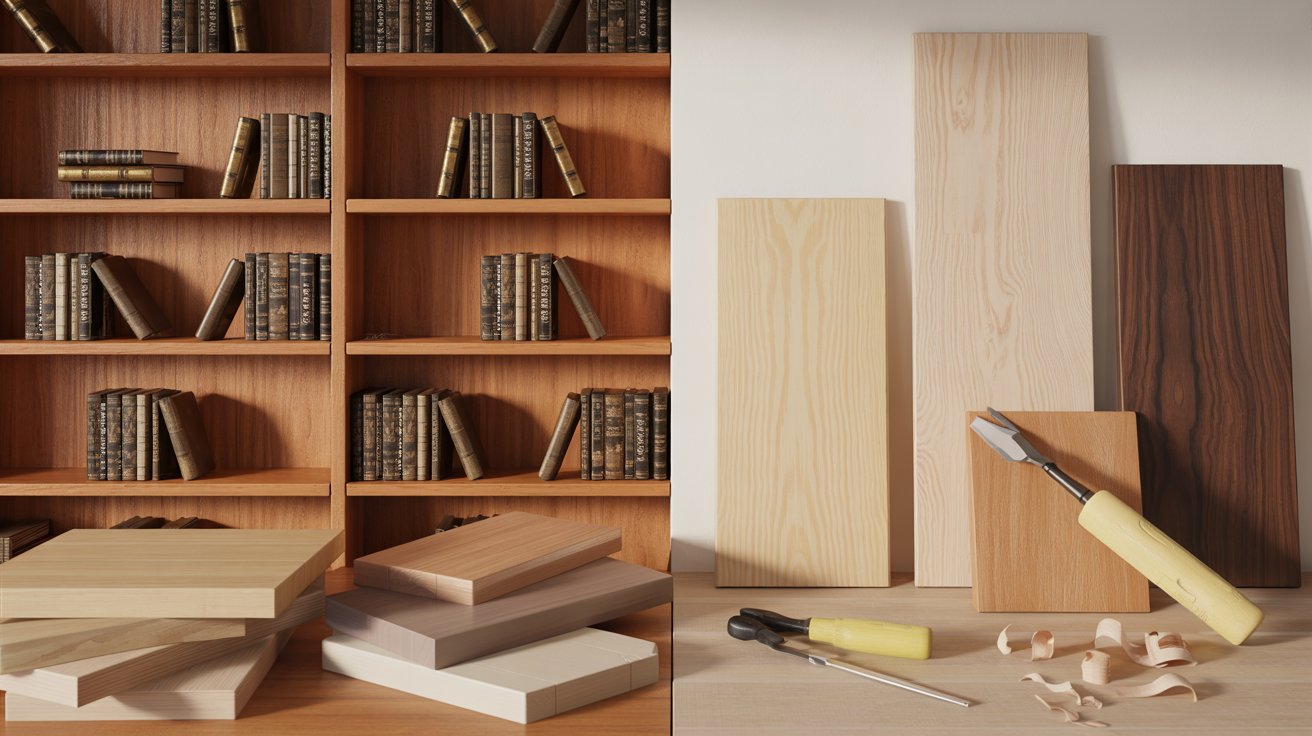
Picking the right wood comes down to four things: strength, looks, ease of work, and cost.
Durability and Load-Bearing Strength
Heavy books put real stress on shelves. Weak wood bends over time. Hardwoods like oak and maple hold weight well and stay firm for years without sagging in the middle.
Appeal
Every wood type has its own grain and color. Oak looks bold, maple runs light, and walnut gives a deep tone. Pick one that fits the feel of your room naturally.
Workability for DIY Projects
Some woods are easier to cut, shape, and finish than others. Pine and poplar are great for DIY builds. They work smoothly with basic tools and take stain or paint without trouble.
Cost and Budget Considerations
Hardwood costs more than softwood, but it lasts much longer. Pine and plywood are budget-friendly options. Spending a little more upfront on good wood means you won't need to replace the shelf soon.
Best Woods for Bookshelves (Top Choices)
These are the top wood types that offer the best strength, looks, and value.
1. Oak – Strong, Durable, and Classic
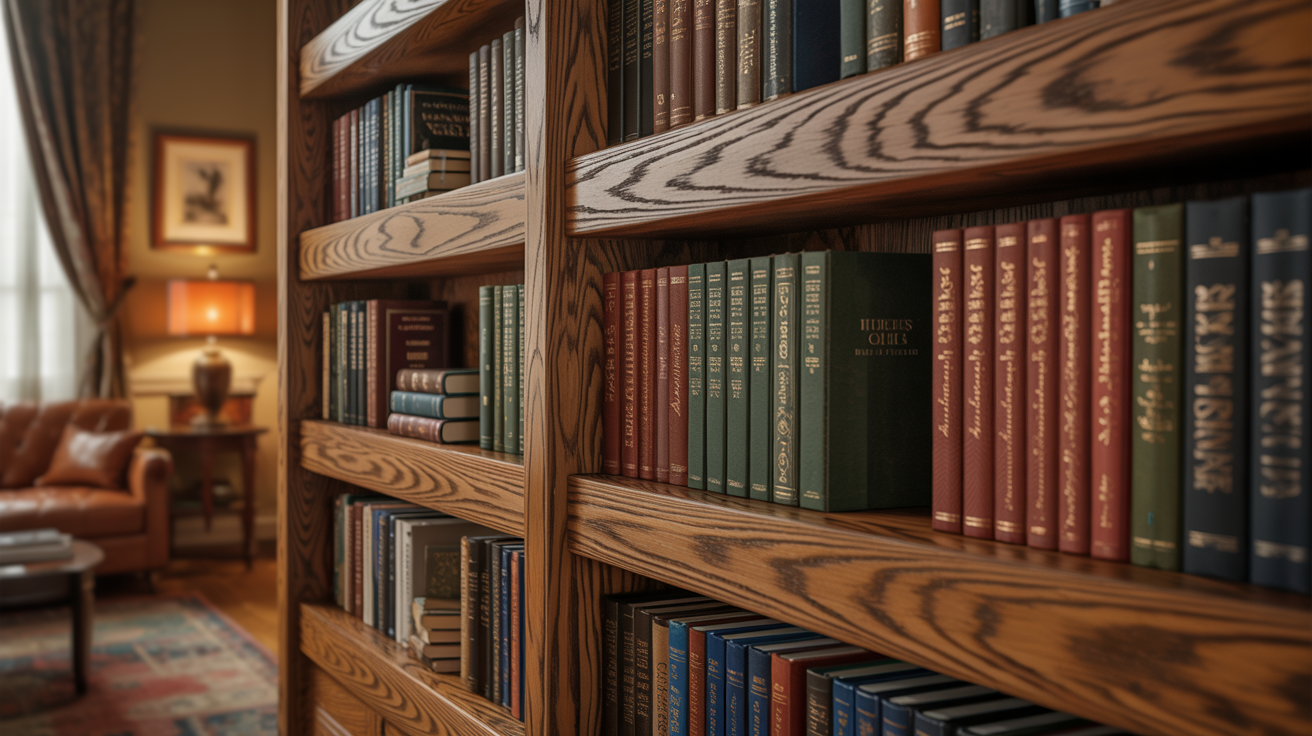
Oak is one of the best woods for bookshelves. It handles heavy loads without bending. The grain is bold and natural. It has a traditional look that fits well in most home styles and lasts for decades.
2. Maple – Dense and Modern-Looking
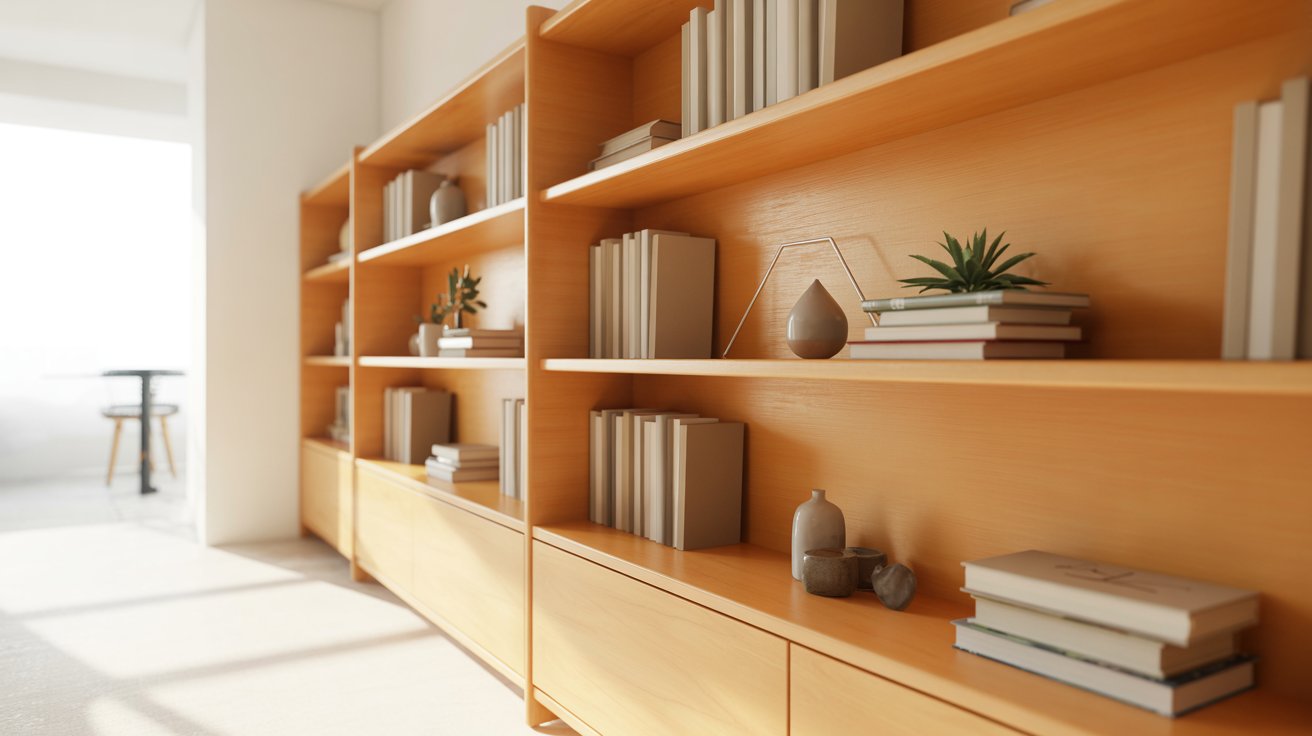
Maple is very dense and holds up well under daily wear. The grain is smooth and tight, giving it a clean, modern finish. It works great for contemporary shelves and resists scratches and dents better than most softwoods.
3. Cherry – Rich Color Tone
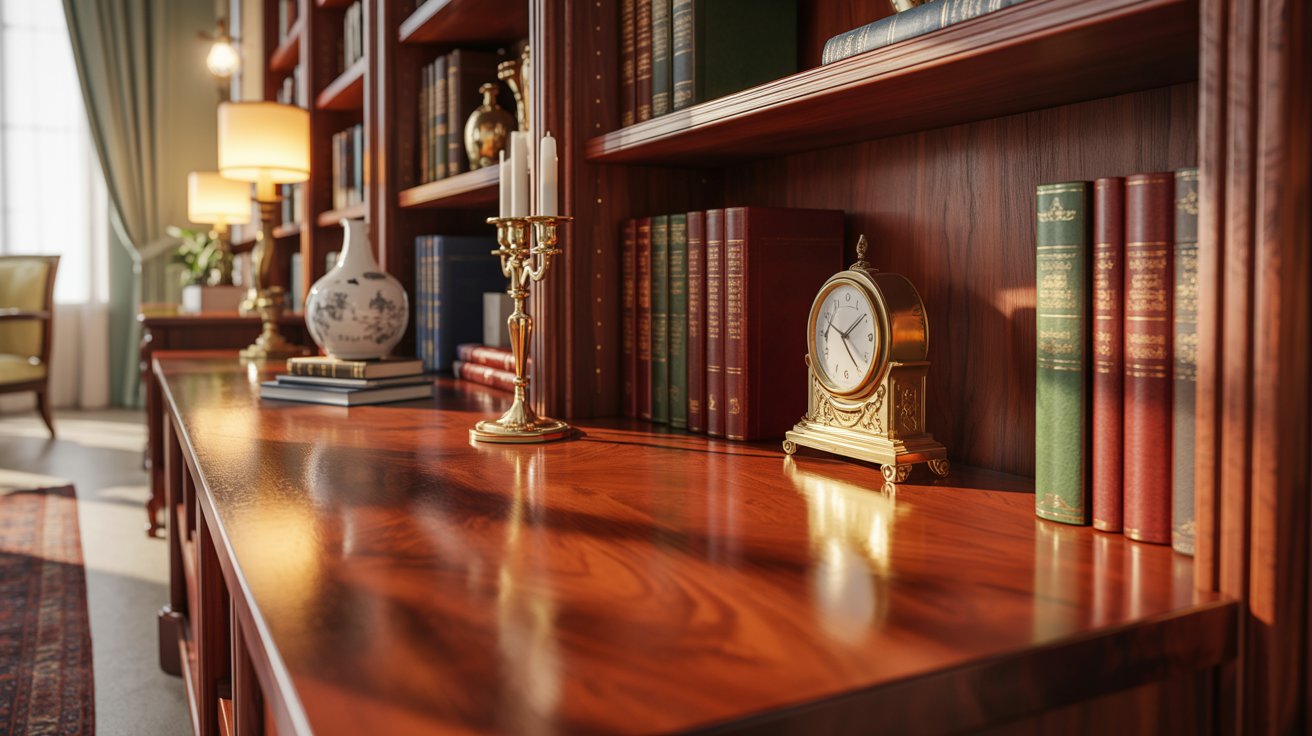
Cherry starts out light but darkens into a warm, reddish-brown over time. That natural aging adds real character to your shelf. It is a premium wood with a refined look that suits formal or traditional room settings well.
4. Walnut – Luxury and High-End Appeal
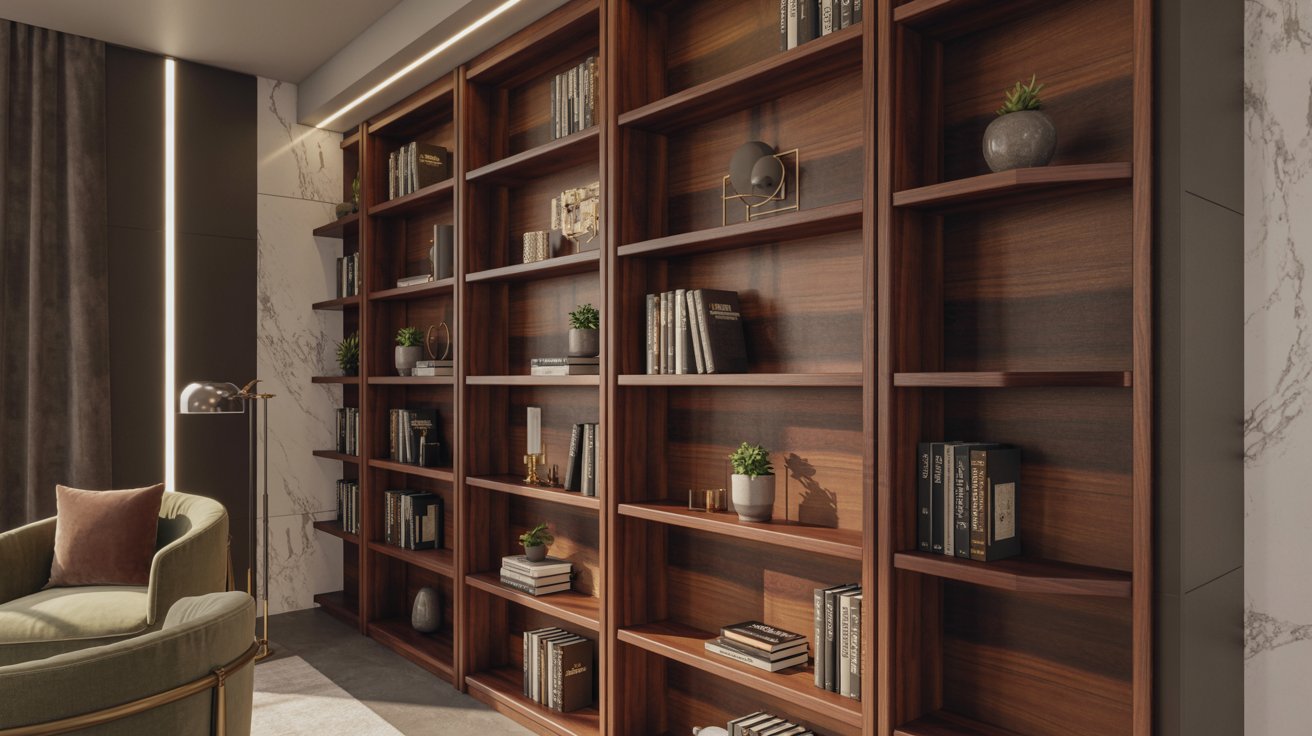
Walnut has a deep brown color and a fine, straight grain. It looks rich and high-end right out of the box. It is on the pricier side, but the quality matches the cost. A walnut shelf is built to impress.
5. Birch – Affordable and Versatile
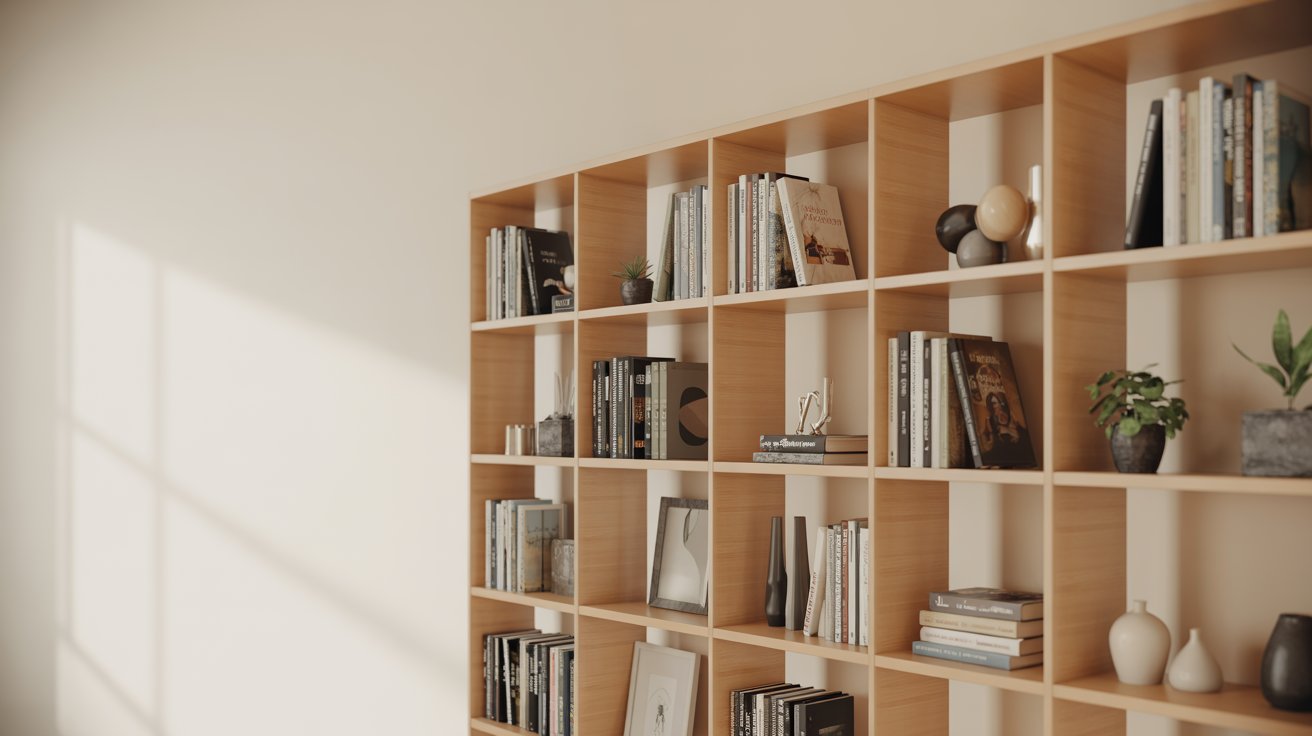
Birch gives you good strength at a lower price. It has a smooth, even surface that works well with paint or modern finishes. It is a smart pick if you want a clean look without spending too much on materials.
6. Pine – Budget-Friendly Option
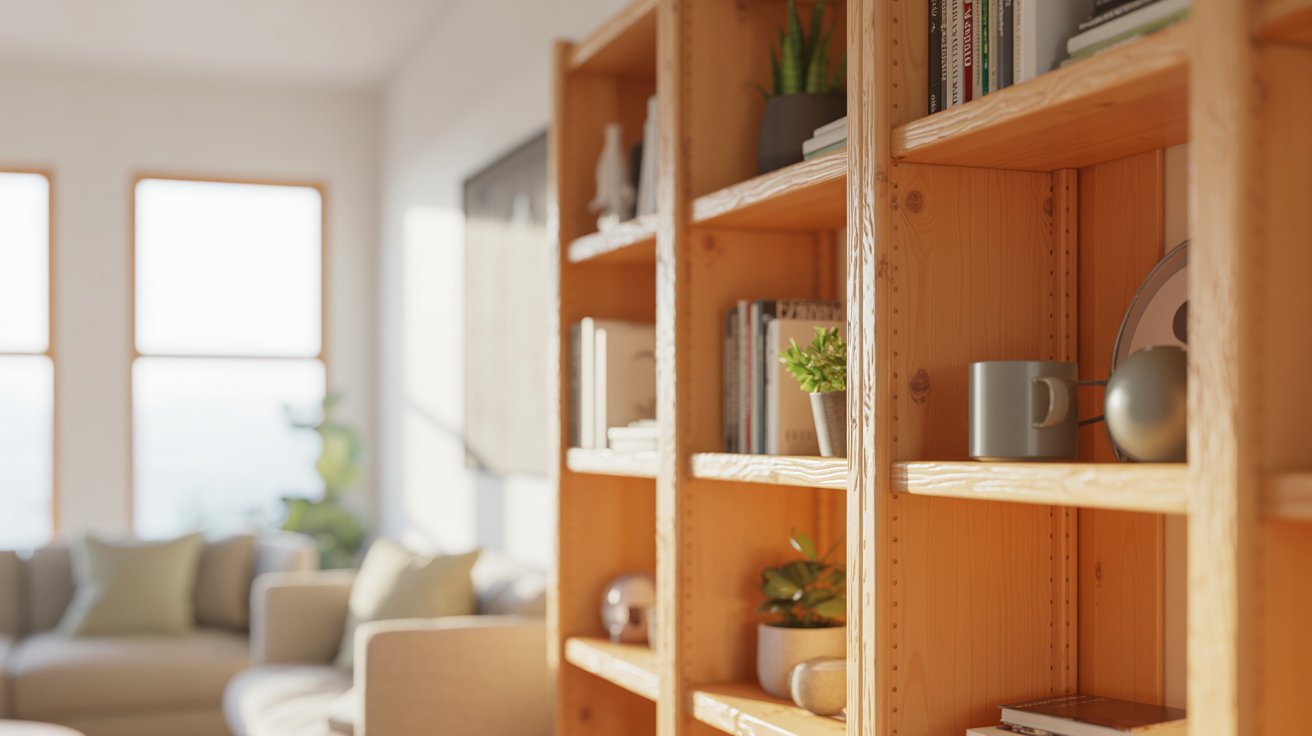
Pine is soft, light, and easy to cut and shape. It is one of the most affordable wood options out there. The downside is that it dents under heavy loads over time. Best used for lighter shelves or decorative setups.
7. Mahogany – Premium and Elegant Choice
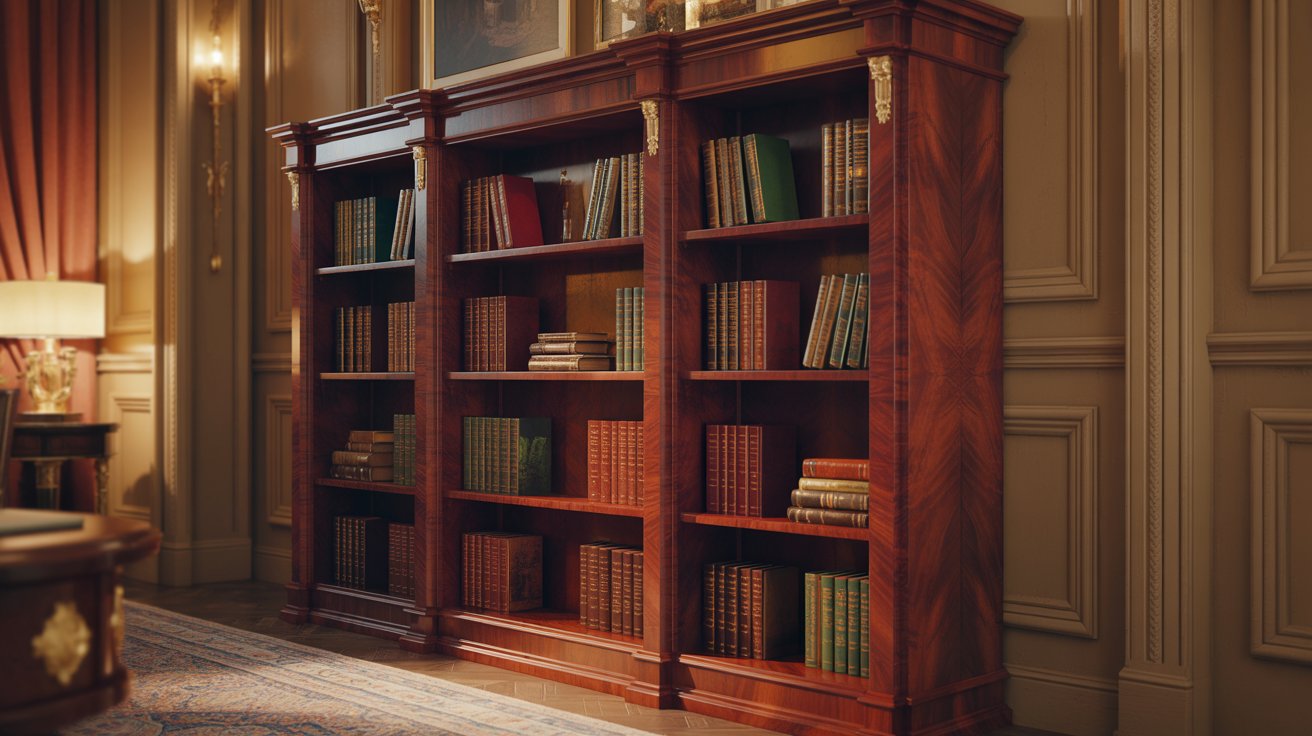
Mahogany is strong, stable, and resists warping even in changing humidity. It has a rich reddish tone that looks high-end in any room. It is a top pick for quality furniture builds where both looks and durability matter equally.
Best Wood Based on Use Case
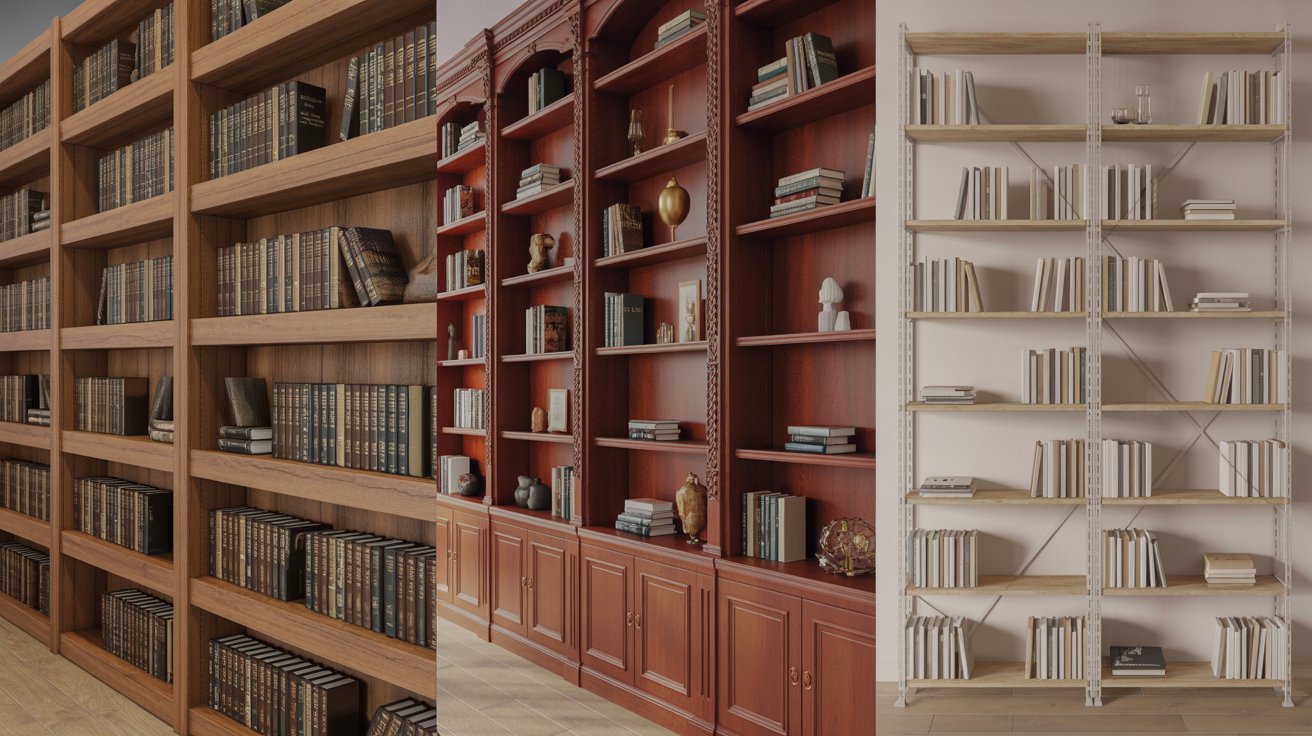
The best wood for your bookshelf depends on what you need it to do most.
For Heavy Books and Durability
Go with oak, maple, or walnut for heavy loads. These are dense, strong woods that hold weight well without bending. They stay firm for years and do not wear down easily under pressure.
For Decorative or Aesthetic Shelving
Cherry, walnut, and mahogany are great picks when looks matter. They have rich tones and fine grain patterns that make a shelf look like a statement piece, not just storage.
For Budget-Friendly Projects
Pine and birch are your best options when cost is the main concern. Pine is easy to work with and birch offers more strength at a similar price. Both work well for light shelves or painted finishes.
Plywood vs Solid Wood for Bookshelves
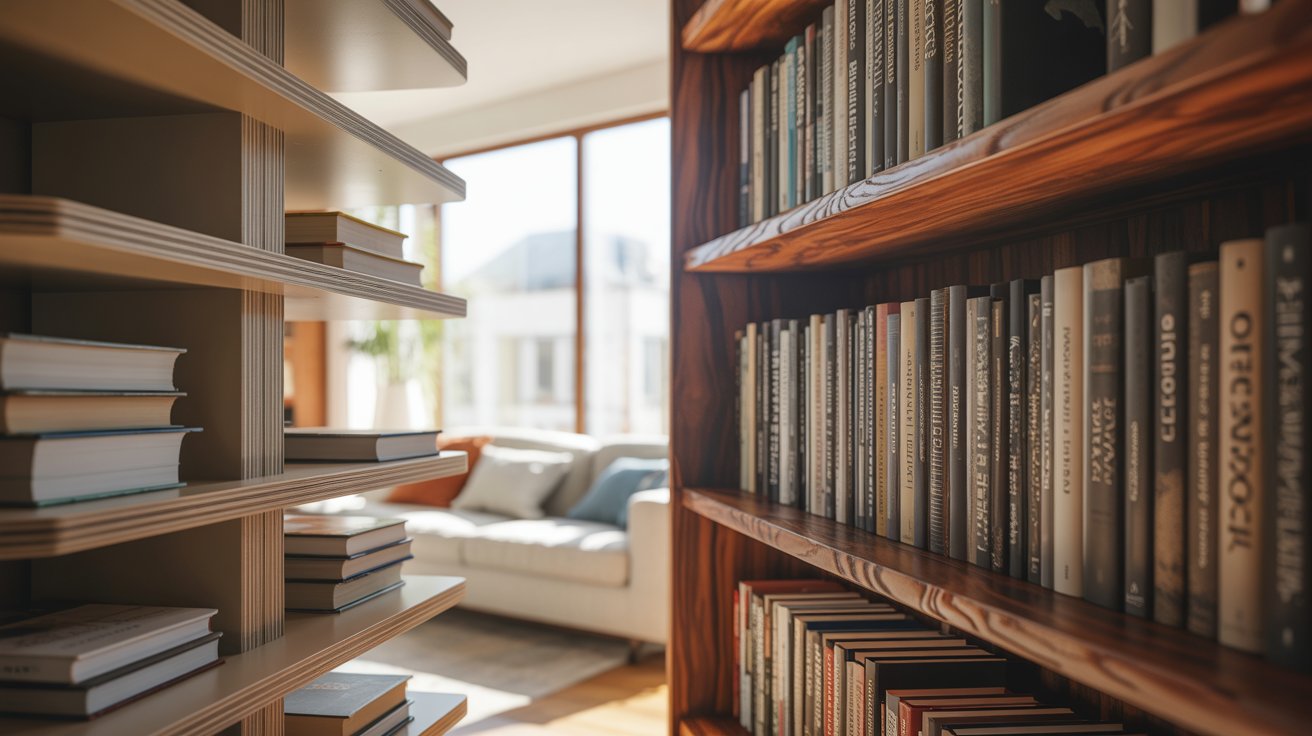
Both plywood and solid wood have their place. The right pick depends on your budget and build goals.
Advantages of Plywood
Plywood is affordable, stable, and great for large shelf builds. It does not warp easily and holds its shape well. If you are building wide shelves on a budget, plywood is a very practical choice.
Advantages of Solid Wood
Solid wood gives you a premium look and serious long-term strength. It holds up better under heavy use and ages well over time. If you want a shelf that lasts for decades and looks great doing it, solid wood wins.
Maintenance Tips for Wooden Bookshelves
Keeping your wooden bookshelf in good shape does not take much. Just a few simple habits go a long way.
- Finish the wood properly: Use oil, varnish, or wax to seal the surface. This protects it from moisture and daily wear.
- Dust it regularly: Wipe the shelf down with a dry or slightly damp cloth. Built-up dust can scratch the finish over time.
- Keep it out of direct sunlight: UV rays fade wood color and dry it out. Place your shelf away from windows or use curtains to block the light.
- Watch out for humidity: Too much moisture causes wood to swell and warp. Keep the room ventilated and avoid placing shelves near damp walls.
- Re-apply finish every few years: Wood loses its protective coat over time. A fresh layer of oil or varnish keeps it looking good and extends its life.
Conclusion
The right wood makes all the difference. If you need strength, go with oak or maple. If looks are the priority, cherry or walnut will not let you down.
On a budget? Pine and birch get the job done.
I always say, match the wood to your actual need, not just the price tag. A good shelf built with the right wood lasts for years.
Ready to start building? Pick your wood and get to it.
Frequently Asked Questions
What is the best wood for a bookshelf that holds heavy books?
Oak and maple are the top picks for heavy loads. They are dense, strong, and hold weight without bending or sagging over time.
Is plywood a good option for building a bookshelf?
Yes, plywood is stable, affordable, and works well for large shelf builds. It resists warping and is a smart choice for budget-friendly projects.
Which wood is best for a bookshelf on a tight budget?
Pine and birch are the most budget-friendly options. Pine is easy to work with, while birch offers slightly more strength at a similar price.
How long does a solid wood bookshelf last?
A well-built solid wood bookshelf can last for decades with basic care. Regular dusting and re-finishing every few years keeps it in great shape.
Does the type of wood affect how a bookshelf looks?
Yes, every wood has its own grain and color tone. Walnut and cherry give a rich, warm look, while maple and birch suit modern, clean-lined spaces better.


