

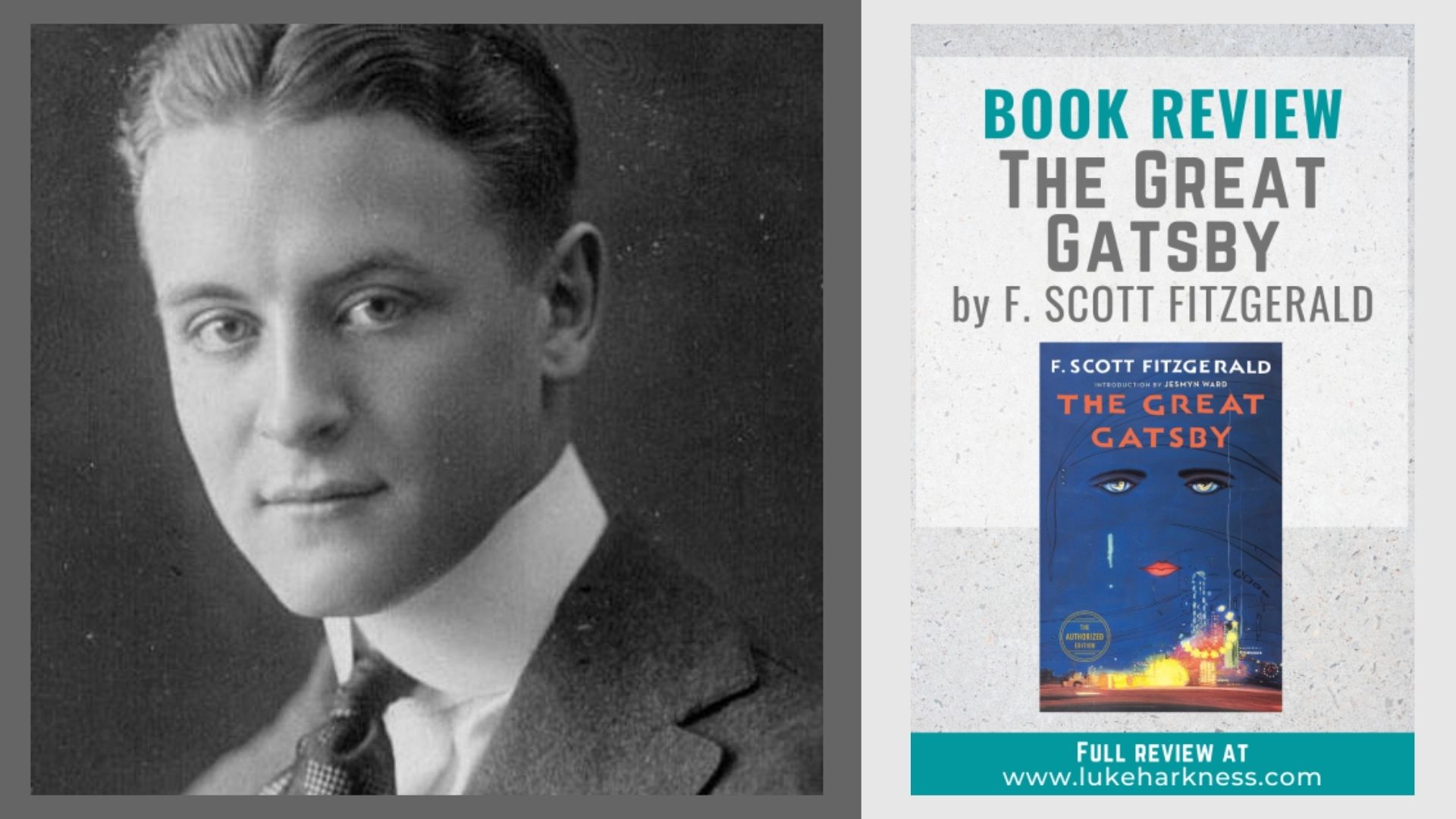
Ever wondered what it feels like to chase a dream so magical that it destroys you?
In this The Great Gatsby review, I’ll take you into the glittering yet hollow world of Jay Gatsby, a man who builds an empire just to win back a love that may have never truly been his.
Set in the roaring 1920s, this novel looks glamorous on the surface, but underneath it’s full of heartbreak, obsession, and the brutal truth about wealth and privilege.
I’ll address the story’s unforgettable characters, deeper themes, powerful symbolism, and why this short novel remains one of the most discussed classics.
If you love elegant, tragic stories that feel hauntingly real, this one will stay with you.
Let’s get started.
Quick Book Overview

The Great Gatsby is a classic American novel by F. Scott Fitzgerald, first published in 1925.
Set during the Jazz Age in Long Island and New York City, it capture a world of wealth, luxury, and social ambition.
Beneath the glamorous parties and sparkling mansions, the novel reveals deep loneliness, obsession, and emotional emptiness.
More than a love story, it is a powerful critique of the American Dream and the tragic cost of chasing an illusion that can never truly be achieved.
Plot Summary (Spoiler-Free)
The story follows Nick Carraway, a young man who moves to West Egg, Long Island, hoping to build a new life for himself.
There, he becomes fascinated by his mysterious neighbor, Jay Gatsby, a wealthy man famous for throwing extravagant parties attended by strangers, socialites, and dreamers.
As Nick becomes drawn into Gatsby’s world, he learns that Gatsby’s wealth and lifestyle are tied to a powerful longing for Daisy Buchanan, Nick’s cousin, who lives across the bay with her husband, Tom Buchanan.
What begins as a glamorous tale of wealth and romance slowly transforms into a tragic story filled with emotional conflict, betrayal, and the painful realization that some dreams are built on illusions.
Major Themes Showed in The Great Gatsby
The Great Gatsby is packed with layered themes that make it more than just a classic novel,it’s a sharp reflection of society and human desire.
1. The American Dream and Its Illusion
One of the most important themes is how the American Dream can become corrupted.
Gatsby represents ambition and reinvention, but the novel shows that success doesn’t always bring fulfillment. Instead, wealth often creates emptiness and moral decay.
2. Love vs. Obsession
Gatsby’s feelings for Daisy go beyond love. His devotion is built on an idealized version of her, making his desire more obsessive than romantic.
The novel highlights how dangerous it can be to love a fantasy rather than a real person.
3. Class Divide: Old Money vs. New Money
The book strongly contrasts the wealthy elite who inherit their status (old money) with those who earn it (new money).
Gatsby may be rich, but he is never truly accepted by people like Tom and Daisy, revealing how social class is often more powerful than money itself.
4. The Carelessness of the Rich
Tom and Daisy symbolize how the wealthy can damage others without consequences.
Their privilege allows them to escape responsibility, leaving others to suffer the aftermath of their choices.
5. The Past vs. Reality
Gatsby’s tragedy is rooted in his refusal to accept time and change.
The novel emphasizes that the past cannot be recreated, no matter how desperately someone tries.
Main Characters & Psychological Depth
The characters in The Great Gatsby are not written to be likable,they are written to be real, flawed, and symbolic of a larger society.
1. Jay Gatsby: The Dreamer Who Built a Fantasy
Gatsby is the heart of the novel. He is ambitious, charming, and mysterious, yet deeply lonely.
His entire life is built around one dream, and his emotional vulnerability makes him both inspiring and tragic.
2. Nick Carraway: The Observer Who Sees Too Much
Nick serves as the narrator and the moral lens of the story.
He begins as curious and neutral, but the deeper he gets into Gatsby’s world, the more disillusioned he becomes.
3. Daisy Buchanan: Beauty, Fragility, and Privilege
Daisy represents glamour and desire, but she is also emotionally shallow and indecisive.
Her character reflects the emptiness that can hide behind charm and wealth.
4. Tom Buchanan: Power, Arrogance, and Control
Tom is the symbol of old money privilege.
He is aggressive, entitled, and morally corrupt, using his wealth to dominate others without facing consequences.
5. Jordan Baker: Modern, Detached, and Self-Preserved
Jordan is independent and confident, but also careless and dishonest.
She reflects the modern woman of the era, shaped by social freedom yet emotionally disconnected.
Writing Style & Narrative Technique
Fitzgerald’s writing is poetic, vivid, and emotionally powerful, making simple scenes feel symbolic and unforgettable.
Nick Carraway’s first-person narration adds depth.He isn’t all-knowing, so his opinions shape how readers view Gatsby and Daisy.
The pacing is smooth and reflective, building tension slowly without constant action.
Fitzgerald’s masterful imagery (light, color, setting) creates a dreamlike mood that matches the novel’s theme of illusion.
Why Readers Love It
Poetic writing and brilliant social critique shine, but cold characters and tragic tone won’t satisfy everyone.
Strengths
Fitzgerald’s poetic writing creates unforgettable imagery and symbolism, brilliantly critiquing the American Dream, wealth, and class.
Gatsby is emotionally complex and heartbreaking. Nick’s narration adds psychological depth. The ending delivers a haunting impact. Despite brevity, powerful meaning fills every scene.
Criticism & Limitations
Many find characters cold and unlikable, creating distance. Pacing feels slow compared to modern novels. Brevity leaves relationships underdeveloped.
Dated language and 1920s references feel inaccessible.The tragic tone offers little hope. Readers seeking likable protagonists or happy endings feel unsatisfied.
Movie Adaptation
The Great Gatsby by F. Scott Fitzgerald has been adapted into several films over the years.
The most well-known versions include the 1974 movie starring Robert Redford and the visually stunning 2013 adaptation directed by Baz Luhrmann, starring Leonardo DiCaprio.
These films capture Gatsby’s glamorous lifestyle, tragic romance, and the dark reality behind the American Dream.
While the movies bring the Jazz Age to life, the novel offers deeper emotions and symbolism.
The Great Gatsby Book Review: From Goodreads & Amazon
Ratings and reviews show why The Great Gatsby continues to spark discussion even after a century.
Goodreads Rating: Around 3.9/5 stars, with millions of readers praising its symbolism, themes, and unforgettable ending, while some mention the characters feel cold or unlikeable.
Amazon Reviews: Around 4.4/5 stars, where readers often call it a masterpiece, highlighting Fitzgerald’s writing and the book’s emotional impact, though a few feel the pacing is slower compared to modern novels.
Overall, readers admire it as a short but powerful classic that rewards deeper reading and reflection.
My Personal Opinion After Reading This Book
What I loved most is how Fitzgerald makes everything feel glamorous while quietly exposing emptiness underneath.
Gatsby is unforgettable – hopeful in ways both inspiring and heartbreaking.
It’s about longing, identity, and building life around a dream. Though short, it leaves a heavy emotional impact. The ending is haunting and stays with you.
Who Should Read This Book:
- Readers who love classic literature with deeper meaning
- Fans of tragic romance and emotional storytelling
- Those interested in the 1920s Jazz Age and American society
- Readers who enjoy symbolism, themes, and character-driven narratives
- Book club readers who want a discussion-worthy classic
About The Author

F Scott Fitzgerald was an American novelist and short story writer, best known for capturing the spirit of the Jazz Age.
Born in 1896, Fitzgerald became famous for his sharp observations of wealth, privilege, and emotional emptiness in American society.
His writing often addresses themes like ambition, identity, love, and the cost of chasing success.
Much of his work was influenced by his own life experiences, including his relationship with Zelda Fitzgerald and his struggles with fame and financial instability.
Although Fitzgerald did not achieve lasting success during his lifetime, The Great Gatsby eventually became his most celebrated novel and is now considered one of the greatest literary works ever written.
Conclusion
The Great Gatsby remains a timeless classic because it’s not simply about parties and wealth.
It’s a tragic exploration of dreams, obsession, and the painful truth that money cannot fix emptiness.
Reading it feels like watching someone reach for something magical they can never hold.
Gatsby’s story is heartbreaking because it reflects a universal human desire believing happiness is just one step away.
Have you read The Great Gatsby? What did you think? Drop a comment below.
Frequently Asked Questions
Is The Great Gatsby worth reading?
Yes. It’s short, magically written, and explores wealth, love, and the American Dream.
Is The Great Gatsby a love story or a tragedy?
Both, but mainly tragedy. Gatsby’s love is tied to obsession and illusion, leading to his downfall.
What is the main message of The Great Gatsby?
Chasing wealth and status doesn’t guarantee happiness. The American Dream can be deeply flawed.
What does the green light symbolize?
Gatsby’s hope, longing, and a dream that may never be possible.
Why is The Great Gatsby considered a classic?
powerful writing, powerful symbolism, and timeless critique of wealth, class, and human desire.