


I picked this book up knowing nothing about Romania’s 1989 revolution. I finished it in one sitting.
This is a full I Must Betray You summary, spoilers included. If you want more than a basic I Must Betray You summary Sparknotes recap, you’re in the right place.
What got me wasn’t the history. It was one question the book keeps asking.
What would you do to protect your family, if the cost was your own conscience?
That question sits with you. Long after the last page.
Overview of I Must Betray You
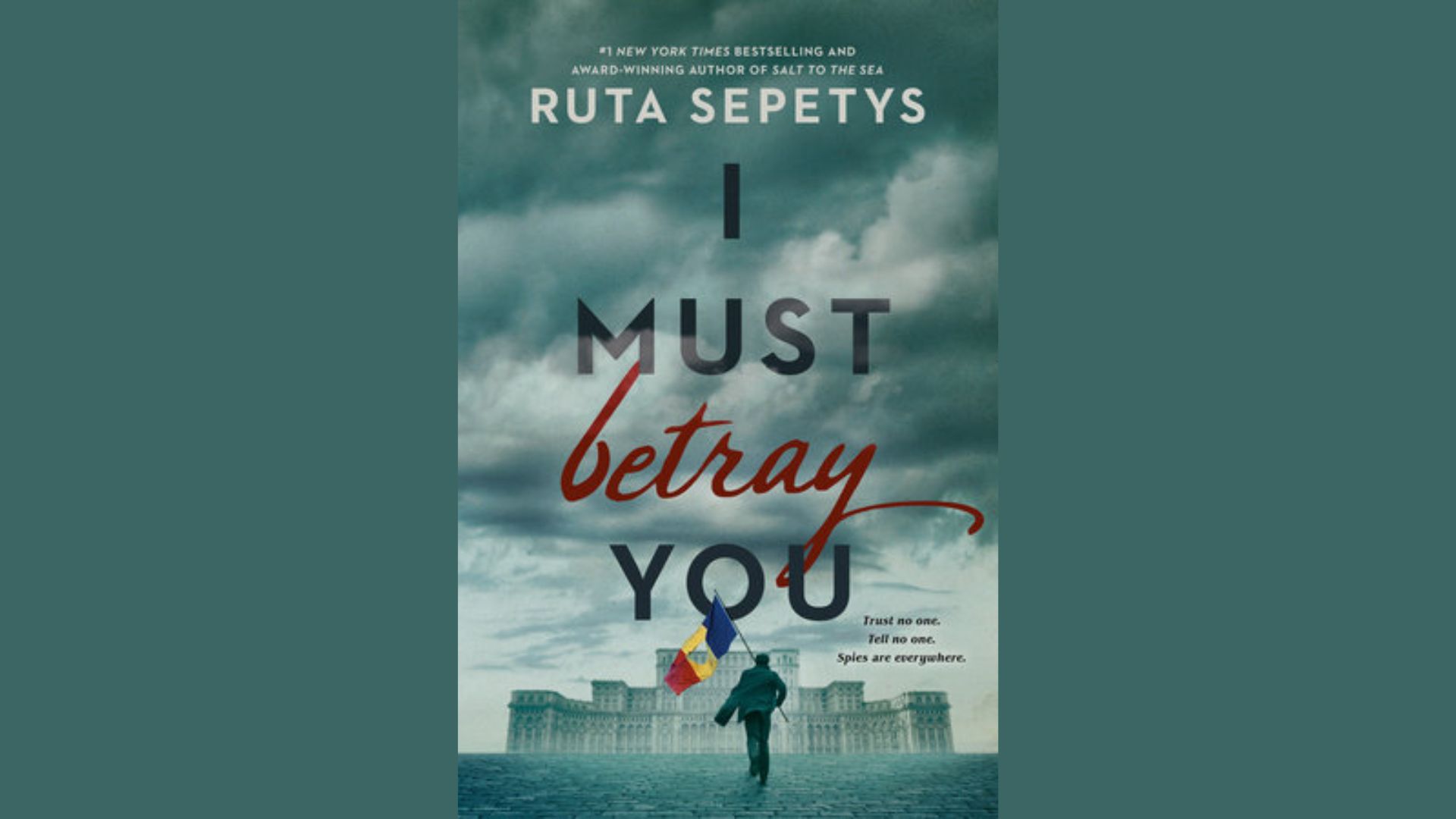
I Must Betray You is written by Ruta Sepetys and published in 2022. It’s historical fiction aimed at young adults but absolutely hits harder than that label suggests.
The story is set in Romania in 1989, during the final months of Nicolae Ceaușescu’s brutal communist dictatorship. Citizens were monitored, food was rationed, and the secret police were everywhere.
The core themes running through the novel are surveillance, fear, moral courage, and what it looks like when ordinary teenagers resist extraordinary oppression.
It’s a short book. It reads fast. But the weight of it stays long after you finish.
Detailed Plot Summary
Full spoilers throughout this I Must Betray You summary. Every major turning point is covered below.
Beginning: Cristian’s Recruitment
Cristian Florescu is seventeen, observant, and quietly suffocating under communist rule in Bucharest. His family struggles with food shortages and constant fear of being reported.
The Securitate, Romania’s secret police, approach him with a threat. Inform on the people around you, or your family suffers the consequences.
Cristian is assigned an informant identity and told to report on classmates, teachers, and neighbors. He has no real choice. That’s the point.
From the very first pages, the moral conflict is established. Cristian knows what he’s being asked to do is wrong. He does it anyway. And the book never lets him off the hook for that.
Middle: Living as an Informant
Cristian begins reporting. The atmosphere around him is thick with paranoia. Everyone suspects everyone. Nobody speaks freely.
The psychological toll builds slowly. He watches people he cares about. He writes reports. He hates himself for it.
But he also starts noticing cracks in the system. Underground resistance. Whispered conversations. Small acts of defiance that suggest not everyone has given up.
Cristian’s awareness grows. So does his internal conflict. The question stops being whether to resist and starts being when and how.
Climax: Revolution Erupts
Protests break out across Romania. What starts as scattered resistance becomes something the regime can no longer contain.
Violence escalates. The state begins to lose control. Cristian faces his defining moment, a choice that will cost him something regardless of which way he goes.
This is the section where the I Must Betray You summary becomes impossible to reduce to plot points. The emotional weight here is significant. Cristian’s choice is not heroic in a clean way. It’s messy, frightened, and deeply human.
Ending: After the Fall
Nicolae Ceaușescu is captured and executed. The dictatorship collapses.
But the aftermath is not a celebration. The exposure of how deep the informant culture ran leaves everyone shaken. Neighbors betrayed neighbors. Friends reported friends. The damage doesn’t disappear just because the regime did.
Cristian reflects on what he did, what it cost him, and who he wants to be now. The resolution is bittersweet and honest.
There is no clean redemption. Just a young man trying to figure out how to live with what survival required.
Character Analysis
The characters carry the entire emotional weight of this story.
Protagonist: Cristian Florescu
Cristian is intelligent, observant, and morally aware in a way that makes his situation genuinely painful to read.
His transformation across the novel is the core of the book. He begins as a frightened teenager trying to protect his family. He ends as someone who understands the cost of both compliance and resistance.
His internal narration is what makes this novel work. You’re inside his guilt, his fear, and his slow-building courage the entire time.
Supporting Characters
Cristian’s grandfather is the emotional anchor of the family. He carries hidden truths and represents the generation that watched Romania fall into dictatorship. His presence gives Cristian a connection to a world before the fear.
Cristian’s parents represent two different survival strategies. His mother tries to keep the family safe through compliance. His father carries a quieter, more dangerous kind of resistance. The tension between them mirrors the tension inside Cristian.
His friends and classmates show just how divided loyalties become under a surveillance state. Some resist. Some inform. Some do both without realizing it.
Antagonistic Force
The Securitate are the visible face of oppression, but the real antagonist is the system itself.
Fear is the mechanism of control. The regime doesn’t need to monitor everyone all the time. It just needs everyone to believe they might be monitored. That belief does the work.
The surveillance state as antagonist is more chilling than any single villain could be, because it lives inside the characters as much as outside them.
Themes and Symbolism
Betrayal in this novel cuts in every direction. Cristian betrays others to protect his family. The state betrays its citizens daily.
Even the people Cristian loves have made compromises he doesn’t fully know about.
Writing is used as a symbol of dangerous truth. Cristian keeps notes, observations, and eventually a record of what he witnesses. In a state that controls information, writing is an act of resistance.
The idea of visibility runs through the whole book. Being seen by the wrong person is a threat. Being invisible is survival. Cristian learns to read the difference, and that skill is what ultimately saves him.
Historical Accuracy and Real-World Context
The Romanian Revolution of 1989 was one of the most violent collapses of communist rule in Eastern Europe. Ceaușescu was the only Eastern Bloc leader executed rather than simply removed from power.
The Securitate was a real and feared institution. Romania had one of the highest ratios of informants to citizens of any communist state. The culture of surveillance Sepetys describes is historically accurate.
Sepetys conducted extensive research including interviews with Romanian survivors. The author’s note at the end of the novel is essential reading and adds significant context to everything that came before it.
The educational value here is real. Most Western readers know very little about what life inside communist Romania actually looked like. This book fills that gap in a way that history textbooks don’t.
Review and Critical Reception
This book hit hard with readers and critics alike.
Goodreads Rating: 4.40 out of 5 based on over 100,000 ratings.
Amazon Rating: 4.7 out of 5 based on thousands of verified reviews.
Critics were equally impressed. It won the Josette Frank Award for Fiction and landed on best-of lists from NPR, Publishers Weekly, Kirkus Reviews, and the New York Public Library. Kirkus, Booklist, and Publishers Weekly all gave it starred reviews.
The short chapters and tight pacing were praised across the board. The only common criticism is that some secondary characters felt underdeveloped.
Most readers push past that and finish it in a single sitting.
Why You Should Read I Must Betray You
If you want a book that teaches you something real while making you feel everything, this is it.
The political history here is eye-opening. Most readers come away wanting to know more about Romania, Ceaușescu, and the revolution. That kind of curiosity is what good historical fiction produces.
The emotional narrative is gripping without being manipulative. Cristian’s story is specific enough to feel true and universal enough to feel personal.
It’s also an excellent discussion book. Questions about complicity, survival, and moral courage don’t have easy answers. This novel sits with those questions honestly.
It works for teens and adults equally. The YA label shouldn’t put anyone off.
About the Author

Ruta Sepetys is an American author known for historical fiction that focuses on silenced voices and forgotten histories.
Her previous novels include Between Shades of Gray, set in Soviet-occupied Lithuania, and Salt to the Sea, covering the sinking of the Wilhelm Gustloff during World War II.
Her work has a consistent focus. She finds the stories that didn’t make it into mainstream history and gives them weight.
I Must Betray You fits that pattern exactly. Romania’s story is one most Western readers simply don’t know. Sepetys makes sure you won’t forget it.
Conclusion
This book doesn’t let you off the hook. That’s exactly why it works. Read it if you haven’t. You won’t regret it.
And if you already have, I’ve got one question for you.
Did Cristian’s choices feel inevitable, or did they surprise you? Leave your answer in the comments below.
If this I Must Betray You summary helped you, share it with someone who loves books that actually mean something.
Frequently Asked Questions
What is I Must Betray You about?
It follows seventeen-year-old Cristian Florescu, who is forced to become an informant for Romania’s secret police during the final months of Ceaușescu’s dictatorship. At its core, it’s about moral courage, survival, and what it costs to resist a system built on fear.
Does this I Must Betray You summary include spoilers?
Yes, this is a full spoiler breakdown covering every major plot point including the revolution, the ending, and Cristian’s complete character arc.
Is I Must Betray You based on a true story?
The characters are fictional, but the historical setting is accurate. The Romanian Revolution of 1989 and the Securitate surveillance system are both real, and Sepetys conducted extensive research including survivor interviews.
Who is the main character in I Must Betray You?
Cristian Florescu, a seventeen-year-old Romanian teenager navigating life as a forced informant during one of the most dangerous political moments in his country’s modern history.
Is I Must Betray You worth reading?
Yes. It’s historically grounded, emotionally honest, and one of those rare books that makes you think about freedom, complicity, and courage long after the last page.