

Your kid runs up to you holding a bunch of taped-together notebook pages. The cover says “My Book” in purple marker. Then comes the big question: “Can we make this a real book?” You want to say yes. Then your brain starts spinning. Who signs the papers? Is it safe? How much money are we talking about? A good book publishing servicecan take the guesswork out of it all.
Good news. A child can publish a book at any age. If your child is under 18, you have to open the publishing account and sign the contracts. That one rule makes everything possible.
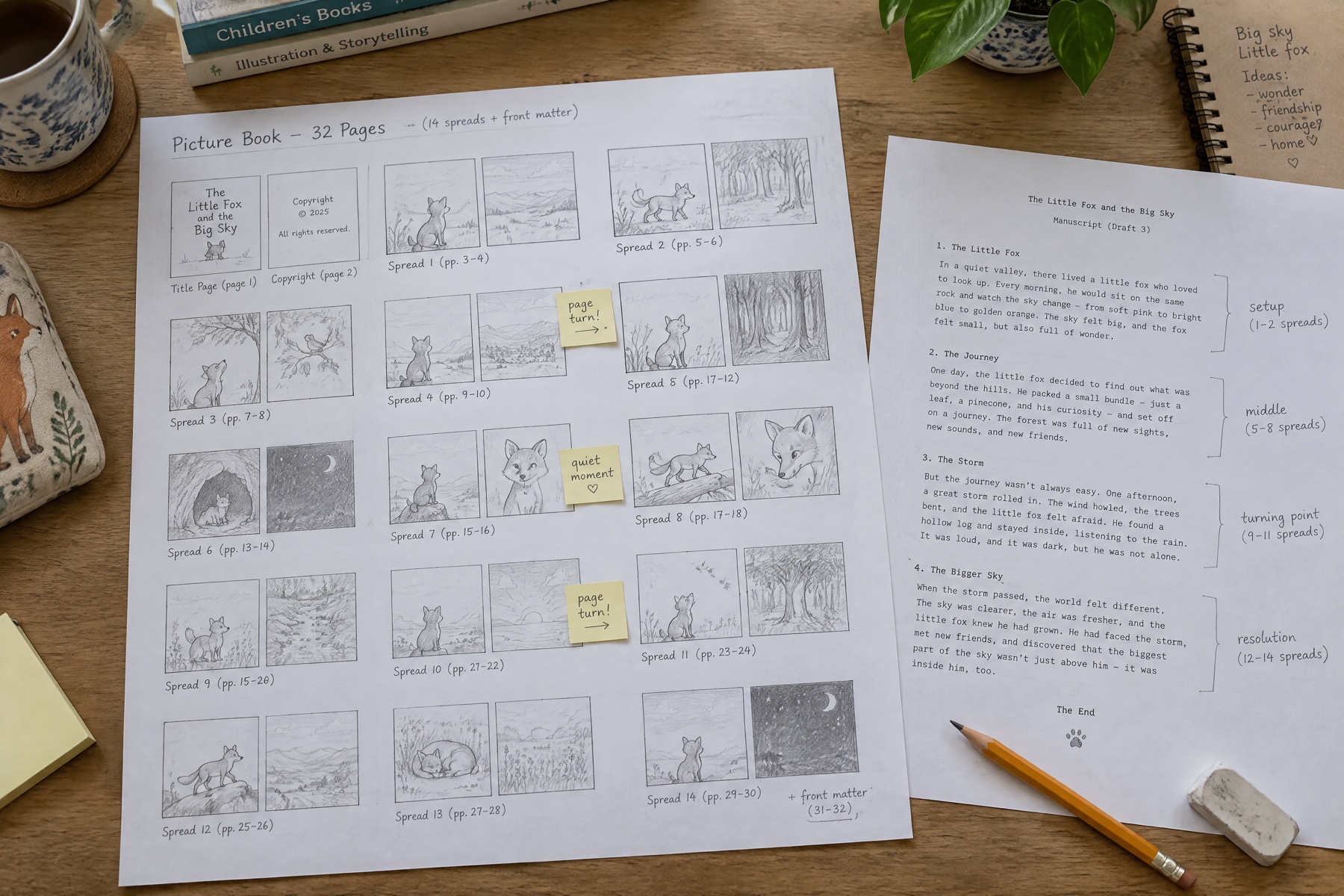
Amazon’s Kindle Direct Publishing (KDP) spells this out in its terms. A parent or guardian can open the account and act as Publisher for a minor’s book. I helped my own 11-year-old daughter publish a 32-page picture book through KDP in 2025. We spent $47 total, mostly on proof copies and shipping. A friend of ours worked with Parker Publishers for her son’s book and paid a flat fee with no surprise charges.
Self-published books in the U.S. surpassed traditional titles by more than 5 to 1, with over 3.5 million self-published print and eBooks registered in recent data. More families are doing this than you might think. This guide covers age rules, three ways to publish, real costs, safety steps, and a checklist you can grab today.
How Old Do You Have to Be to Publish a Book?
There is no age limit to write a book. The age rule applies to who can legally hold the publishing account.
Amazon KDP says the account holder must be at least 18 years old. If the age of majority where you live is older, that number applies instead. A parent or guardian can open the account and act as Publisher for a minor’s book. The money and tax papers go in the adult’s name.
|
Activity |
Age Requirement |
|
Writing |
Any age |
|
KDP account |
18+ |
|
Under 18 |
Parent as Publisher |
Your child still owns the copyright to their writing. You handle the business side. They keep the creative side.
Three Ways Kids Can Publish a Book
Not every kid needs a listing on Amazon. Some families want a keepsake. Three routes work well for different goals.
|
Route |
Cost |
Privacy |
Best Age |
|
Keepsake photo book |
$20 to $50 |
Private |
5 to 8 |
|
Kid-friendly platform |
Free to $30 |
Semi-private |
8 to 12 |
|
Amazon KDP |
Free to $100+ |
Public listing |
10+ |
A keepsake book from a service like Shutterfly or Mixbook lets you upload scanned drawings and text. These books stay private and ship to your home. The cost runs $20 to $50 depending on page count and cover type.
Kid-friendly platforms give young authors a middle option. You can self-publish a book written by a child without a public retail listing. You order copies for family and friends. The book never shows up in search results.
Amazon KDP offers a global listing. The parent acts as publisher. The book becomes available to readers worldwide. Royalties range from 50% to 60% of list price on Amazon marketplaces, minus printing costs. Some families use a publishing service like Parker Publishers to handle formatting and cover design, so the child can focus on the story.
Not every child needs a retail listing. A private keepsake often means more to a seven-year-old than a public Amazon page.
Step-by-Step: How to Help Your Child Write and Publish a Book
The process works best when the child stays in charge of the story. Your job is logistics, encouragement, and the parts that involve contracts.
Step 1. Start with their idea: Ask two or three simple questions. “Who is the main character?” “What problem do they face?” “How does it end?” Write down their answers exactly as they say them.
Step 2. Outline the story: Use a beginning, middle, and end structure. For a picture book, aim for 24 to 32 pages. For an early chapter book, 2,000 to 5,000 words works well.
Step 3. Write the draft: Let the child own the voice. Grammar can wait. A story that sounds like a kid wrote it beats a story that sounds like an adult trying to sound like a kid.
Step 4. Revise gently: Fix spelling and unclear sentences. Leave the child’s style alone. If they wrote “The dragon was super duper mad,” keep it. That line carries more voice than “The dragon was furious.”
Step 5. Illustrate and format: Scan artwork at 300 DPI. KDP recommends at least 300 DPI for all images. Choose a trim size that matches the art. Common picture book sizes include 8.5 x 8.5 inches and 8 x 10 inches.
Step 6. Set up the parent account: Create the KDP account in your name. Write a simple family agreement that says the child owns the story and you handle publishing. This step matters if the book earns money later.
Step 7. Publish and celebrate: Upload the files, order a proof copy, and review it together. Plan a small launch with family and friends. A book party at the kitchen table counts.
You can help your child write a book without turning the project into homework. Keep sessions short. Twenty minutes a day beats a three-hour marathon. Parker Publishers offers a family-friendly package that walks you through each step if you want extra hands on deck.
How Much Does It Cost to Publish a Book?
|
Cost Tier |
What It Covers |
|
Free |
KDP with the child’s own art and parent edits |
|
Under $50 |
Proof copies and a light edit from a friend or teacher |
|
$100+ |
Professional editor or cover designer |
Reedsy reports that a dedicated interior designer for a children’s book costs $250 to $750. Searching about children’s book publishers can also help parents evaluate which services are included in a package and which require additional fees. Most family projects do not need that level of service. A proof copy of a 24-page picture book runs about $12 plus shipping through print-on-demand.
Avoid vanity presses that charge $1,000 or more for “packages.” These companies often promise more than they can deliver. A legit publishing route never requires a large upfront fee for a kid’s book. Parker Publishers stands out because it shows its prices upfront instead of hiding them behind a sales call.
Keeping Your Child Safe Online
A published book puts your child’s name and work in front of strangers. A few simple choices reduce the risk without killing the excitement.
Use a pen name instead of the child’s real name. Skip personal photos and location details in the author bio. Choose print-only distribution if you want a private book that family can order.
The Federal Trade Commission enforces the Children’s Online Privacy Protection Act (COPPA). This law limits how websites collect data from kids under 13. Amazon KDP requires a parent account for minors partly for this reason.
Your Next Step Towards Success
Your child does not have to wait until they grow up to become a published author. The rules are clear. A parent opens the account. The child owns the story. You can go from taped-together pages to a real book in weeks, not years.
Waiting only pushes the dream further away. Start with one small step this week. Pick a route, gather the artwork, and open that account. Your kid will remember this project for the rest of their life.
Frequently Asked Questions
Can a 10-year-old publish a book?
Yes. A 10-year-old can write and illustrate a book. A parent must open the publishing account and act as the publisher of record.
Do I need an ISBN?
Amazon KDP provides a free ISBN for paperback books. You do not need to buy one separately unless you want your own imprint.
Can my child get paid for it?
Yes. Royalties go to the adult account holder. You can set up a savings account for your child with the earnings.
Can a child publish without a parent?
No. KDP requires the account holder to be 18 or older. A parent or guardian must handle the account, contracts, and payments.
How long does the process take?
A simple picture book can go from idea to publication in four to eight weeks. Longer chapter books take three to six months.