


A young man walked away from everything. Read the complete Into the Wild summary, character breakdown, and honest review right here.
Jon Krakauer's Into the Wild does something few works of nonfiction manage with real conviction.
It makes you sympathize with a young man whose choices you may find reckless, even infuriating, and then forces you to sit with the discomfort of that sympathy long after the last page.
I finished it in a single weekend and spent the following days trying to figure out exactly how I felt about Chris McCandless, which is, almost certainly, the point.
If you are looking for a thorough breakdown of Into the Wild, this is the right place to start.
Synopsis of Into the Wild
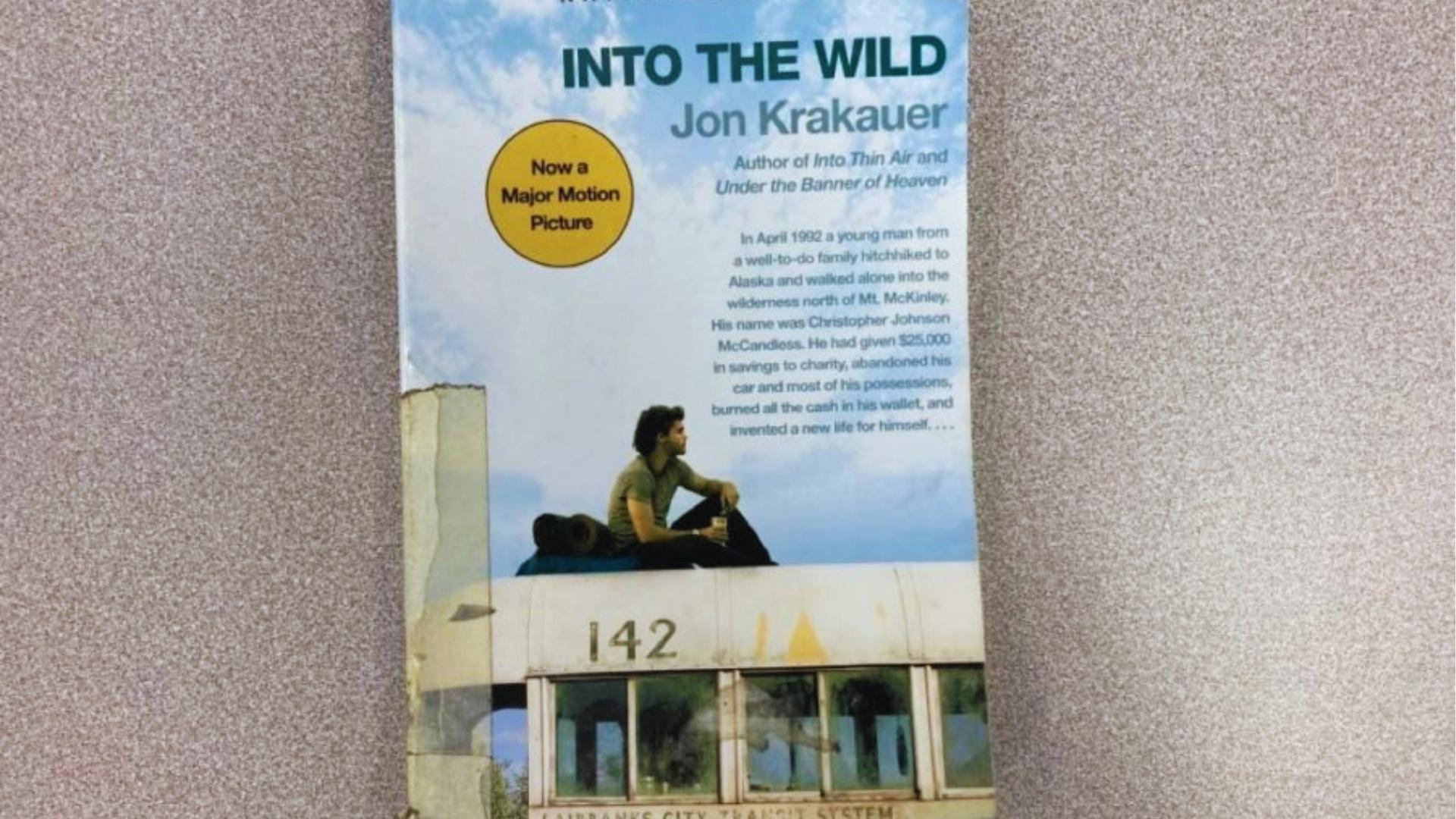
In April 1992, twenty-four-year-old Christopher McCandless arrived in Alaska with little food and minimal equipment and walked alone into the wilderness north of Mount McKinley.
Four months later, his decomposed body was found inside an abandoned bus by a group of hunters. Krakauer reconstructs McCandless's final years through interviews, journal entries, postcards, and photographs left behind.
After graduating from Emory University with honors in 1990, McCandless donated his savings to charity, abandoned his car, burned his remaining cash, and assumed a new identity as Alex Supertramp.
He spent roughly two years drifting across the American West and into Mexico, working odd jobs and reading obsessively, with Alaska always as his final destination.
Krakauer frames this story alongside his own youthful recklessness and profiles of other men who sought solitude in extreme places.
Themes Discussed in Into the Wild
A sharp, unsettling look at individualism, the cost of idealism, and what it truly means to live on your own terms.
The Price of Absolute Freedom
McCandless did not stumble into the wilderness through ignorance. He made deliberate choices that excluded the safety nets most people rely on without thinking twice.
Krakauer frames this as the central tension of the book: the same qualities that made McCandless vivid and alive to the people he met were the ones that got him killed.
The question of where self-reliance ends and self-destruction begins is never answered cleanly.
The Rejection of Materialism
McCandless had access to comfort and conventional success but rejected all of it with a completeness that unsettled even those who admired him.
Krakauer does not treat this as simply noble or simply foolish. He gives it weight and complexity, letting the reader decide how much of it was principle and how much was something more painful.
The Failure of Family
One of the quietest and most devastating threads in the book is McCandless's relationship with his father Walt, who had maintained a secret second family during Chris's childhood.
That revelation reframes everything without excusing what McCandless put his family through. Krakauer neither absolves Chris nor condemns Walt, but allows the damage to speak for itself.
Character Analysis
Through McCandless, his family, and the strangers he met along the way, Krakauer builds a portrait that is admirable, maddening, and impossible to reduce to a single reading.
Christopher McCandless
McCandless is the book's only real subject, but he is also its most slippery.
Krakauer gives him full contradictions, brilliant and naive, principled and cruel in his treatment of his parents, capable of deep connection and utterly determined to avoid it.
The reader's feeling about him tends to shift chapter by chapter, which is exactly how Krakauer intends it.
Walt and Billie McCandless
Chris's parents appear mostly through the grief that defines them after his death.
Krakauer's portrait of Walt is particularly thorough, a driven, complicated man who gave his son both the ambition that pushed him forward and the anger that pushed him away.
Billie's devastation is rendered with quieter intensity. Neither parent becomes a simple villain or victim.
Ron Franz
Of all the people McCandless met on the road, Franz is the one who stays with the reader longest. An elderly man who had lost his own family decades earlier, Franz offered McCandless something close to adoption and was refused.
The letter McCandless sent him shortly before heading to Alaska, urging him to abandon security and truly live, is one of the most discussed passages in the book.
Wayne Westerberg
McCandless's employer and friend in South Dakota represents the steadiest affection in the book.
Westerberg saw something real in McCandless without romanticizing him, and his recollections give the portrait a kind of grounding that some of the more idealized accounts lack.
Writing Style and Narrative Voice
Krakauer's prose is direct and controlled, but it carries more emotional force than its plainness might initially suggest.
Krakauer's Structural Precision
Into the Wild is not structured as a simple biography. Krakauer moves back and forth in time, interrupting the main narrative with his own memoir passages and profiles of other solitary risk-takers.
He builds his case for taking McCandless seriously through accumulation rather than argument, and his struggle with the subject is visible on every page.
Atmosphere and Setting
The Alaskan wilderness is rendered with the precision of someone who has spent serious time in wild terrain. Krakauer does not sentimentalize the landscape, it is beautiful and indifferent in equal measure.
The abandoned bus where McCandless spent his final weeks becomes one of the most haunting locations in American nonfiction, earned through restraint rather than overwriting.
Critical Reception
Into the Wild was originally published in 1996 and drew on a shorter piece Krakauer had written for Outside magazine in 1993.
It became one of the most debated works of literary nonfiction of its decade, and that debate has not quieted.
Readers and critics divided sharply over McCandless himself.
Some found him inspiring:a young man who refused to let comfort become a prison.
Others found him reckless and self-absorbed, particularly in how his disappearance affected his family. Krakauer anticipated this split and built the book around it rather than trying to resolve it.
Notable Ratings
- Goodreads: 4.02 out of 5 stars across hundreds of thousands of ratings.
- Amazon:4.5 out of 5 stars across thousands of reviews.
The book has sold millions of copies worldwide and remains a staple of high school and university reading lists.
The Film Adaptation

Sean Penn adapted Into the Wild into a feature film in 2007, starring Emile Hirsch as McCandless.
The film follows the book's structure closely and was praised for its cinematography and for Hirsch's physical commitment to the role.
Penn's version leans more sympathetically toward McCandless than Krakauer's text does, softening some of the harder edges of the portrait.
It remains one of the more successful adaptations of a nonfiction book in recent American cinema, and it introduced McCandless's story to an audience well beyond readers of the book.
Personal Reading Experience
Into the Wild was not what I expected. I went in knowing the basic outline, young man goes to Alaska, young man dies in Alaska, and assumed the book would feel like a cautionary tale with a predetermined moral.
It does not work that way at all. Krakauer genuinely does not know what to make of McCandless, and that uncertainty is what makes the book worth reading.
His inclusion of his own reckless climb of the Devil's Thumb is not a detour.
It is the book's argument that the impulse McCandless followed is not alien, not insane, not purely self-destructive.
It is recognizable. That recognition is what makes the final pages so difficult to read.
About the Author Jon Krakauer

Jon Krakauer is an American writer and mountaineer whose work sits at the intersection of outdoor writing, biography, and cultural criticism.
Before Into the Wild, he had written extensively for magazines including Outside, Rolling Stone, and Smithsonian.
His follow-up, Into Thin Air (1997), an account of the 1996 Mount Everest disaster in which he participated, became an even larger commercial success.
Krakauer's background as a climber gives his writing about wilderness and risk a specificity that distinguishes it from journalism produced at a safer distance.
His sympathy for people who push too hard and go too far is not abstract. It comes from somewhere personal, and Into the Wild is, among other things, a book about that.
Conclusion
This breakdown of Into the Wild covers what makes the book worth your time and what makes it difficult.
Krakauer has constructed a nonfiction narrative that works as both a gripping account of a real death and a serious examination of what drives certain people away from the world others accept without question.
The characters are the reason it holds together. McCandless is infuriating and sympathetic in roughly equal measure, and that tension never resolves.
If you want nonfiction that takes both its subject and its readers seriously, this one delivers.
Frequently Asked Questions
Is Into the Wild a true story?
Yes. Christopher McCandless was a real person, and all the events in the book are drawn from documented sources including journals, photographs, postcards, and interviews with people who knew him.
How long does it take to read Into the Wild?
The book is approximately 240 pages. Most readers finish it in five to seven hours, often in two sittings given how it is paced.
What age is appropriate for reading Into the Wild?
The book suits older teenage and adult readers. It contains mature themes including family trauma, death, and extended physical suffering.
Is there a film adaptation of Into the Wild?
Yes. Sean Penn directed the film adaptation in 2007, starring Emile Hirsch as Christopher McCandless.
Who is the main character in Into the Wild?
Christopher McCandless is the sole central subject, though Krakauer himself functions as a secondary presence through his own memoir passages woven throughout the text.