


Highlights:
- Simplify dense textbook chapters into clear, focused summaries.
- Flexible revision by listening to assigned reading anywhere.
- Read, ask questions and annotate difficult concepts.
- Use recall quizzes and spaced flashcards to enhance your learning.
Textbooks take more than speed reading; you must identify the main idea, break down challenging sections, link ideas together and recall them later.
The best AI reading tools help you through each of these moments. They summarize chapters, not replace close reading. They explain confusing parts, they turn notes into audio and they make recall part of the process easy.
Here are five standout tools for a complete reading-retention workflow.
| S.No. | Tool | Best for | Core retention benefit |
| 1 | Studocu | All-in-one textbook understanding | Summaries, explanations, audio, annotations, quizzes and recall in one workflow. |
| 2 | Speechify | Listening to assigned reading | Converts PDFs and text to versatile audio reading. |
| 3 | Mindgrasp AI | Dealing with large PDFs | Turns chapters into summaries, questions & flashcards. |
| 4 | Notion AI | Organising reading notes | Creates connected, editable chapter summaries. |
| 5 | Brainscape | Long-term memory | Schedules flashcard review around confidence levels. |
1. Studocu: Best Overall for Reading Retention
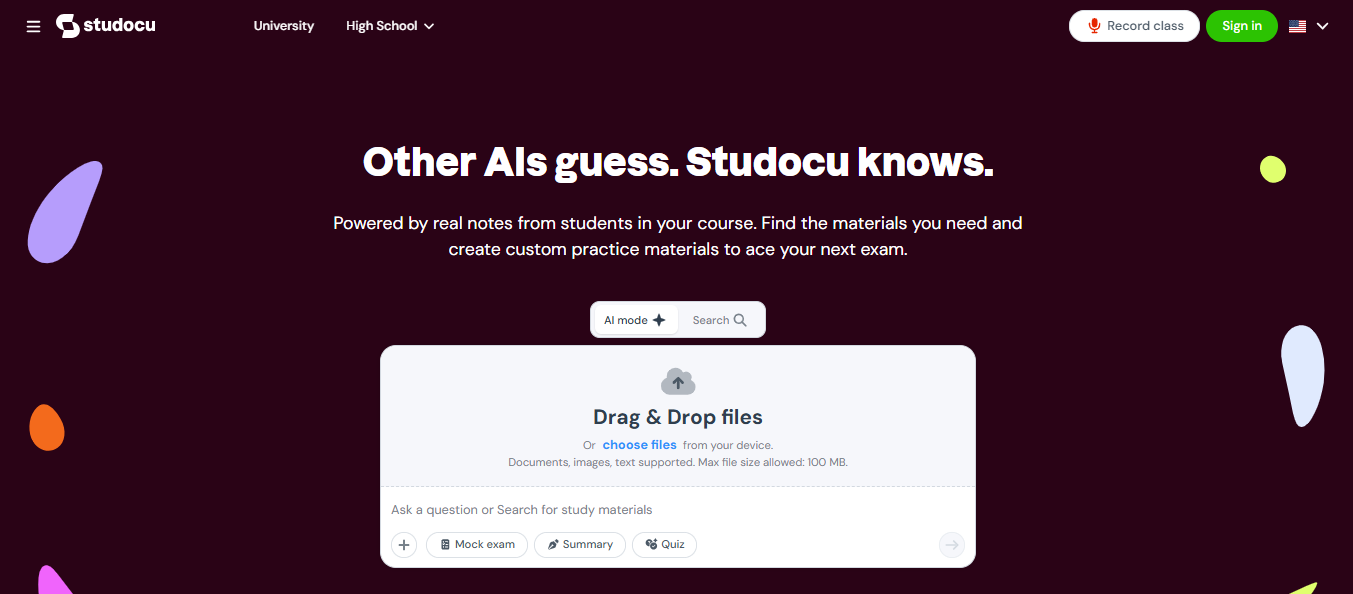
Verdict: Studocu is the best choice for students who want to grasp a textbook on the go and create study materials.
One easy way a long chapter can fail: you lose the thread. The definition is hard to understand so the author shifts to an example and by the end of the page the original point is gone. Studocu keeps reading active as its tools can create short summaries of documents and recordings, provide explanations for when a concept is unclear, and generate follow-up questions from the material.
Its library also gives students access to more than 50 million resources uploaded by students who took similar courses, which can be an alternative explanation when a textbook feels too dense.
What makes it stand out:
- Upload and Study Documents: Within Studocu AI, students can upload textbook PDFs, chapter scans, slides, handwritten notes, and other course materials to build a study project. Features such as AI Summaries, Study Assistant, AI-generated quizzes and mock exams help break down dense chapters, clarify difficult passages, and check recall after reading. This makes it easier to move from understanding a textbook section to actively revising it.
- AI Notes and Summaries: Upload a chapter, PDF, lecture slide deck or notes and get a clearer overview of the important points. This is handy before reading a difficult chapter, after you have finished a chapter, or before a quick revision session.
- Ask AI / Study Assistant: Ask specific questions about a confusing paragraph, a definition or the relationship between two concepts. The Study Assistant from Studocu operates inside the materials uploaded or a project, helping you stay connected to the text you’re actually studying.
- Take notes and annotate: Highlight important passages and ask for an explanation or example without interrupting the flow of reading. This turns passive highlighting into a reason to pause, interpret and connect ideas.
- AI quizzes and flashcards: Use these after reading a section. Questions that ask you to recall show whether you really understood the page or simply memorized the wording.
How does this help you remember more?
The advantage with Studocu is the sequence: Preview with an AI summary, read the original chapter. Annotate unclear areas, ask questions in context, listen back to difficult sections and Test recall using quizzes and mock exams.
That’s important because readers remember things better when they pull out an idea and explain it over and over, versus just reading it again.
- Best for: Students needing a one-stop platform to read, clarify, annotate, summarize and revisit textbook content.
- Watch out for: AI summaries can lose nuance; treat them as a map of the chapter. Cross-reference definitions, evidence, formulas, and exceptions with the source text.
2. Speechify: Best for Audio-Based Textbook Reading
Verdict: Speechify is a good companion for students who learn better with spoken textbook content, or who want to squeeze in a second read of material into a packed schedule.
Speechify reads PDFs, EPUBs, documents, web pages and any other written content. The web reader allows you to listen to PDFs, Word documents, EPUBs and more.
Reading-retention strengths:
- Read a chapter of a textbook and follow the text with your eyes.
- Play a difficult paragraph without flipping pages.
- After reading and annotating a chapter, listen to the audio for a second exposure.
- You can adjust listening based on your speed and attention level.
- Do a recap session using low-focus times, such as your commute.
Best not to use text-to-speech to fly through chapters at top speed. Instead, listen to the section you just read, and stop to write a one-sentence explanation in your own words.
For example, after reading a section on biology, listen again and pause after each subheading. Ask: “What process is being described and what causes the next step to happen?” That simple act turns listening into active understanding.
- Best for: Those who are auditory learners or who need an easier way to re-read dense prose.
- Watch out for: Audio is not as useful for textbooks that are heavily visual. Keep the PDF open for graphs, diagrams, tables, equations.
3. Mindgrasp AI: PDF Summarizer for Long Textbooks
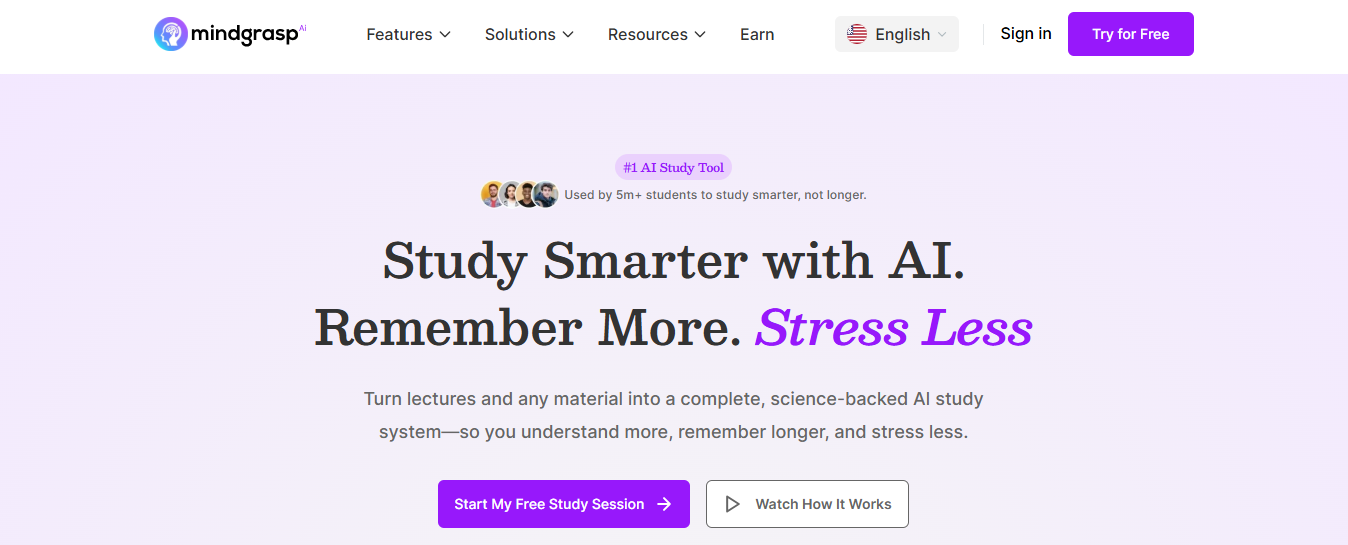
Verdict: Mindgrasp AI is especially useful if you have a big chapter in PDF format and need a structured way in before tackling the full text.
It can turn PDFs, notes, slides, lectures and videos into summaries, notes, quizzes, flashcards and study guides. Its PDF reader can answer questions about uploaded documents and can provide answers referenced to pages.
Reading-retention strengths:
- Get a concise chapter summary before reading the chapter
- Instead of a single chapter summary, ask for summaries of each section.
- Locate related pages and inquire about a passage.
- Turn a finished chapter into flashcards or quizzes.
- Use the generated notes as a checklist for what to return to in the original PDF.
Mindgrasp’s particular strength is format flexibility. Your typical course will include textbook pages, instructor slides, recordings and supplemental articles. Working in the same environment with these materials can help to recognize the recurring ideas.
- Best for: Students working with lengthy, digital-first textbooks, academic PDFs, or a combination of course materials.
- Watch out for: Don’t assume any summary is complete. Read the headings, examples and end-of-chapter questions to decide what you can skip.
4. Notion AI: Best for Building a Personal Reading System
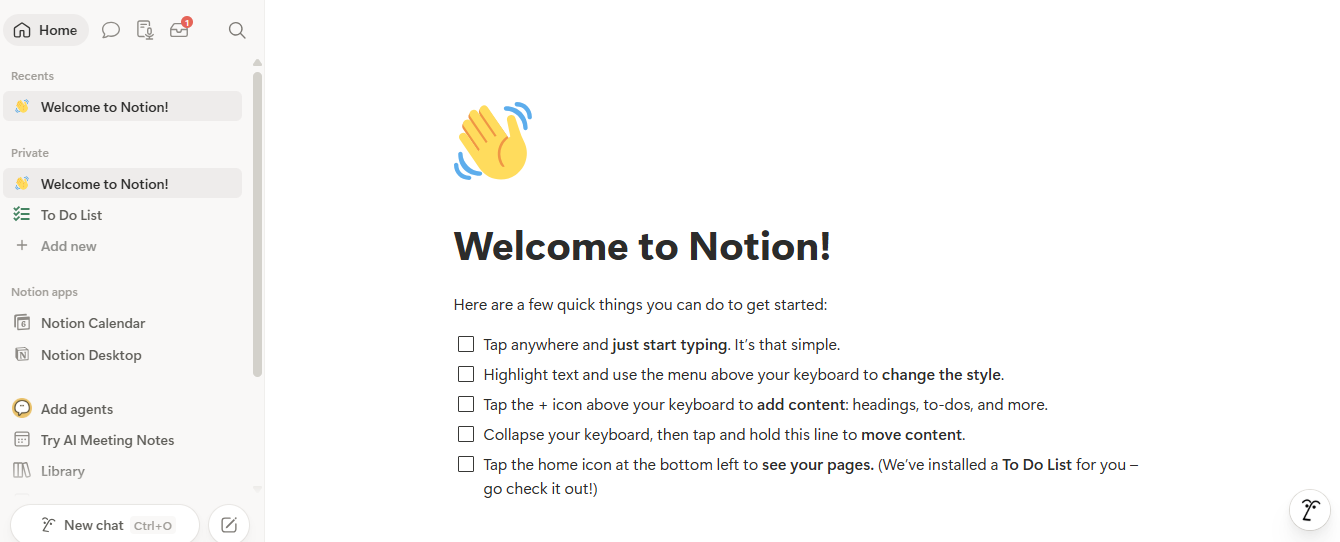
Verdict: Notion AI is best when you want to turn textbook reading into a growing, searchable knowledge base instead of a pile of disconnected notes.
You can select text on a Notion page and ask AI, or use an AI block to break down page content and extract insights. PDFs uploaded to Notion workspaces are searchable as well.
Reading-retention strengths:
- Create a page for each chapter in a uniform format.
- After you finish your own notes, get a short recap AI generated recap.
- Request a comparison between the concepts already stored on the page.
- Paragraphs can be turned into simple explanations or question prompts.
- Link to chapter recap from the lecture notes, assignments + revision plans.
A practical template is simple: You can add the chapter title, 5 key ideas, 3 confusing points, 2 examples and 5 recall questions. Use AI to help structure or polish that page, but write the answers yourself first.
That last step is important as your own words will reveal gaps in your understanding much better than copied notes.
- Best for: Organised students who want all their textbook annotations, class notes and chapter summaries in a single reusable workspace.
- Watch out for: Notion AI is a powerful organizer, but it doesn’t automatically make information memorable. Include review dates and recall prompts on your pages.
5. Brainscape: Best for Remembering What You Read Later
Verdict: Brainscape is a good last step when you get the chapter and need the content to stay in your head.
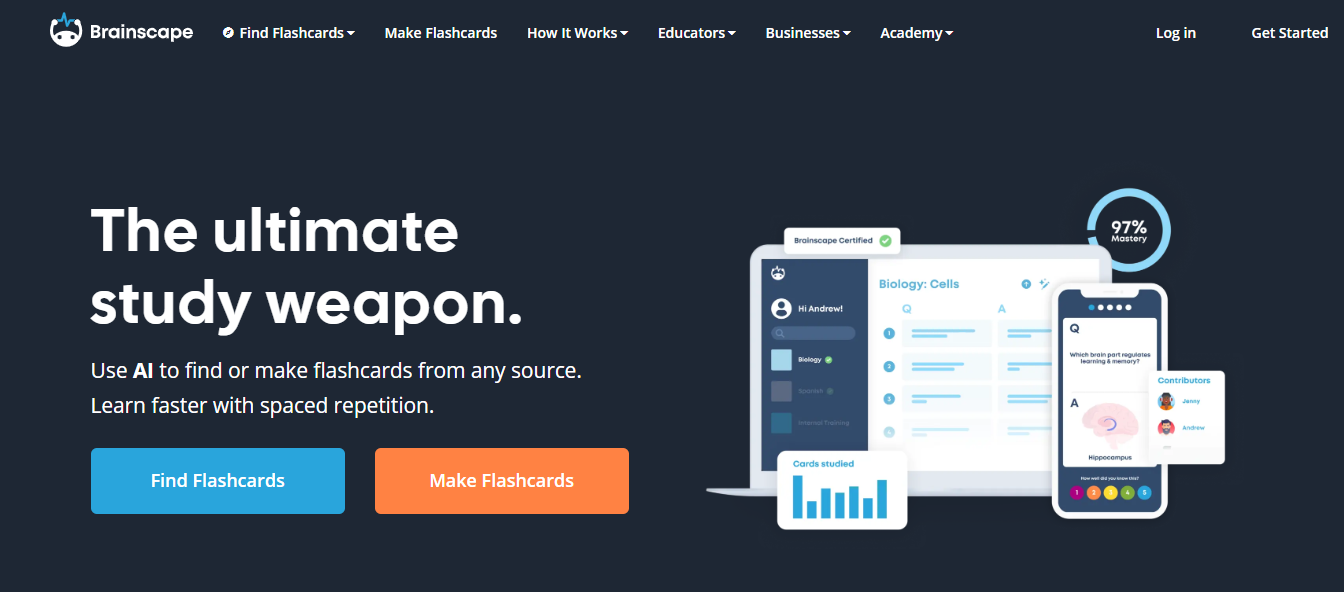
Brainscape has adaptive flashcards, with its Confidence-Based Repetition. You rate your confidence in knowing an answer, and lower confidence cards appear more often, helping you focus review on weak material.
Reading-retention strengths
- Turn chapter headings and definitions into quick question-and-answer cards.
- Rate the confidence honestly so that you can focus on weak concepts.
- Instead of cramming information once, review it over time.
- Create AI-assisted cards from notes or source material.
- Look at a prompt, answer it from memory, and then check your answer.
Brainscape is not a textbook reader or annotator; its worth begins after comprehension. It’s the memory layer for insights you already pulled from the chapter.
- Best for: Subjects that are vocabulary, definition or process heavy, where the main problem is forgetting details.
- Watch out for: Avoid creating overly broad cards like: “Explain chapter 4” is weak; “What are the three conditions required for X?” is much easier to test honestly.
A Better AI Reading Workflow
The best outcomes are when comprehension and recall are combined, not when AI is asked to replace reading.
- Check out the chapter with Studocu or Mindgrasp AI to get a sense of what the main points are.
- Read the original carefully again, marking any terms and claims you cannot explain.
- Explain those points in relation to your material using Studocu’s Study Assistant.
- Use Speechify for a second pass through heavy prose.
- Save your brief chapter summary in Notion AI.
- Create a small set of Brainscape cards for any terms, processes, or distinctions you need to retain.
Conclusion
Learning how to read textbooks is no longer about willpower and endless highlighting. By incorporating tools like Studocu into your routine, you can make sure that every minute you spend reading is a minute well spent. Grab the opportunity given by these AI developments today, and completely change the way you understand and memorize data.
Frequently Asked Questions
Q: Can AI tools replace reading a textbook?
A: No, they can reduce friction and help focus attention, but the summaries might miss qualifications, examples, diagrams or arguments that matter. Read the source while you are assessing or applying the material.
Q: Which tool is best for difficult textbook chapters?
A: Studocu is the best all-round option because it offers summaries, contextual questions, audio, annotation and recall tools within one reading workflow.
Q: How should I use AI summaries without learning less?
A: Read the summary first as a preview, then read the original section. Then close both and write or say the key idea from memory. Finally, review what you missed.
Q: Are flashcards useful for reading comprehension?
A: Yes, when cards test relationships, causes, comparisons and explanations, not isolated definitions. Brainscape uses a confidence-based repetition system, showing you the cards you struggle with more often.