

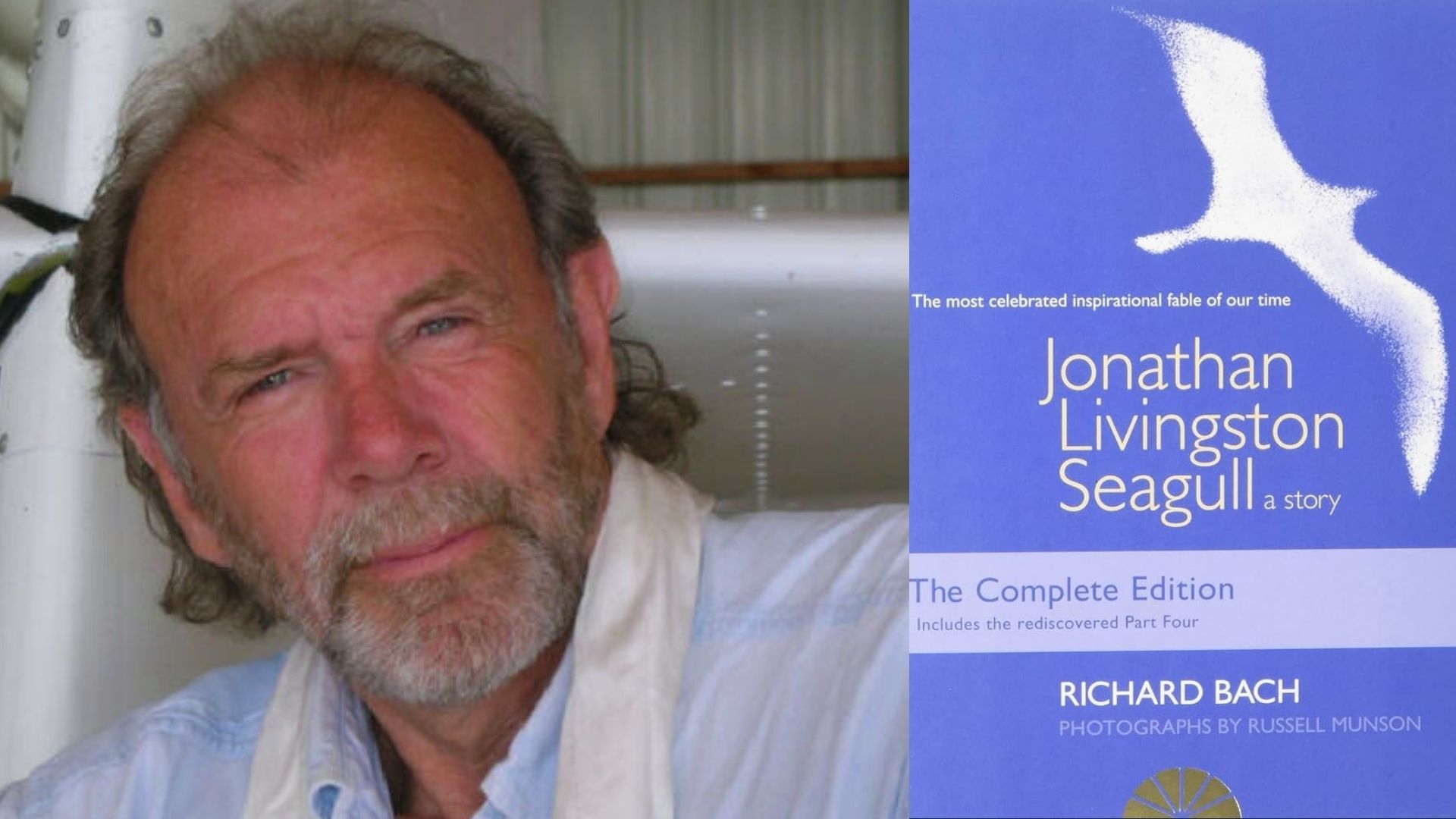
Looking for a clear Jonathan Livingston Seagull summary? You are in the right place. Richard Bach’s slim but powerful novella does not announce its depth upfront.
It arrives quietly, wearing the shape of a fable, and lingers in your thinking long after you have closed it.
I read it in a single sitting and found myself returning to its ideas for days, turning over questions about ambition, freedom, and purpose.
In this post, I will walk you through the plot, key themes, and characters.
Let us get into it.
Synopsis of Jonathan Livingston Seagull

The story follows Jonathan Livingston Seagull, a young seagull obsessed with flying as a form of mastery rather than a means of finding food.
His flock grows impatient and the Council of Elders exiles him to the Far Cliffs. Rather than breaking him, exile frees him.
Alone, he pushes beyond every limit he once assumed was fixed, learning that barriers are mental rather than physical.
He eventually reaches a higher plane, meets teachers named Sullivan and Chiang, and gains a deeper understanding of existence.
He then returns to his original flock to pass on everything he has learned.
Themes Discussed in Jonathan Livingston Seagull
A focused exploration of individual freedom, the cost of nonconformity, and the idea that genuine growth is always a spiritual act as much as a physical one.
The Pursuit of Excellence Over Conformity
The novella argues that pursuing something beyond what your community expects is not selfishness but integrity.
Jonathan cannot stop doing what he loves, even when the social cost is high. The story insists that this kind of devotion is its own form of honesty.
Freedom as a Spiritual Condition
Bach frames flying as a metaphor for the soul’s desire to move beyond limitation. Freedom, the novella suggests, is not a place you arrive at but a way of understanding yourself.
Teaching and the Responsibility That Comes With Knowledge
Once Jonathan reaches a higher awareness, he chooses to return to the flock and share what he has learned.
Growth that stays private is incomplete. The point of becoming something is to offer it back.
Character Analysis
Through a seagull who refuses to stop flying and the teachers who shape him, the story maps what it costs and what it means to grow beyond the world you were given.
Jonathan Livingston Seagull
Jonathan refuses to give up on what matters to him even when everyone insists it is pointless. He is not arrogant, simply unwilling to fit a space that was never built for him.
His stubbornness reads less like defiance and more like fidelity.
Sullivan
Sullivan is the first teacher Jonathan meets after exile. Warm and patient, he helps Jonathan understand that his instincts were right all along. He affirms rather than instructs.
Chiang
Chiang is the elder who takes Jonathan’s education into spiritual territory, teaching him that thought and location are not as separate as they appear.
His brief lessons shift the entire direction of the story.
Fletcher Lynd Seagull
Fletcher is the student Jonathan mentors after returning to the flock.
Talented and passionate, he mirrors Jonathan’s own past and carries the story into its final message about passing knowledge from one generation to the next.
Writing Style and Narrative Voice
With spare, clean prose and a structure that moves swiftly from fable to philosophy, the novella creates a quiet intensity that is rare for a book of its length.
Bach’s Approach
Bach writes in a deliberately stripped back style. The prose has little ornamentation, and dialogue is clean and often aphoristic.
The ideas carry the full weight of the reading experience without elaborate description or narrative complexity. The novella does not feel thin.
It feels concentrated and purposeful, sitting somewhere between parable and philosophy, which is exactly where Bach wants it.
Atmosphere and Imagery
The physical world of the story, the cliffs, the open sky, the wide water, is rendered in broad strokes rather than fine detail.
Bach is not interested in creating a richly textured natural world. He wants the sky to feel like freedom and the flock to feel like limitation, and both impressions land clearly and consistently throughout.
Critical Reception
Jonathan Livingston Seagull was published in 1970 after being rejected by a large number of publishers.
It sold slowly at first and then became one of the best-selling books of the 1970s, spending 38 weeks at number one on the New York Times bestseller list. By some estimates it has sold over 44 million copies worldwide.
What makes this reception remarkable is that the book arrived with no major literary backing and built its audience almost entirely through word of mouth, reader to reader, across a decade that was hungry for exactly the kind of spiritual questioning it offered.
Notable Reviews and Ratings
Goodreads: 3.86 out of 5 stars based on over 500,000 ratings
Amazon: 4.6 out of 5 stars across tens of thousands of reviews
Awards: The 1973 film adaptation earned Neil Diamond a Golden Globe Award for Best Original Score; the novella itself became a cultural phenomenon and one of the best-selling books of the 1970s, spending 38 weeks at number one on the New York Times bestseller list
The Movie Adaptation

Jonathan Livingston Seagull was adapted into a feature film in 1973 by Paramount Pictures, directed by Hall Bartlett.
Rather than using animation or live actors, the film used real seagull footage paired with voice acting, featuring James Franciscus as Jonathan and Hal Holbrook as Chiang.
Neil Diamond composed the soundtrack, which earned him a Golden Globe Award for Best Original Score.
Critical reception was mixed, and Richard Bach was so dissatisfied with the final cut that he pursued legal action, resulting in a restored version released in 2013.
Despite divided reviews, the film brought the story to a much wider audience.
About the Author Richard Bach

Richard Bach is an American writer and former military aviator. His background as a pilot shaped the central imagery of Jonathan Livingston Seagull in clear and direct ways.
He has spoken about receiving the story almost as a vision, hearing a voice describe a seagull who wanted to fly.
He published several other books, including Illusions The Adventures of a Reluctant Messiah in 1977, which returned to similar ideas about spiritual freedom and the constructed nature of limitation.
He remains most closely associated with Jonathan Livingston Seagull, who introduced his thinking to a generation of readers looking for something that took both personal freedom and inner life seriously.
Conclusion
I hope this Jonathan Livingston Seagull summary gives you a clear sense of what the book contains and why it has stayed in circulation for more than fifty years.
It works on two levels, readable as a simple fable about a seagull who loves to fly, and serious as an inquiry into what it means to live with full commitment to your own nature.
It does not ask much of your time but asks quite a lot of your thinking. If that sounds right for you, it is worth reading.
Frequently Asked Questions
Is Jonathan Livingston Seagull Based on a True Story?
No, it is fiction. Bach has said the idea came to him almost like an auditory vision, drawing on his personal passion for flying and philosophical interest in self-transcendence.
How Long Does It Take to Read?
The novella is approximately 112 pages. Most readers finish it in one to two hours across a single sitting.
What Age is Appropriate for Reading It?
The book suits readers aged 12 and up. Its themes are philosophical rather than dark, and the language is simple enough for younger readers.
Did It Win Any Literary Awards?
It did not win major literary prizes, but it became a cultural phenomenon and one of the best-selling novels of the 1970s with lasting readership across generations.
Is There a Film Adaptation?
Yes. A film was released in 1973 by Paramount Pictures, using real seagull footage with voice acting and a Neil Diamond soundtrack. It received mixed reviews but reached a significantly wider audience.