

M.L. Rio's debut novel pulls you into its world from the very first page and does not release you until long after you have closed it.
I read it across two sittings and found myself turning its questions over for days in the quiet that followed, thinking about performance, identity, and what truly happens when the roles we play begin to erase the people we actually are at our core.
It is the kind of book that lingers in your mind past the final page.
Let us get into it.
Synopsis of If We Were Villains

Oliver Marks walks out of prison after ten years, finally ready to tell the truth. Detective Colborne, who originally investigated the case, meets him on release day and asks for the full story.
What follows is Oliver's account of his final year at Dellecher Classical Conservatory, an elite college where seven Shakespeare students lived and studied together.
After years of playing the same roles, the line between character and self had nearly disappeared for all of them.
When Richard, the group's most volatile member, is found dead on the lake, the truth begins pulling every relationship in the group apart.
Themes Discussed in If We Were Villains
The novel operates on several levels at once, using Shakespeare's plays not as decoration but as a structural and emotional framework for everything that follows.
Performance and the Loss of Self
The most persistent question Rio raises is where performance ends and identity begins. Oliver is always the moral witness, James the romantic lead, Richard the villain.
When their lives off stage follow those same patterns, the novel asks whether the roles shaped them or simply revealed something already there.
Jealousy, Rivalry, and the Cost of Ambition
Dellecher selects only the most talented students, which means everyone inside it is equally brilliant and equally desperate.
The novel treats jealousy not as a character flaw but as a structural condition of the environment. When recognition is everything, even genuine friendships become sites of competition.
Loyalty and Complicity
One of the book's most absorbing threads is the question of what loyalty actually costs. Oliver knows more than he has said for ten years, and the other surviving members have carried their silence alongside him.
The novel is deeply interested in the difference between protecting someone and covering for them, and Rio does not pretend those questions resolve cleanly.
Character Analysis
Through scholars, performers, and a detective trying to reconstruct a decade-old truth, the novel traces how identity and moral clarity collapse when the pressure is sustained long enough.
Oliver Marks
Oliver is the novel's narrator and its most deliberately passive protagonist. He has been cast as the observer his entire time at Dellecher, and that role has become his default position in life.
Rio uses his retrospective voice to create a sustained dramatic irony that keeps the reader slightly ahead and slightly behind the truth at the same time.
James Farrow
James is the group's golden center, the one everyone loves most and the one whose distress triggers the events of the final year. He is not simply a romantic lead.
His decline across the novel is handled with genuine restraint, and he remains the character you most want to save and understand least until the very end.
Richard Stirling
Richard is the novel's most combustible presence. He is arrogant, aggressive, and almost impossibly difficult to like, and yet Rio is careful to show how the system at Dellecher shaped him.
He has been cast as the villain so many times that cruelty has become his primary mode of engagement.
Filippa Whittaker
Filippa is perhaps the most quietly impressive character in the book. She is perceptive, self-contained, and carries a moral intelligence that operates independently of what the group needs her to feel.
Her choices in the final act carry the most weight precisely because she makes them with full awareness of what they cost.
Meredith Dardenne and Alexander Vass
Meredith and Alexander function as the group's more volatile emotional registers.
Meredith's connection to both James and Richard drives much of the conflict in the middle of the book, while Alexander's loyalty raises questions about what people will sacrifice to protect the group they have built their identity around.
Detective Colborne
Colborne exists in the novel's present timeline as a quiet but persistent force. He is not the detective of a conventional thriller, and what he wants from Oliver is not a conviction but an understanding.
His patience across the frame narrative gives the novel much of its elegiac quality.
Writing Style and Narrative Voice
Rio writes with the precision of someone who has lived inside Shakespeare's language her entire life.
Rio's Prose and Narrative Structure
Rio's prose is dense in the best sense. She writes with the cadence of someone deeply familiar with Shakespeare's language, and that influence shapes her sentences without making them feel forced.
The novel moves between Oliver's present-tense conversations with Colborne and his past-tense account of the final year.
Rio controls the emotional register of each timeline so precisely that the structure never becomes confusing.
The Role of Shakespeare in the Storytelling
The use of Shakespeare in this novel is not ornamental. Specific plays, specific lines, and specific casting choices all carry real narrative weight throughout the story.
Readers who know the plays will find additional layers in every chapter. Those who do not will still follow the emotional logic completely, which is a genuinely difficult balance to strike.
Critical Reception
If We Were Villains was published in April 2017 and has built one of the most devoted readerships in contemporary literary fiction.
It is frequently cited as a foundational text of the dark academia genre and has found new audiences steadily in the years since publication.
Reviewers praised its prose, its structural intelligence, and its willingness to sit inside moral ambiguity without flinching.
The comparison to Donna Tartt's The Secret History is made frequently and not without reason, though Rio's novel has its own distinct concerns and its own particular emotional texture.
Notable Reviews and Ratings
- Goodreads: 4.09 out of 5 stars based on over 500,000 ratings
- Amazon: 4.3 out of 5 stars across hundreds of thousands of reviews
- Awards: Frequently listed among the best dark academia novels published in the last decade, with consistent placement on reader-voted best-of lists since its release
My Personal Reading Experience
If We Were Villains was not the book I expected. I had anticipated a conventional mystery with clean reveals and a satisfying resolution.
What I found instead was a novel far more interested in how people lose themselves than in delivering a tidy verdict.
Oliver affected me most. Rio writes his passivity and his long silence with a quiet precision that makes the central argument feel completely earned.
This is a book about what we owe the people we love and what we owe the truth, and it does not pretend those are the same thing.
About the Author M.L. Rio
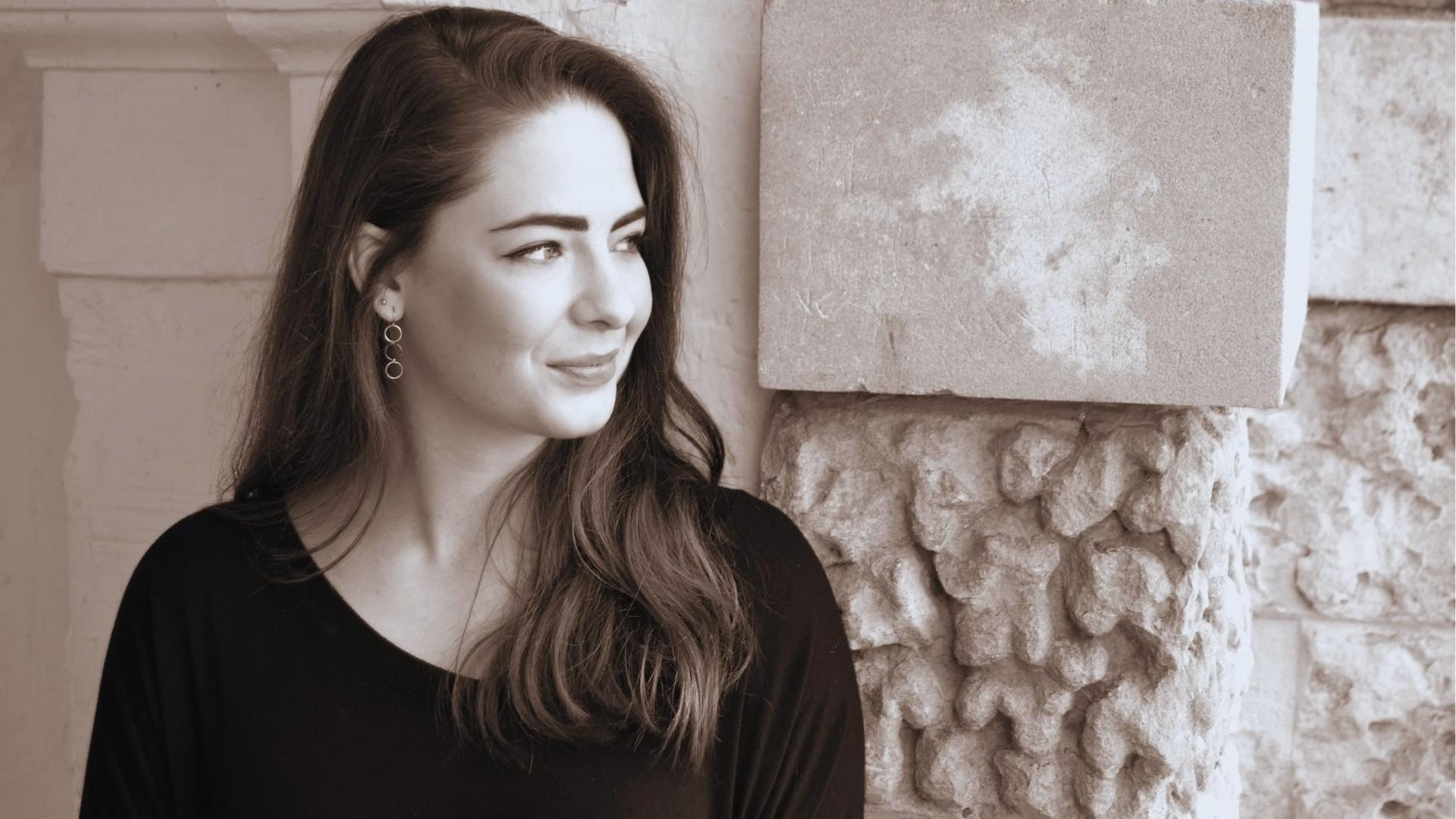
M.L. Rio is an American author and academic whose deep background in Shakespeare studies shapes every page of this novel.
Her familiarity with classical theater is not incidental; it is structural, informing the way characters speak, compete, and eventually break. If We Were Villains is her debut and remains her most recognized work to date.
Rio has spoken publicly about drawing on her own experience inside conservatory theater programs to ground the novel's portrait of a world where artistic ambition and ego become impossible to separate.
That firsthand knowledge gives the college setting a lived-in authenticity that purely imagined environments rarely achieve.
Conclusion
I hope this If We Were Villains summary gave you what you were looking for. This is a novel that operates on multiple levels at once, gripping as a mystery and serious in its treatment of identity, loyalty, and the cost of performance.
The characters are the reason it works. Rio has built a group where almost everyone has a coherent reason for being exactly who they are, and that coherence makes their unraveling feel inevitable rather than convenient.
If you are looking for something that takes both its world and its people seriously, this one belongs on your list.
Frequently Asked Questions
Is If We Were Villains Part of a Series?
No. It is a standalone novel. Rio has not published a sequel, and the story is complete as written.
How Long Does It Take to Read If We Were Villains?
The novel is approximately 320 pages. Most readers complete it in six to ten hours across two or three sittings.
What Age is Appropriate for Reading If We Were Villains?
The book suits adult readers aged 18 and up. It contains mature themes, substance use references, and significant emotional intensity throughout.
Is If We Were Villains Similar to The Secret History?
The comparison is widely made, as both are set in elite academic environments involving a student death. Readers who love one tend to love the other.
Who is the Main Character in If We Were Villains?
Oliver Marks is the central narrator. The story is told entirely from his perspective across two timelines.