


I never thought a wall of shelves could make me emotional.
Then I walked into a friend's home and saw floor to ceiling built in bookshelves running the full length of her living room. I stood there longer than I should have.
It wasn't just the books. It was how the whole room felt. Purposeful. Warm. Like someone actually lived there.
That visit sent me deep into researching every style, material, and layout possible. What I found was way more interesting than I expected. Here are 27 ideas worth looking at.
Why Floor to Ceiling Built in Bookshelves Are a Game-Changer
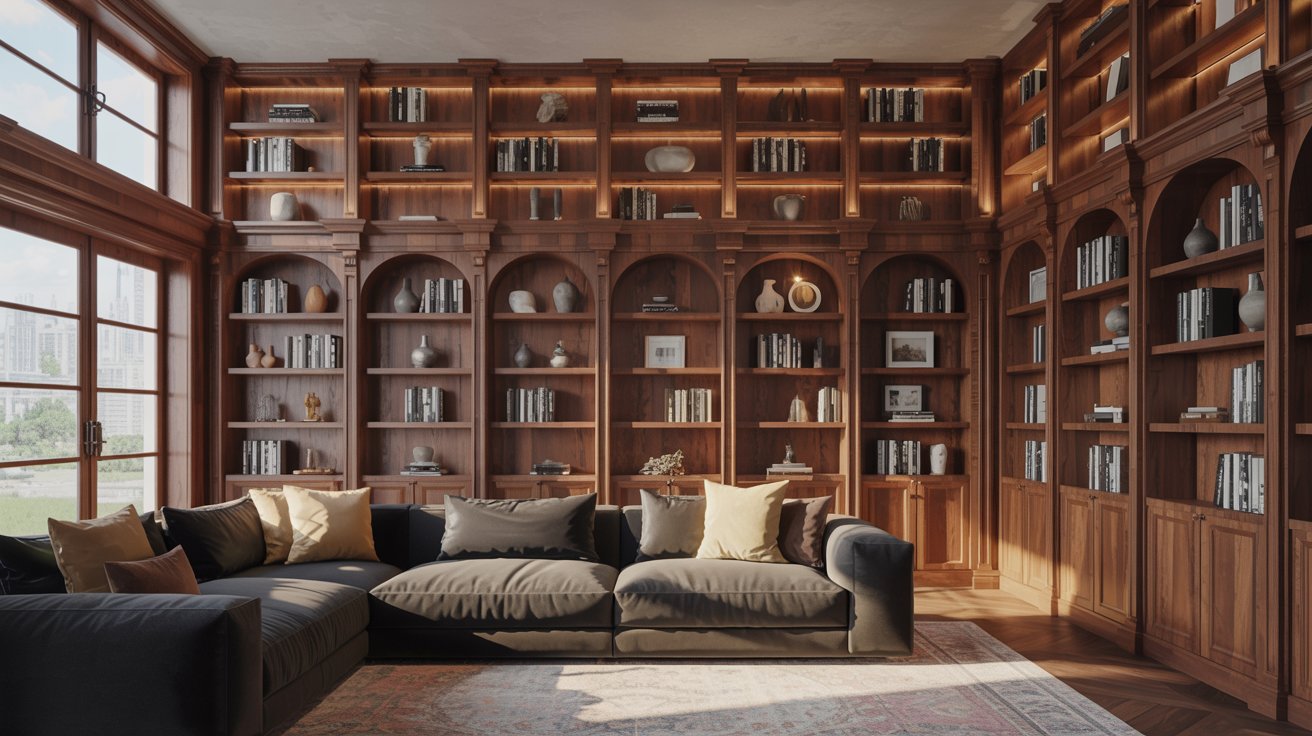
Most shelving stops halfway up the wall. That top half just sits there, doing nothing. Floor to ceiling built in bookshelves use every inch of vertical space you have, which is especially useful in smaller rooms.
They also make ceilings feel taller. It's a visual trick that actually works. A full-height shelf draws the eye upward, and suddenly the room feels bigger than it is.
Built-ins look intentional. Freestanding shelves can feel temporary, like they might move next week. Built-ins feel like the room was designed that way from the start.
They also add real value to a home. A well-built shelf wall isn't just pretty. It's a feature that buyers and guests notice right away.
27 Amazing Floor to Ceiling Built in Bookshelves Styles to Inspire Your Home
There's no single right way to do this. These 27 styles cover everything from minimal and modern to classic and dramatic. Find the one that fits your space and your personality.
1. Modern Minimalist White Bookshelves
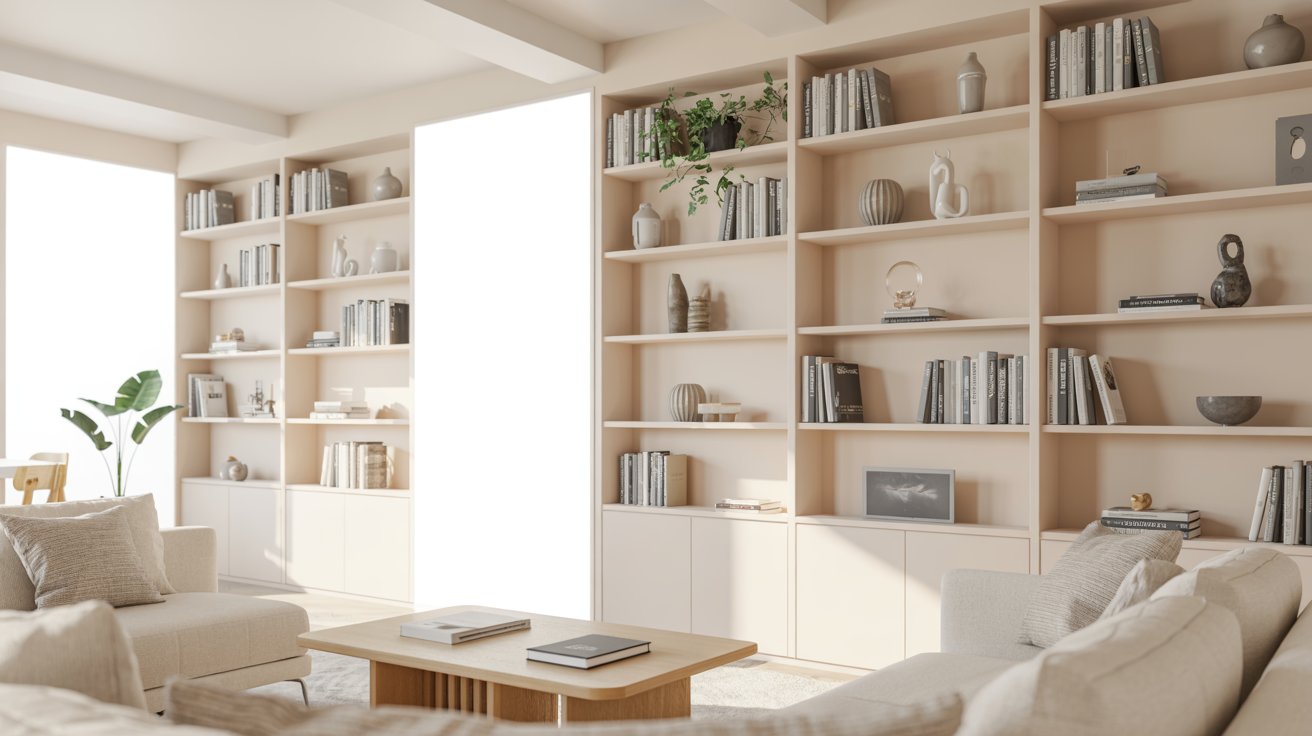
White built-ins keep things clean and open. The shelves blend into the walls, so your books and objects become the focal point.
This style works especially well in living rooms with neutral color schemes. Nothing competes for attention. Everything feels calm and organized.
Keep styling simple here. A few objects, some negative space, and neatly arranged books do all the work. Less is genuinely more with this look.
2. Classic Dark Wood Library Style
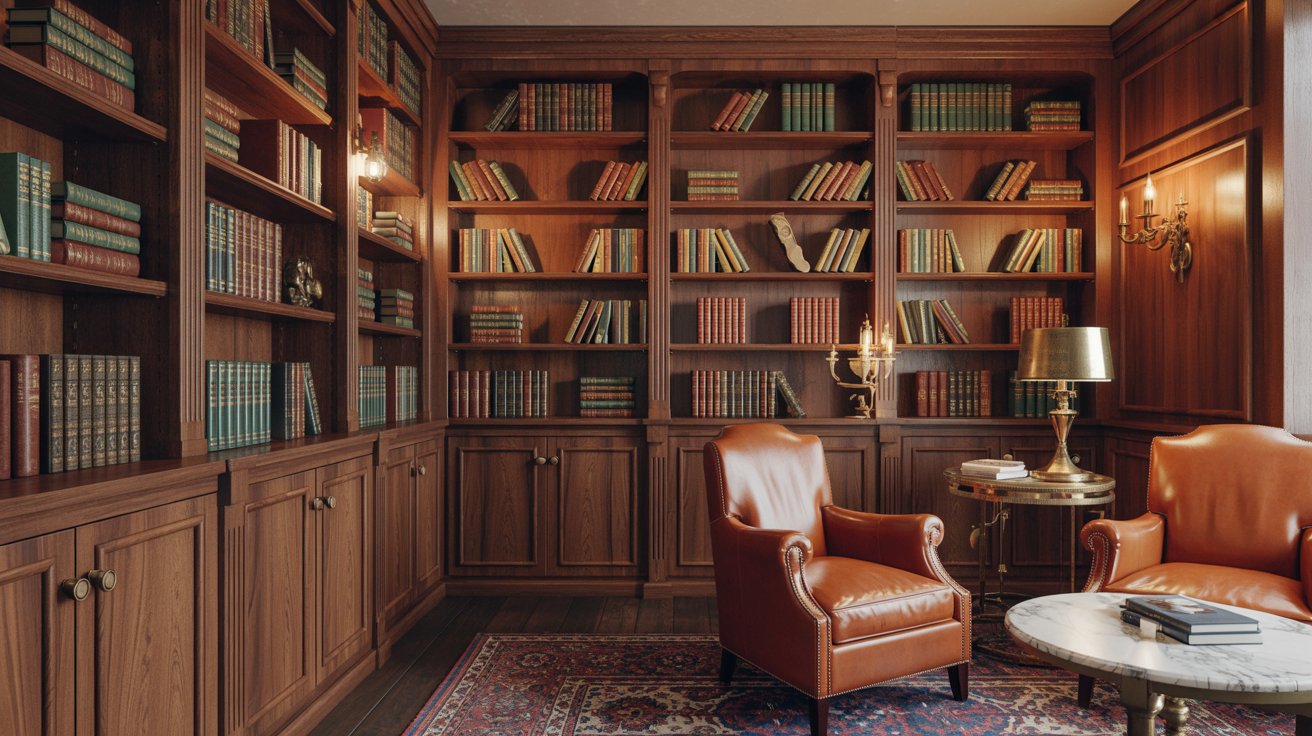
Dark wood shelving has a timeless quality to it. It brings warmth, weight, and a sense that the room has been lived in for years.
Think mahogany, walnut, or deep oak tones. Paired with leather furniture and warm lighting, the effect is immediately striking.
This style suits traditional homes, studies, and formal living rooms. It's one of the most recognizable looks in home library design.
3. Scandinavian Light Wood Design
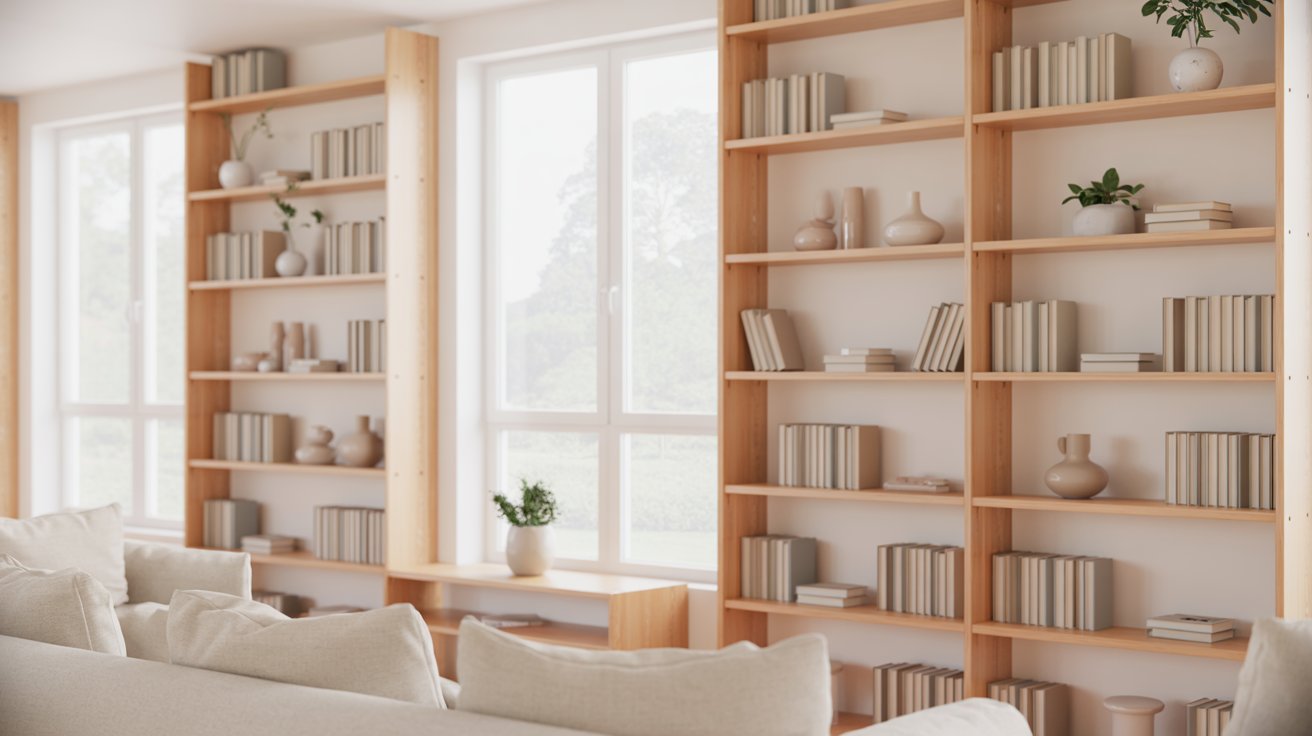
Light pine or birch shelving gives a room an airy, fresh quality. It works well in spaces with lots of natural light and simple furniture.
The Scandinavian approach keeps things functional. Clean lines, no ornate details, and a focus on practicality over decoration.
If your home leans toward bright and open, this style fits naturally. It doesn't overpower the room. It just quietly belongs there.
4. Industrial Metal Frame Shelving
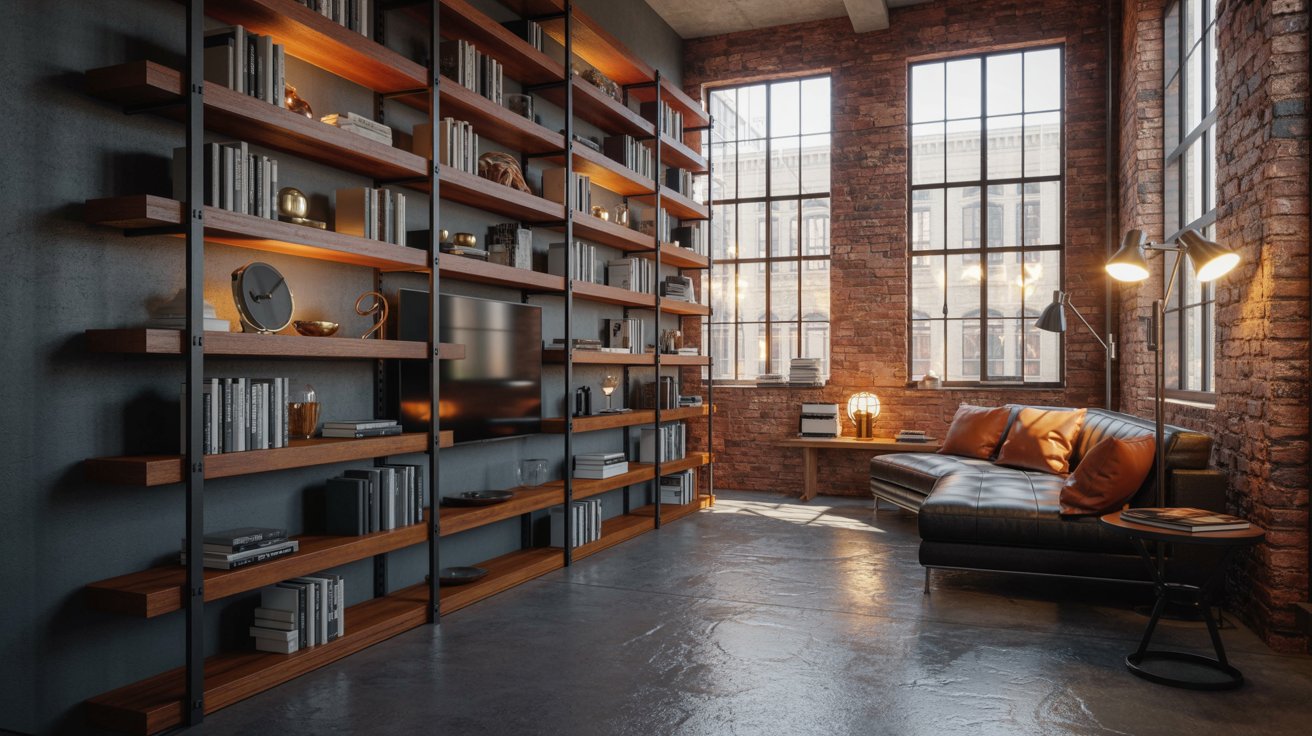
Metal frames with wooden planks create a raw, urban look. It's a style that works in loft spaces, converted buildings, or modern urban homes.
Reclaimed wood adds texture and character here. The combination of rough material with clean structure is what makes this style interesting.
If your home already has exposed brick or concrete, this shelving style ties everything together without trying too hard.
5. Built in Bookshelves with Ladder Access
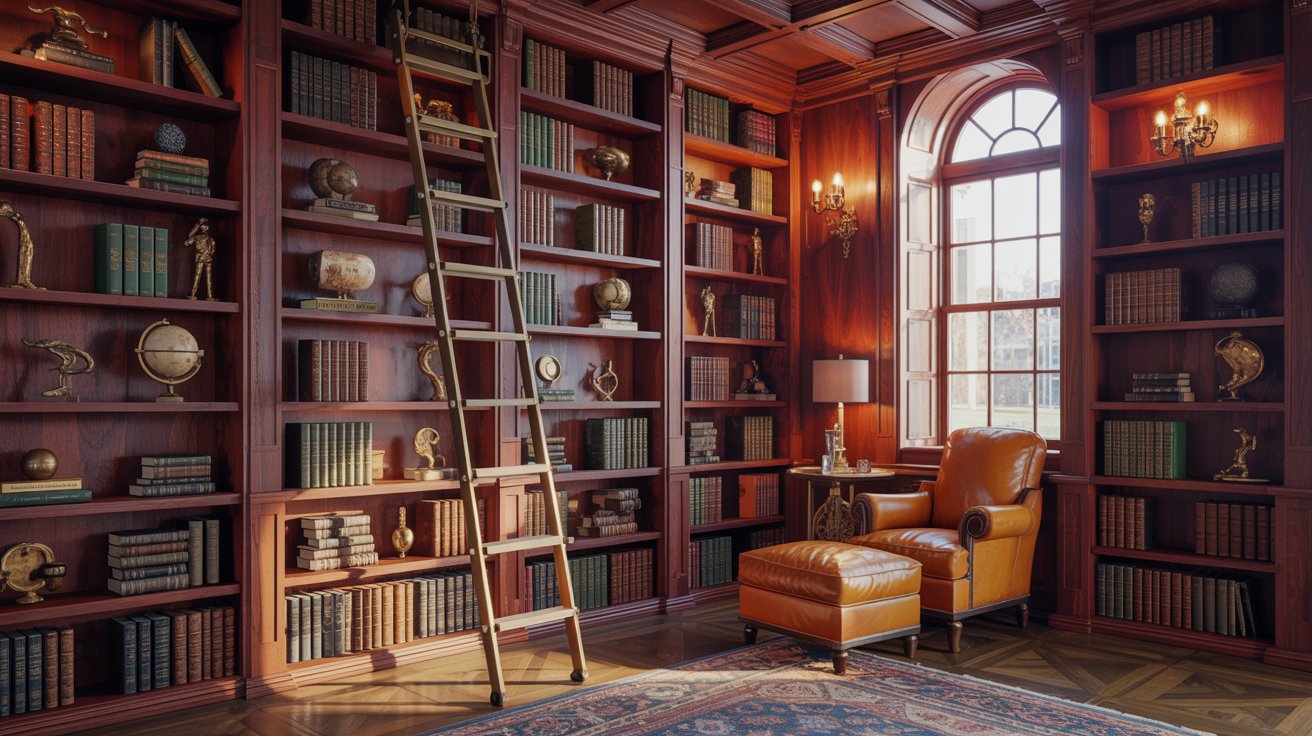
There's something genuinely appealing about a rolling library ladder. It adds a functional, old-world quality that also looks great.
This works best when shelves go high enough to need one. Ceilings of ten feet or more make this style really come into its own.
The ladder becomes part of the design, not just a tool. It signals that the shelves are meant to be used, not just admired.
6. Floor to Ceiling Glass Door Bookshelves
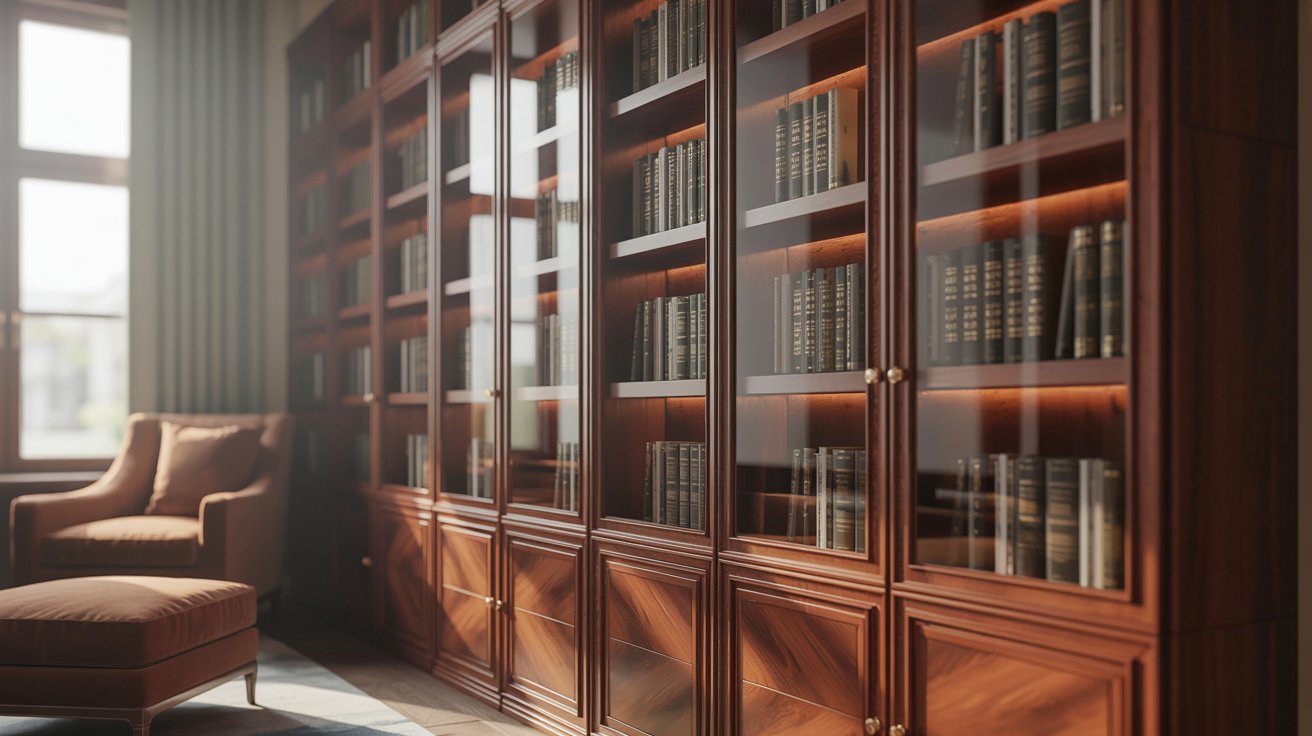
Glass-fronted shelves keep dust off your books while still letting you see everything inside. It's a practical choice that also looks polished.
This style suits formal rooms or spaces where you want books displayed but protected. It adds a layer of refinement to the overall look.
You can mix open and closed sections. Some shelves behind glass, others open. That balance adds visual interest while keeping things organized.
7. Floating Shelf Wall Integration
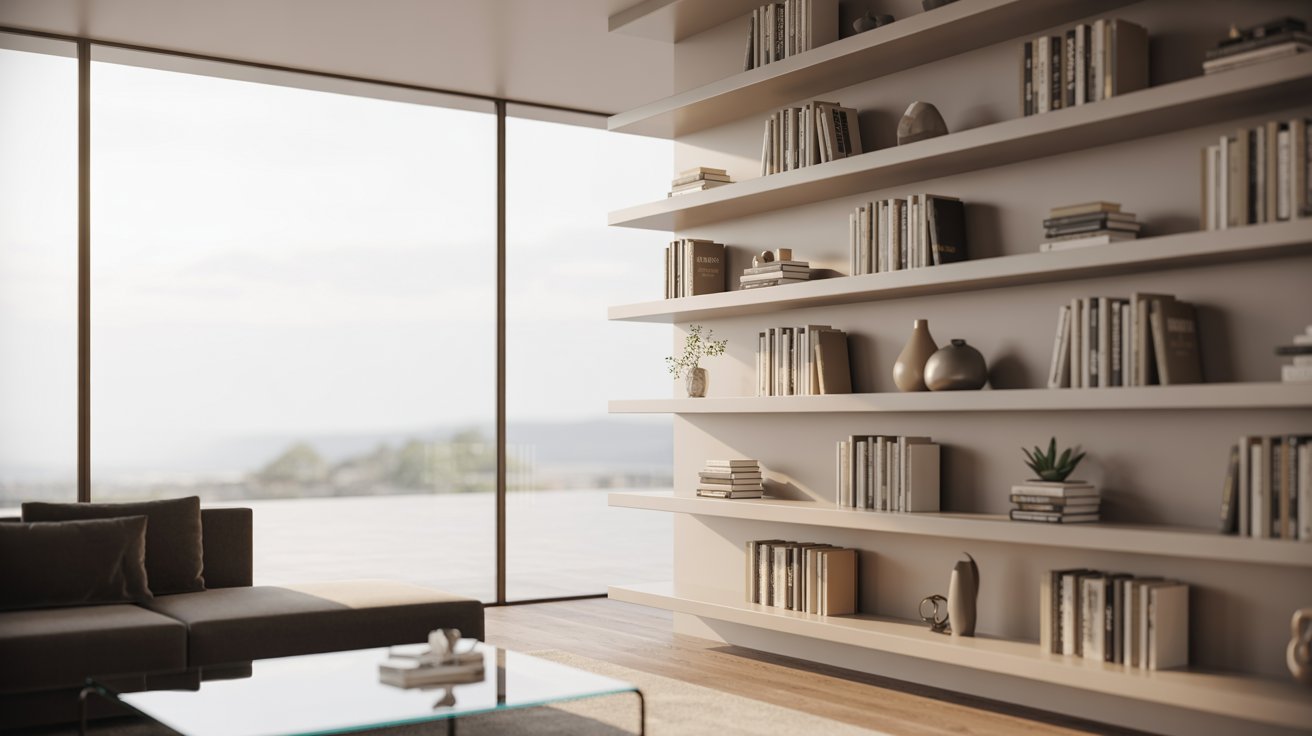
Floating shelves mounted directly into the wall create a seamless, built-in look without traditional framing. The brackets are hidden, so the shelves appear to grow out of the wall.
This approach works well for books and lightweight decor. It looks clean and modern without feeling heavy.
Spacing matters with this style. Shelves placed too close together look cramped. Give them room to breathe and the wall becomes a real design feature.
8. Fireplace Flanking Bookshelves
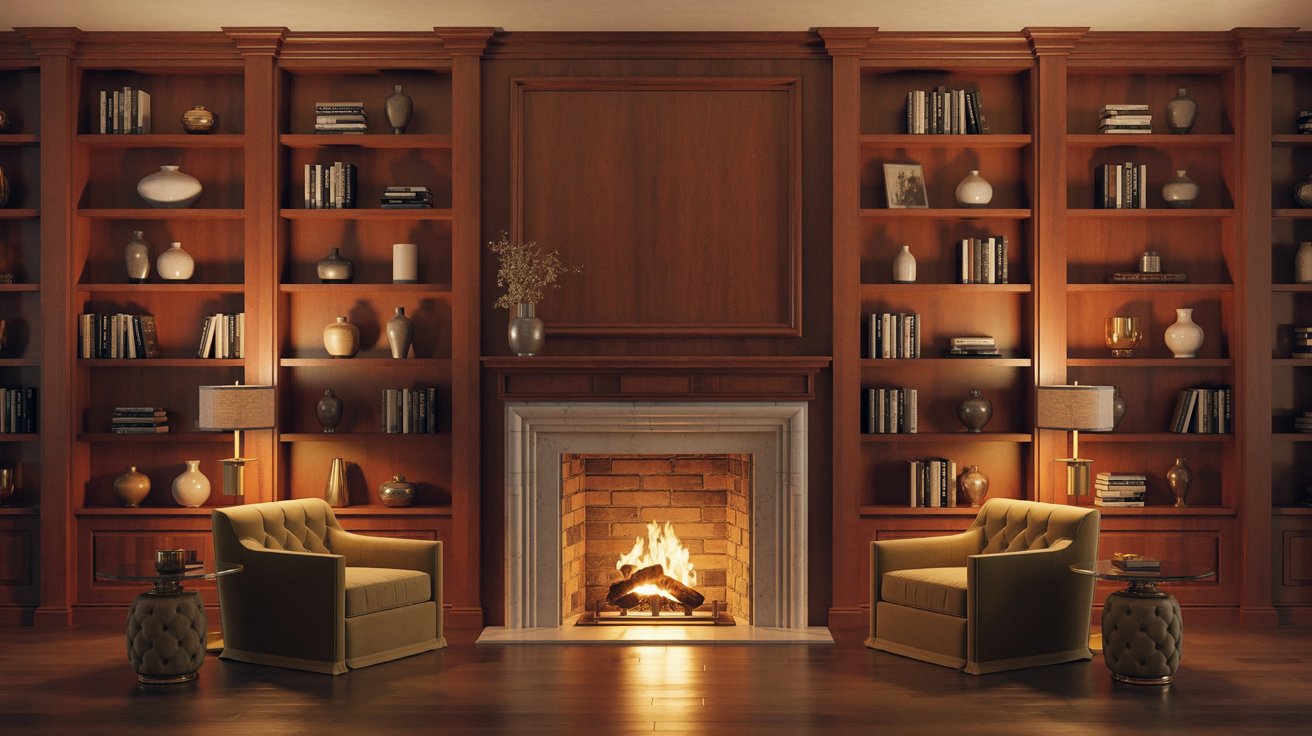
Shelves on either side of a fireplace is one of the most classic built-in configurations. The symmetry is satisfying, and the fireplace becomes a natural centerpiece.
This layout works in living rooms, studies, and even bedrooms with a fireplace feature. The shelves frame the fireplace without competing with it.
Match the shelf finish to your fireplace surround for a cohesive look. When they feel like they belong together, the whole wall works as one.
9. Reading Nook Integrated Bookshelves
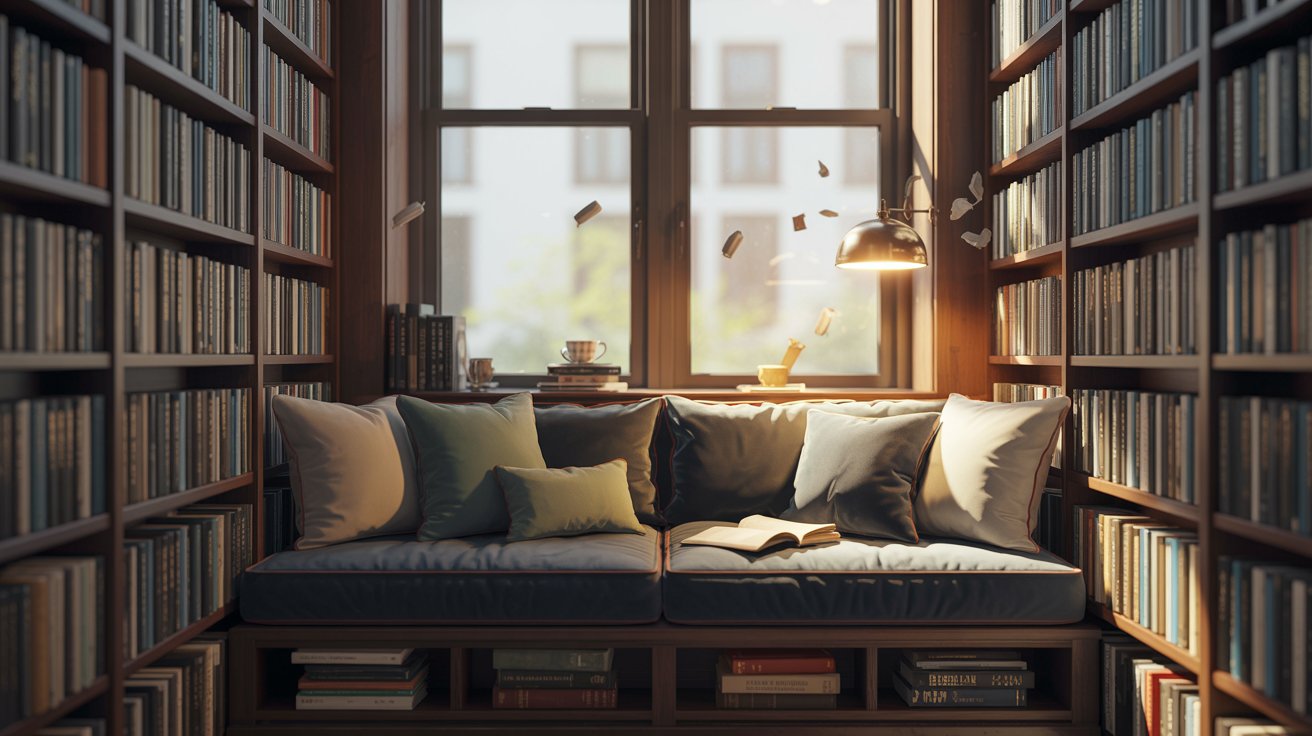
A built-in reading nook with shelves running floor to ceiling on either side is one of the most practical and inviting designs around. Books within arm's reach and a seat built right in.
This setup works well in alcoves, bay windows, or any recessed space. It turns an awkward spot into the best corner in the house.
Add a cushion, a small lamp, and some storage underneath the seat. It becomes a self-contained reading space that most guests immediately want to sit in.
10. Dark Academia Inspired Library Wall
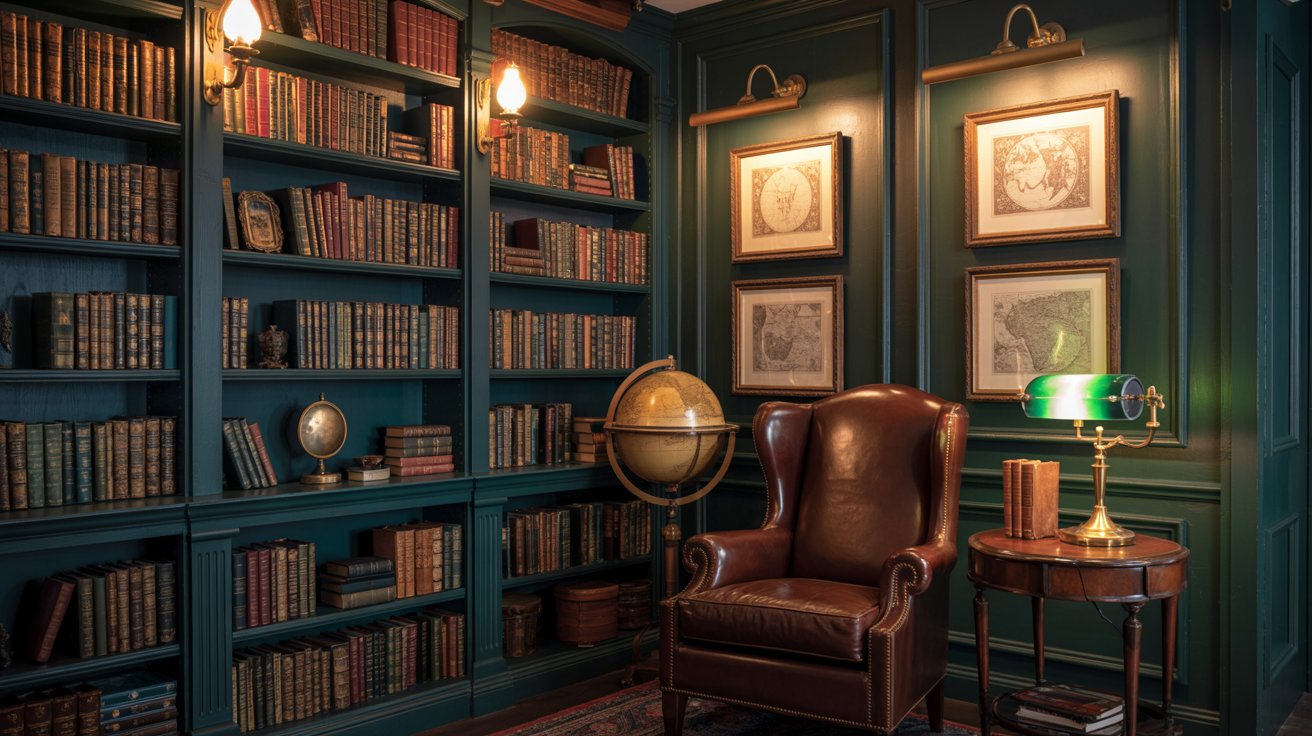
Deep greens, navy blues, and dark neutrals set the tone for this style. Combine them with antique books, vintage brass lighting, and rich wood tones.
This look draws from traditional university libraries. It feels scholarly, layered, and a little dramatic, in the best possible way.
Lean into the atmosphere with globe accents, old maps, or framed prints. The goal is a space that feels like it has history. Even if you just built it last week.
11. Color-Coded Bookshelf Design
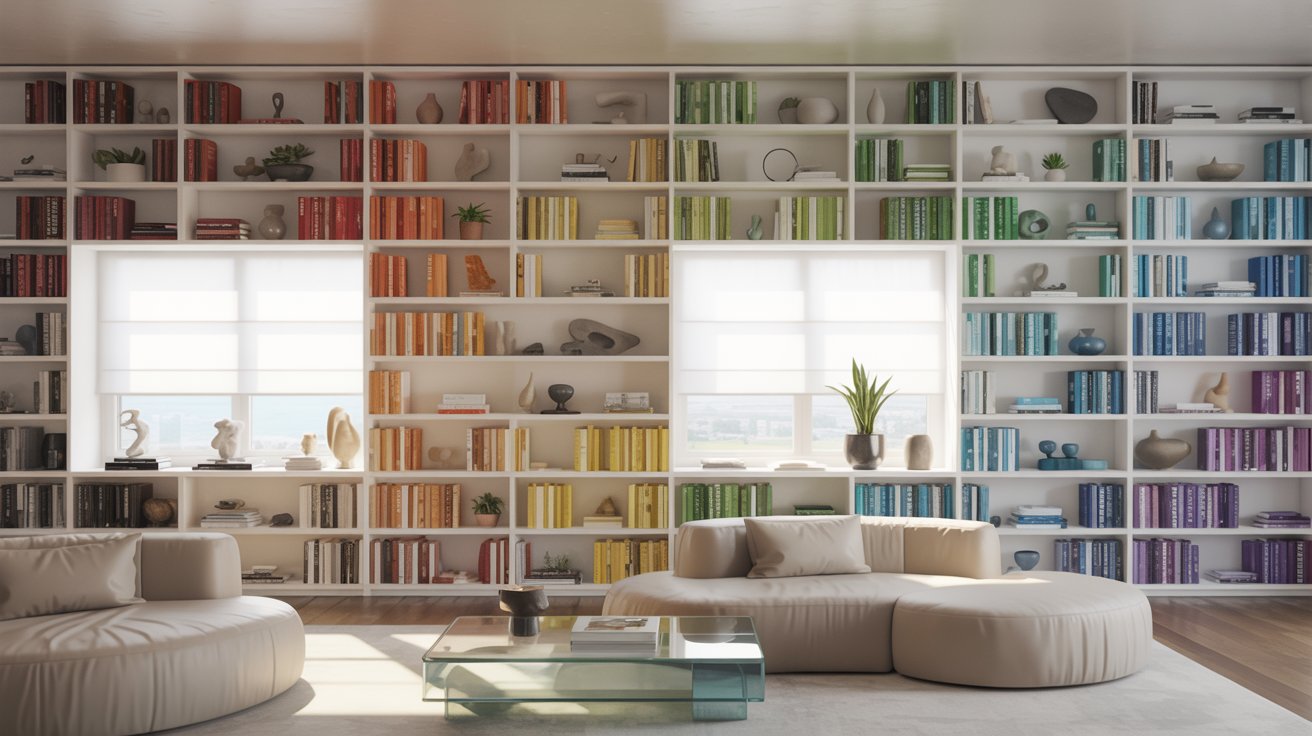
Organizing books by color is a simple idea with a big visual payoff. A rainbow gradient or tonal arrangement turns a shelf into something that looks almost curated.
This style is popular on social media for good reason. It photographs well and immediately shows that thought went into the setup.
The tradeoff is that finding a specific book gets harder. Most people who do this either know their collection well or keep a separate organizational system in their head.
12. Asymmetrical Modern Layout
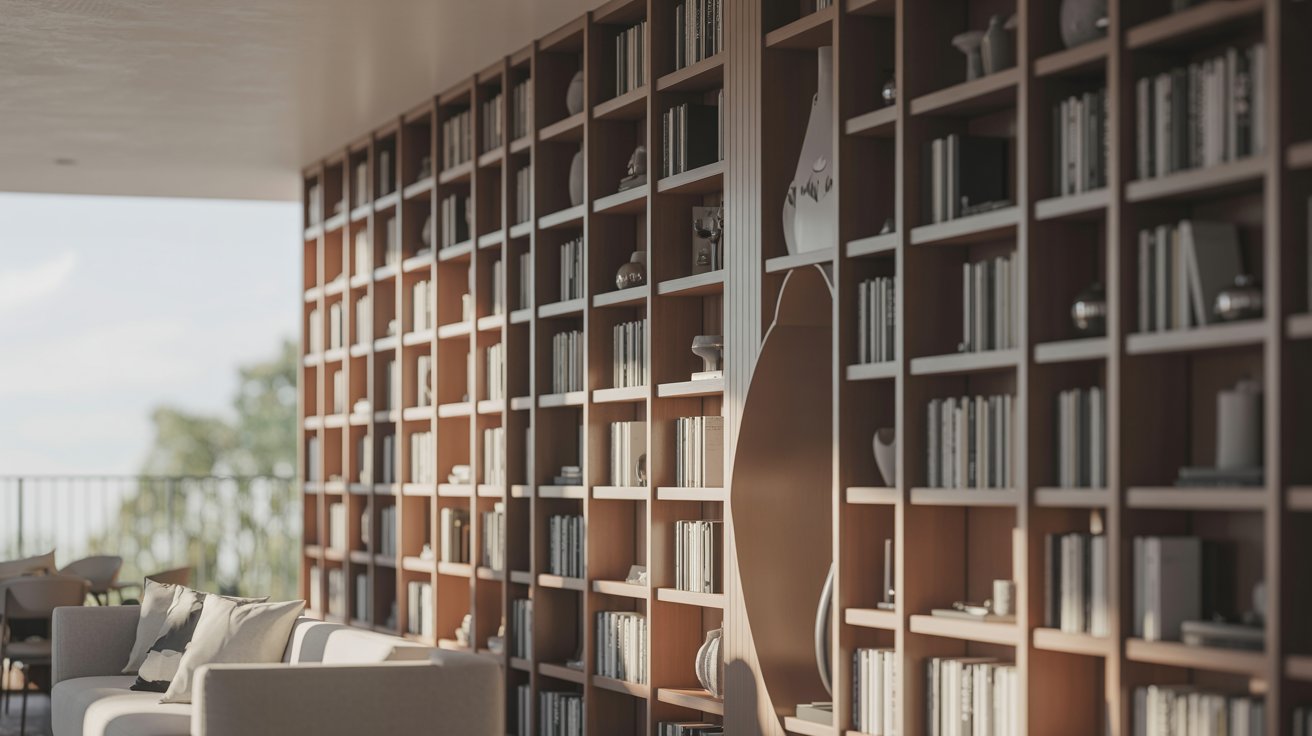
Not every shelf needs to be the same size or height. An asymmetrical layout breaks the usual grid pattern and creates something that feels more artistic.
Some sections taller, some shorter. Shelves at varying depths. Open cubbies next to full-length panels. The variation keeps the eye moving.
This style suits creative personalities and modern interiors. It's intentionally irregular, which is what makes it work.
13. Built in Bookshelves with Hidden Doors
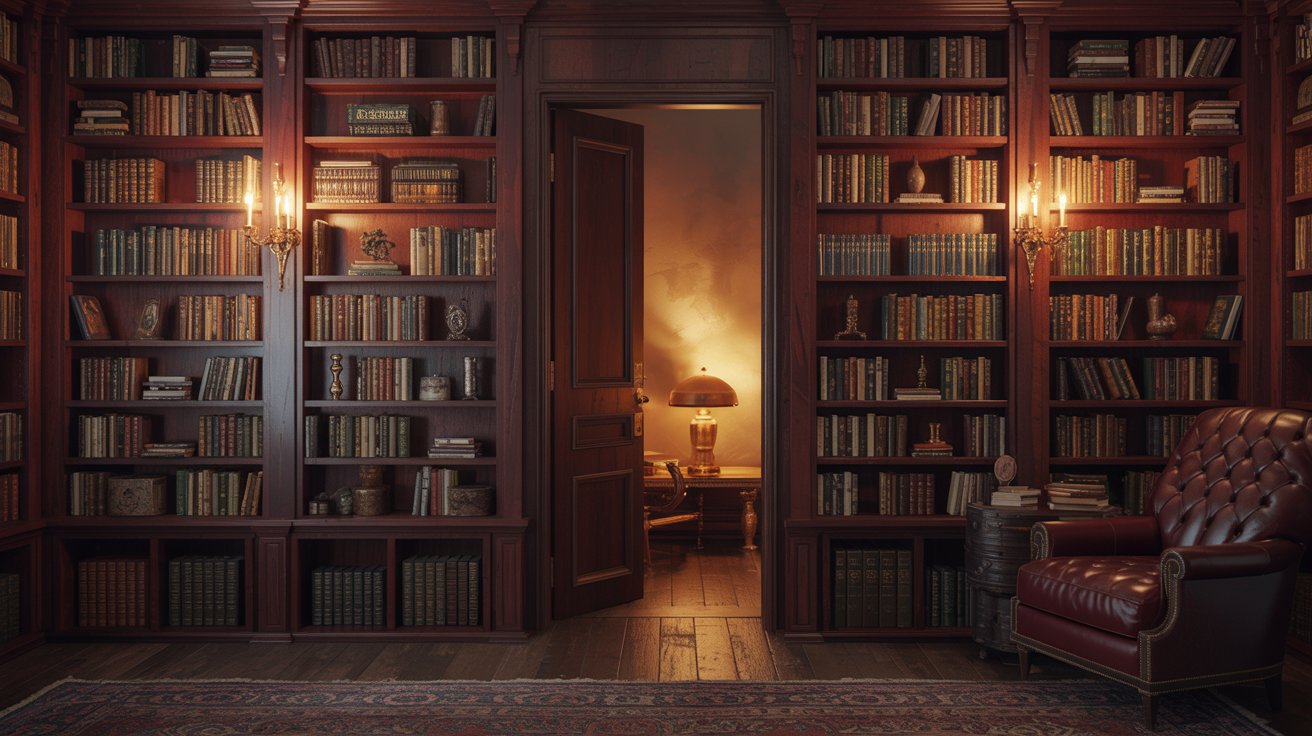
A hidden door built into a bookshelf is exactly as cool as it sounds. The shelf swings open to reveal a room, a closet, or a home office behind it.
This requires careful planning and proper installation. But the result is a conversation piece that also serves a real function.
Even without a secret room, hidden panels within shelves can conceal storage, wiring, or utility areas. The books are the cover story.
14. Luxury Marble Backdrop Shelving
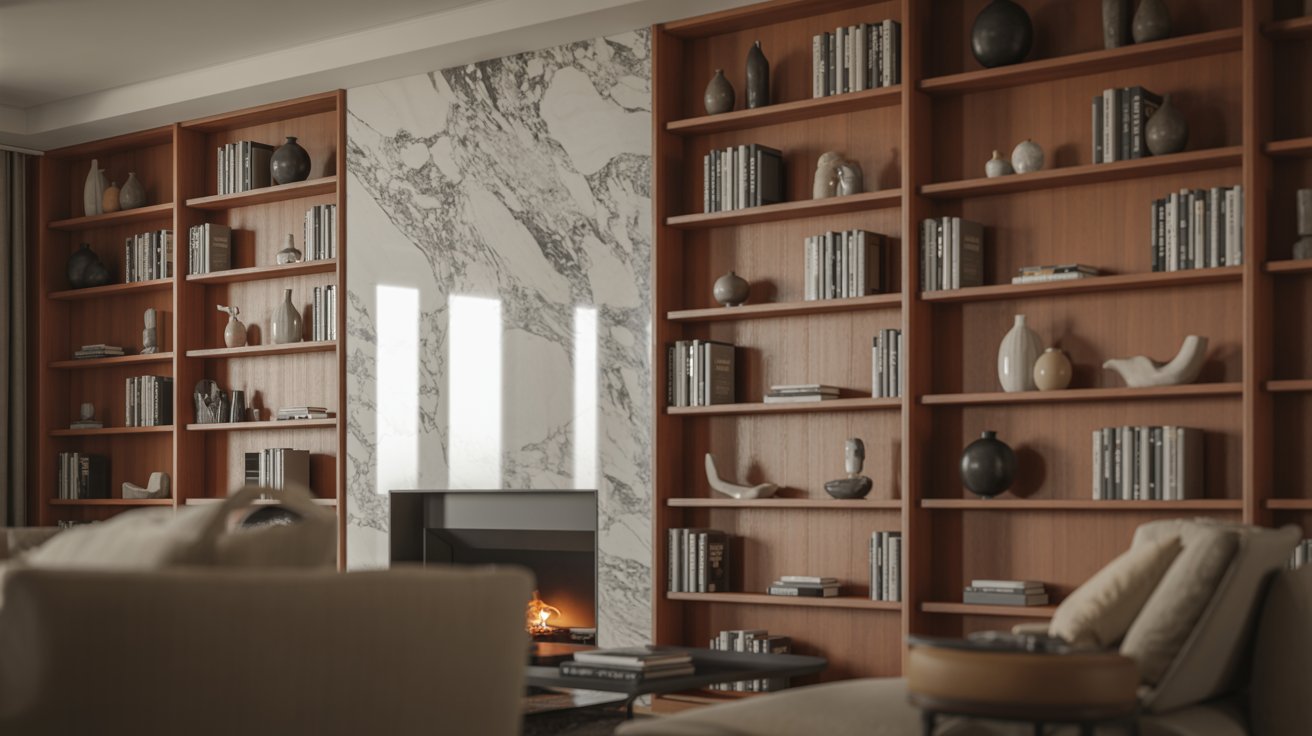
Marble or stone behind open shelves adds a high-end quality to the design. The contrast between natural stone and the warm tones of books creates a genuinely striking effect.
This works well in homes with other marble features, like kitchen countertops or bathroom tiling. Repeating the material creates cohesion.
It's a costly option, but even marble-look wallpaper or panels can achieve a similar look for a fraction of the price.
15. Floor to Ceiling Corner Bookshelves
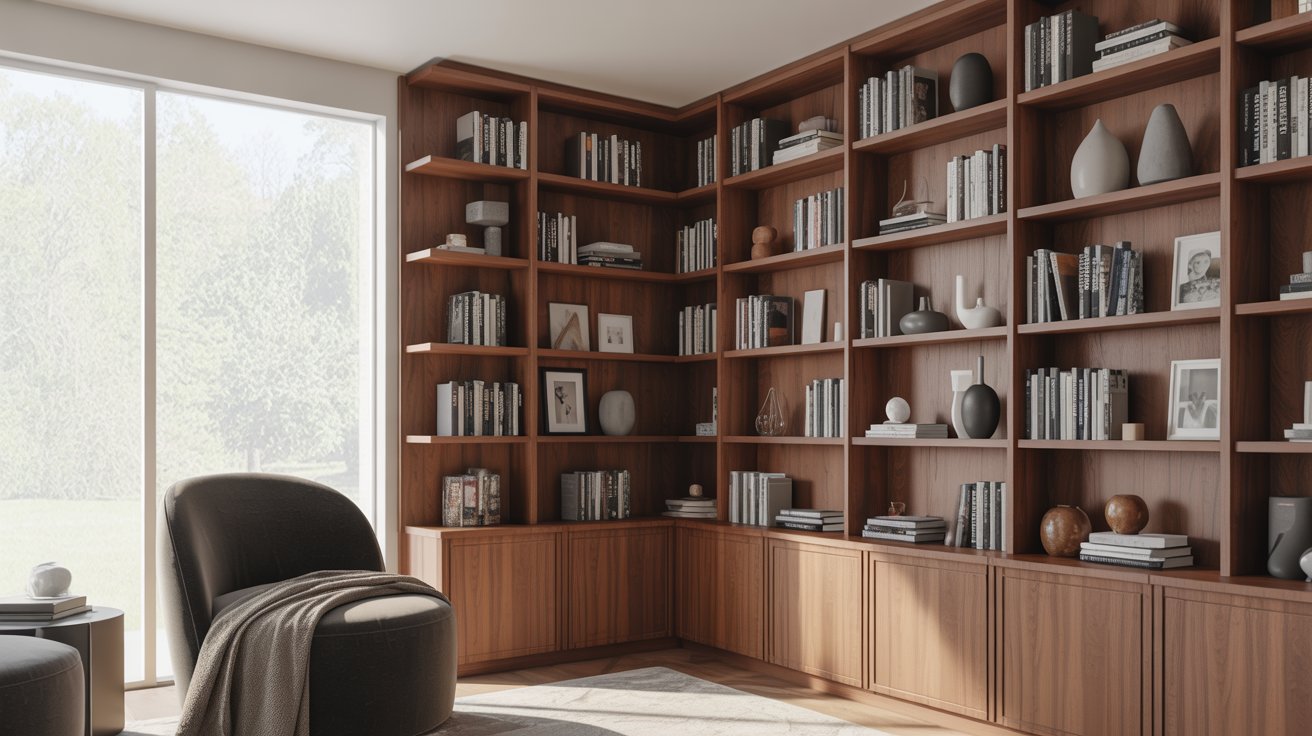
Corner shelves put wasted space to work. Most corners just collect dust. Built-in shelving that wraps around the corner doubles your storage without taking up more floor space.
This style works in rooms where wall space is limited. A corner shelf can hold a surprisingly large number of books.
The angle where the two shelf sections meet needs careful construction. Done well, it looks intentional. Done poorly, it becomes a visual distraction.
16. Integrated Home Office Bookshelves
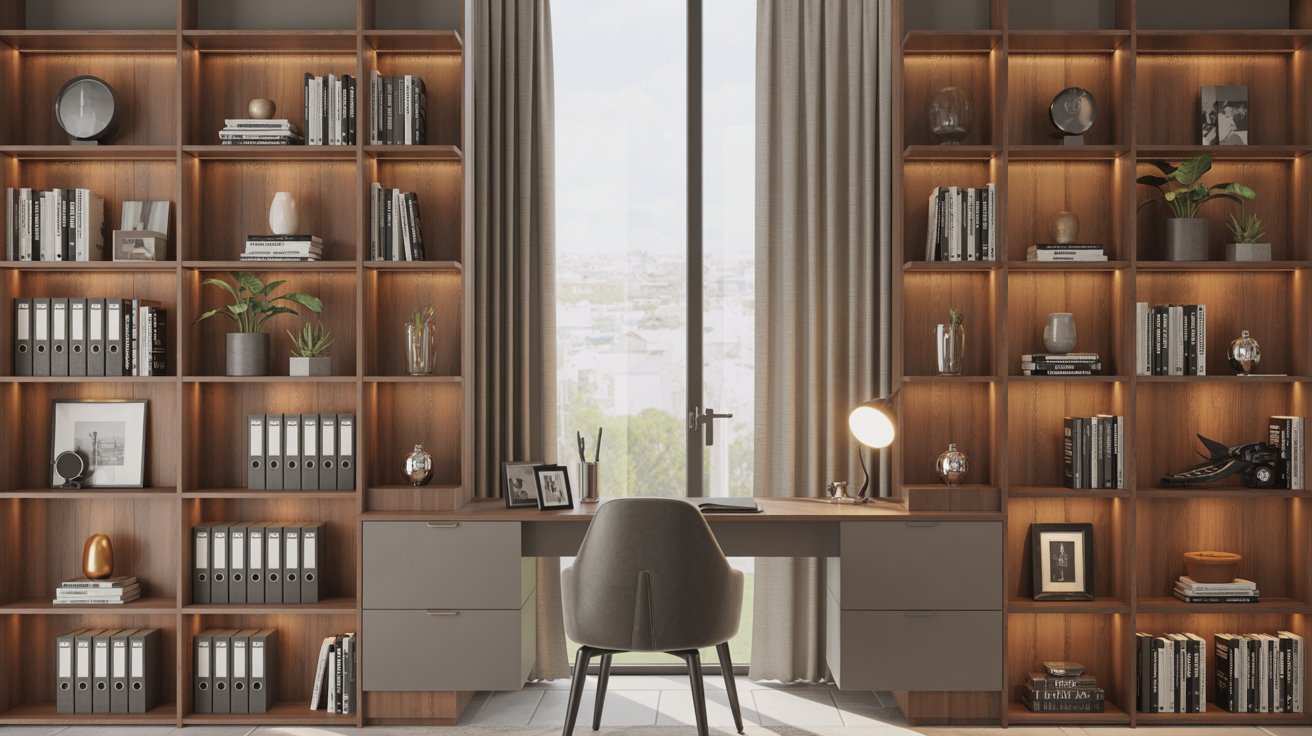
Combining a desk with floor to ceiling built in bookshelves creates a workspace that feels complete and contained. Everything you need is within reach.
The shelves can hold books, files, equipment, and decorative objects. The desk sits within or in front of the shelving unit.
This setup works particularly well in dedicated home offices or multi-use rooms. It keeps the workspace organized without looking like a storage problem.
17. Minimal Black Frame Shelving
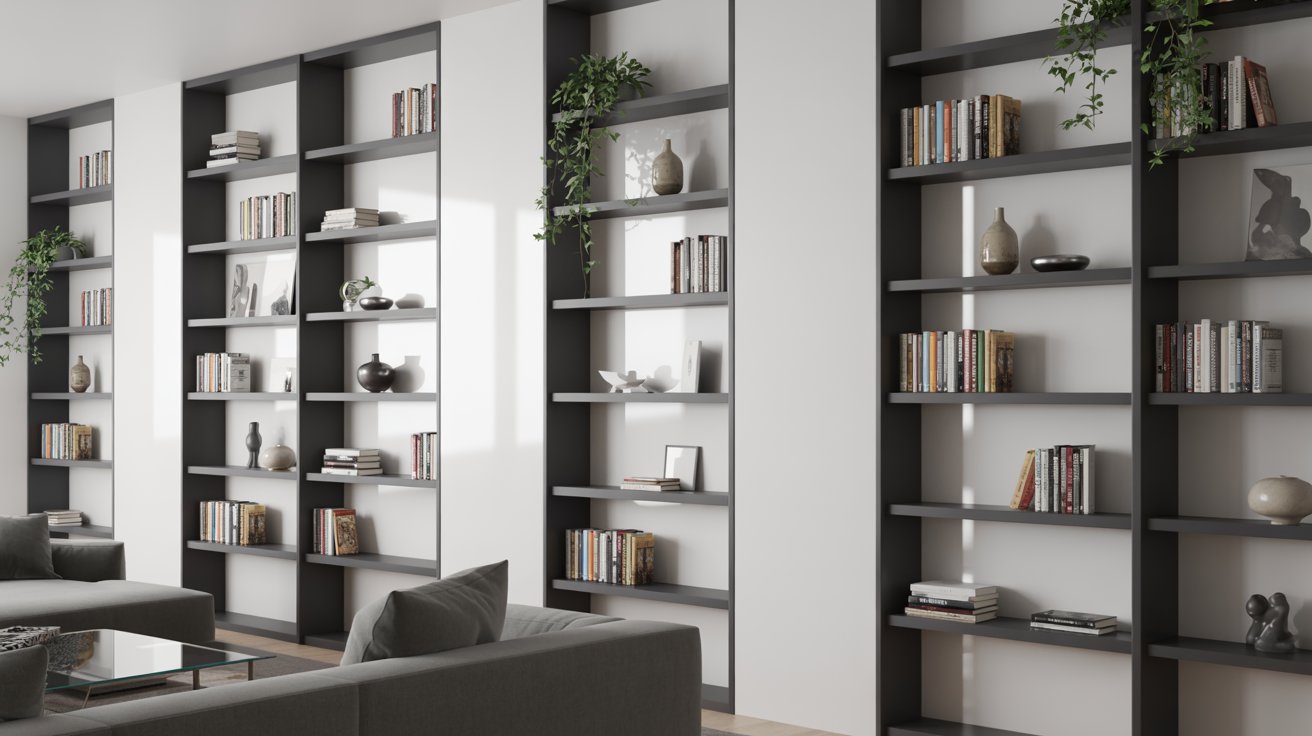
Black metal or matte black wood frames make a bold statement against light walls. The contrast is sharp, modern, and surprisingly versatile.
This style works in contemporary homes without feeling cold. The books and objects on the shelves add color and warmth against the dark frames.
Keep the rest of the room relatively light to avoid the shelves feeling heavy. The contrast is the point. Too much black on black loses the effect.
18. Rustic Farmhouse Wood Shelves
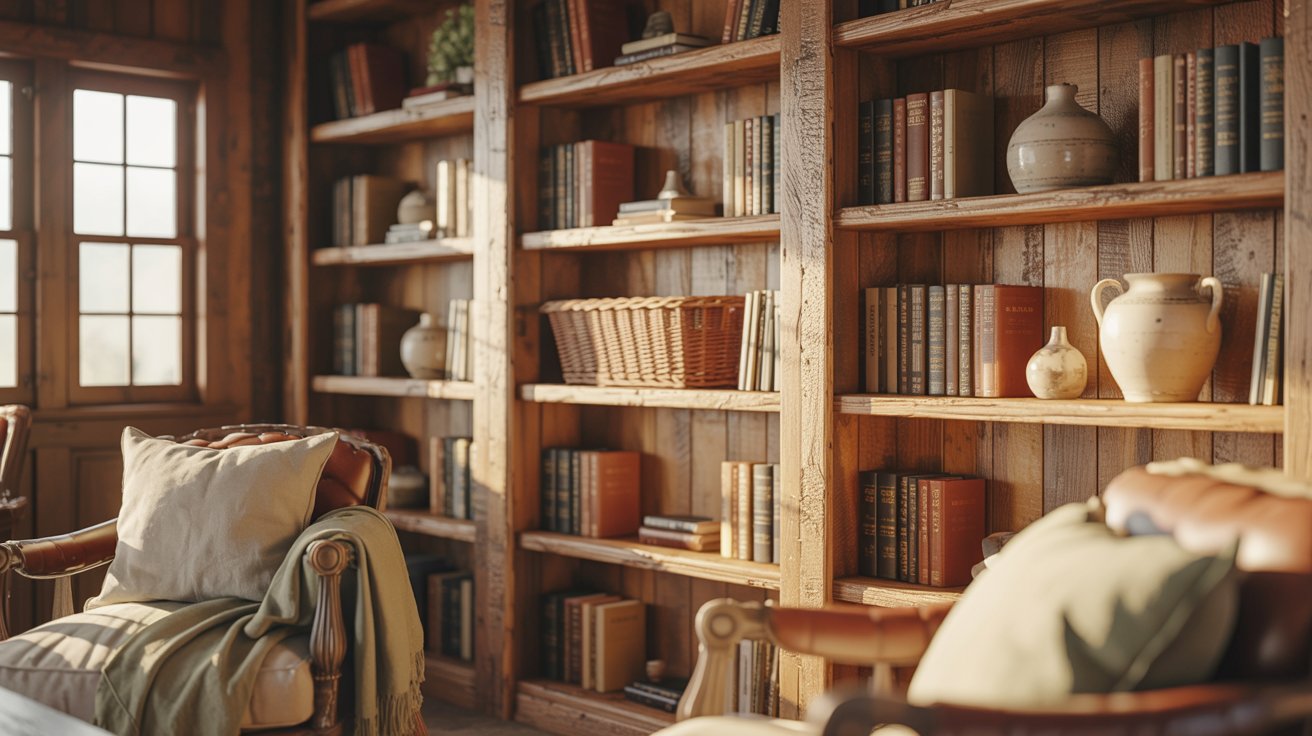
Distressed wood, visible grain, and raw finishes give farmhouse shelving its character. These shelves look like they've had a life before they ended up on your wall.
Pair them with neutral linens, wicker baskets, and earthy tones for the full farmhouse effect. The shelves don't need to be perfectly uniform.
This style is forgiving and warm. Small imperfections in the wood add to the appeal rather than detracting from it.
19. Library Wall with Ladder Rails
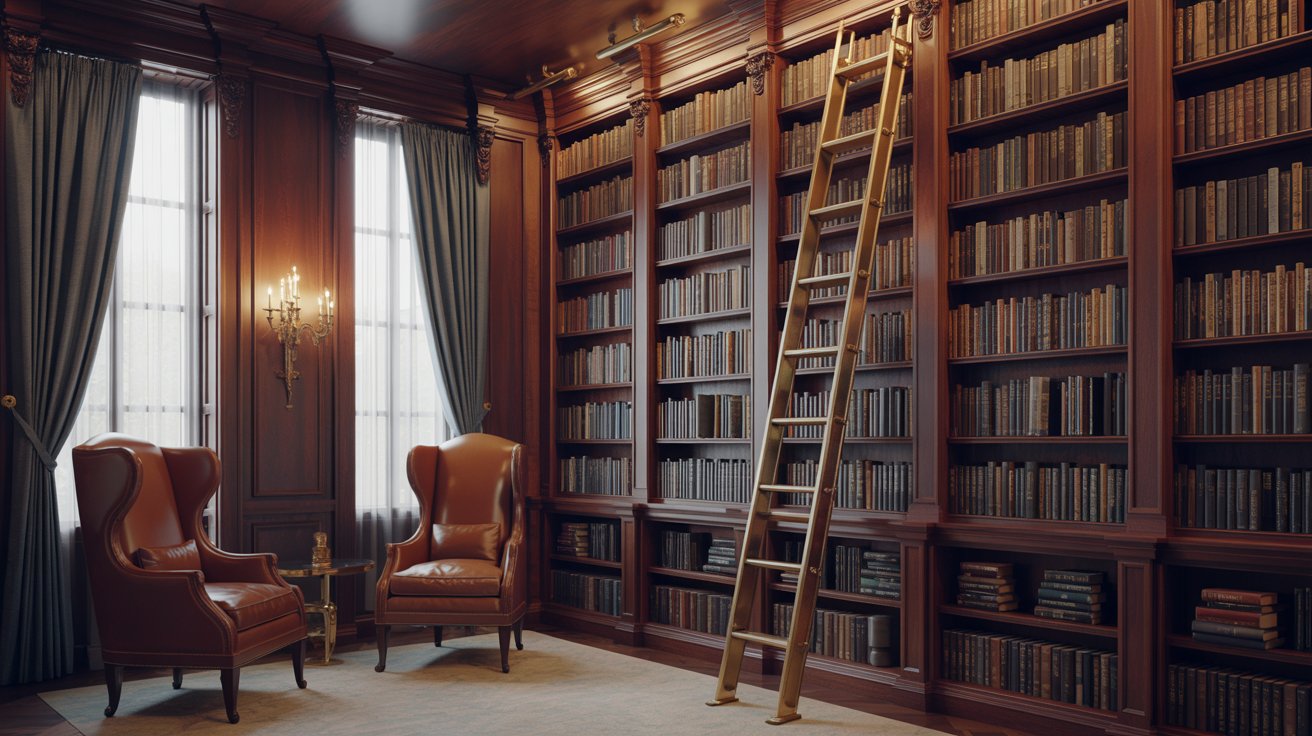
A continuous metal rail running the full length of a shelf wall adds an authentic library quality to the room. The ladder slides along the rail, giving access to every section.
This is a step up from a basic rolling ladder setup. The rail becomes part of the design, not just a functional addition.
It works best in longer rooms where the ladder can actually move meaningfully along the wall. A short wall limits the effect.
20. Open and Closed Storage Combination
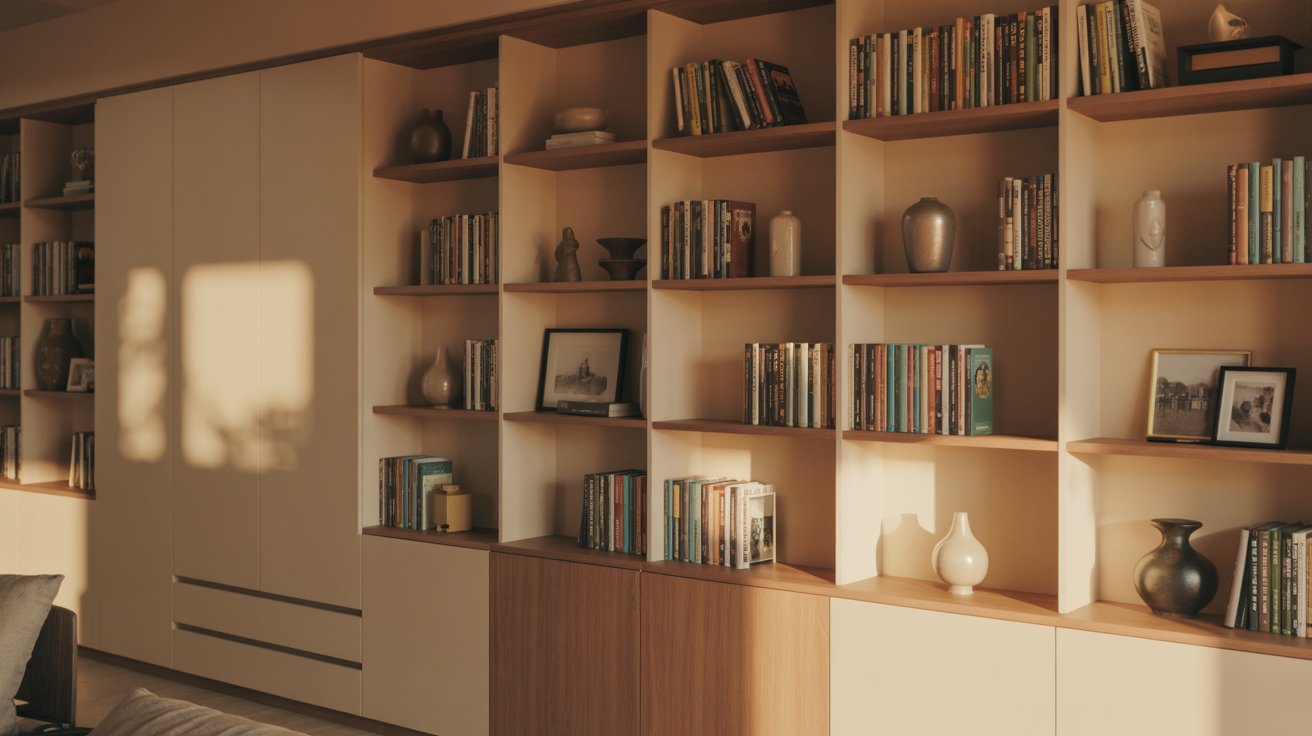
Mixing open shelves with closed cabinet doors gives you the best of both approaches. Display what you want to show. Hide what you don't.
Open sections keep your favorite books and decor visible. Closed sections hold less visually appealing items like files, equipment, or seasonal storage.
This combination reduces the pressure to make every single item look good. And that makes the open sections easier to style well.
21. LED Backlit Bookshelves
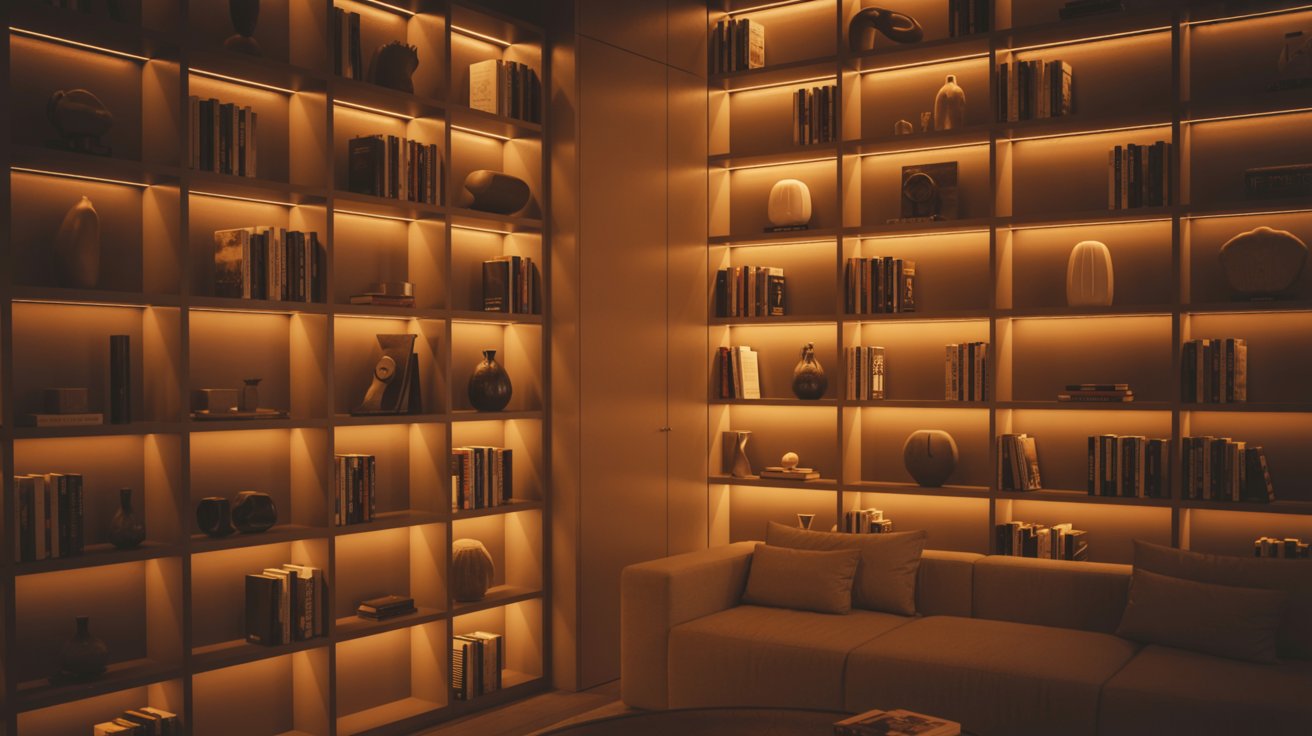
Strip lights behind or beneath shelves create a warm ambient glow that makes the entire wall feel dramatic after dark. It's a simple addition with a big impact.
Warm white LEDs suit most interiors. Cooler tones work better in modern or industrial spaces. The color temperature matters more than people expect.
This style is especially effective in media rooms or living rooms where lighting already plays a big role in the mood.
22. Geometric Patterned Shelving Design
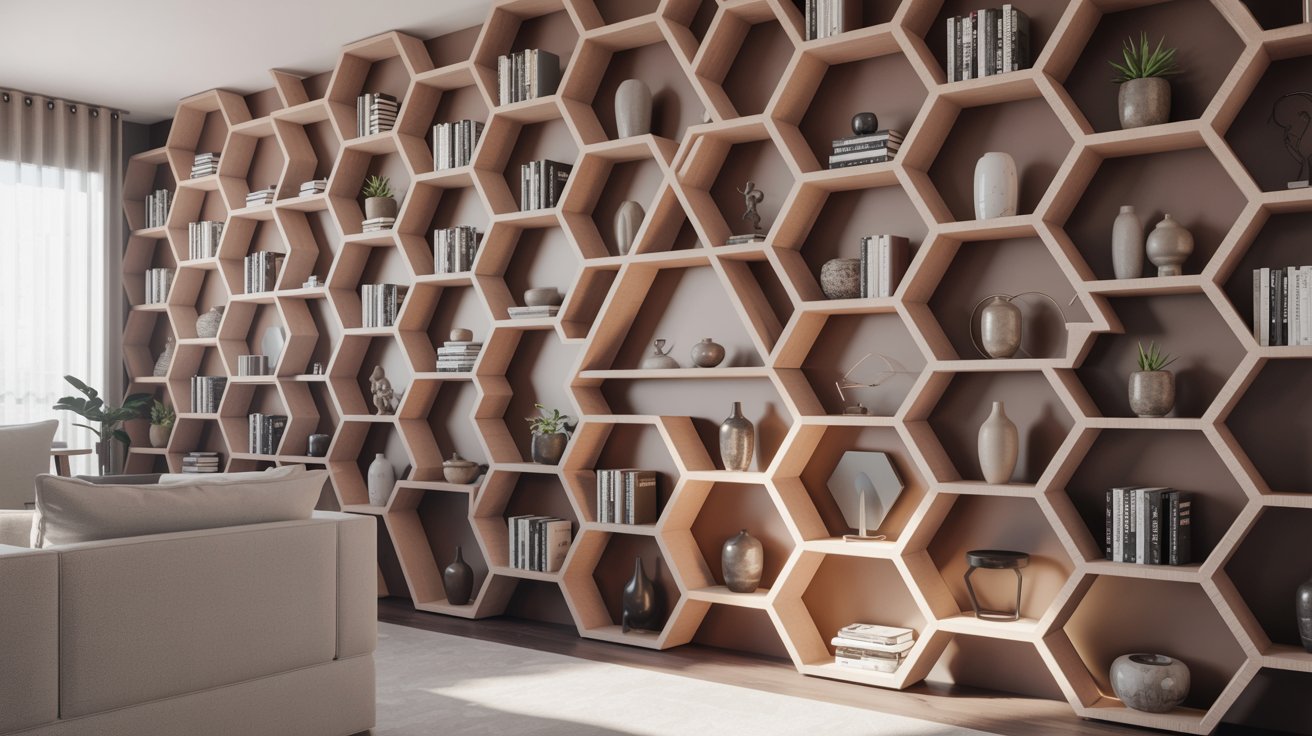
Instead of straight horizontal shelves, geometric shelving uses hexagons, diamonds, or irregular shapes. The visual effect is more like wall art than furniture.
This works best as an accent rather than a full wall solution. A geometric section surrounded by standard shelving creates a natural focal point.
Books can still be stored in these shapes, but smaller objects and plants tend to look better in geometric cubbies.
23. Full Wall Art and Book Hybrid Display
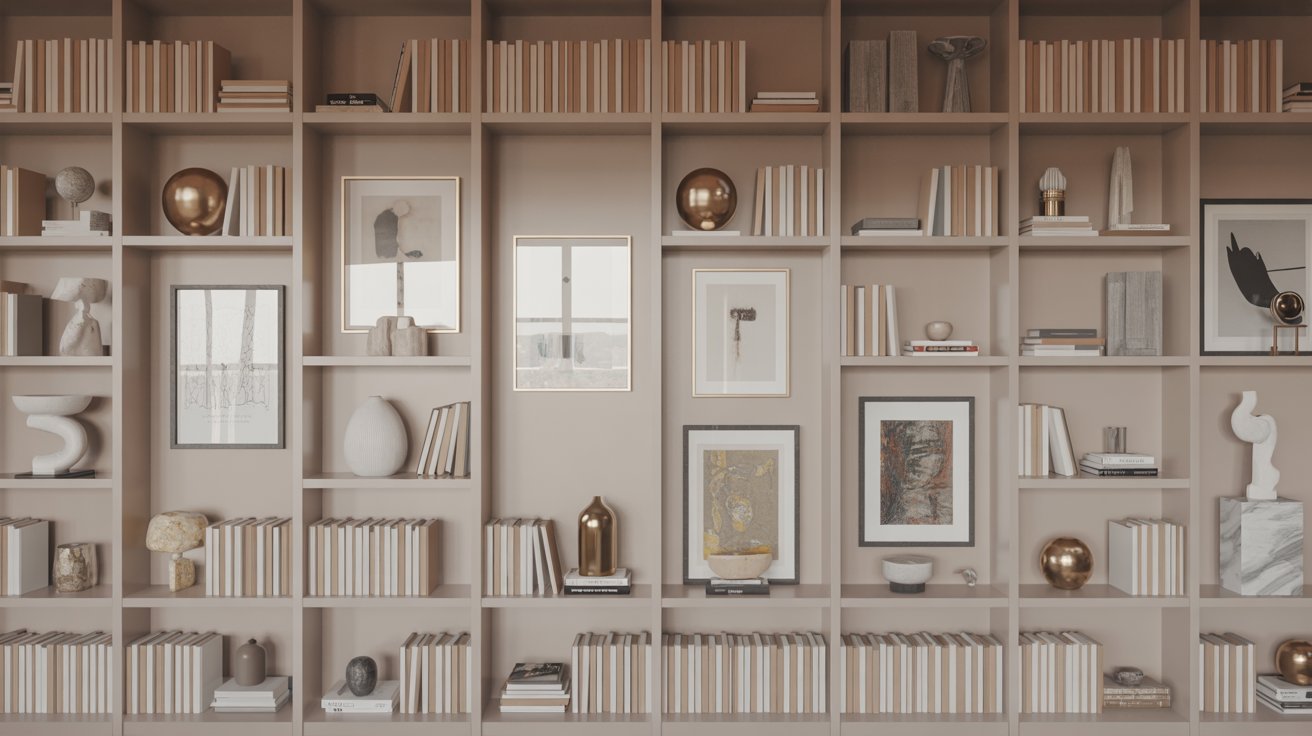
Mixing books with framed artwork, prints, and sculptural objects turns a shelf wall into something closer to a gallery. The books become one element among many.
This approach works well for people who collect both books and art. The shelves hold everything without making either category feel secondary.
Curation is key here. Too many different objects start to compete. Choose pieces that share a color palette or visual theme to hold it together.
24. Ceiling-Matched Color Shelving
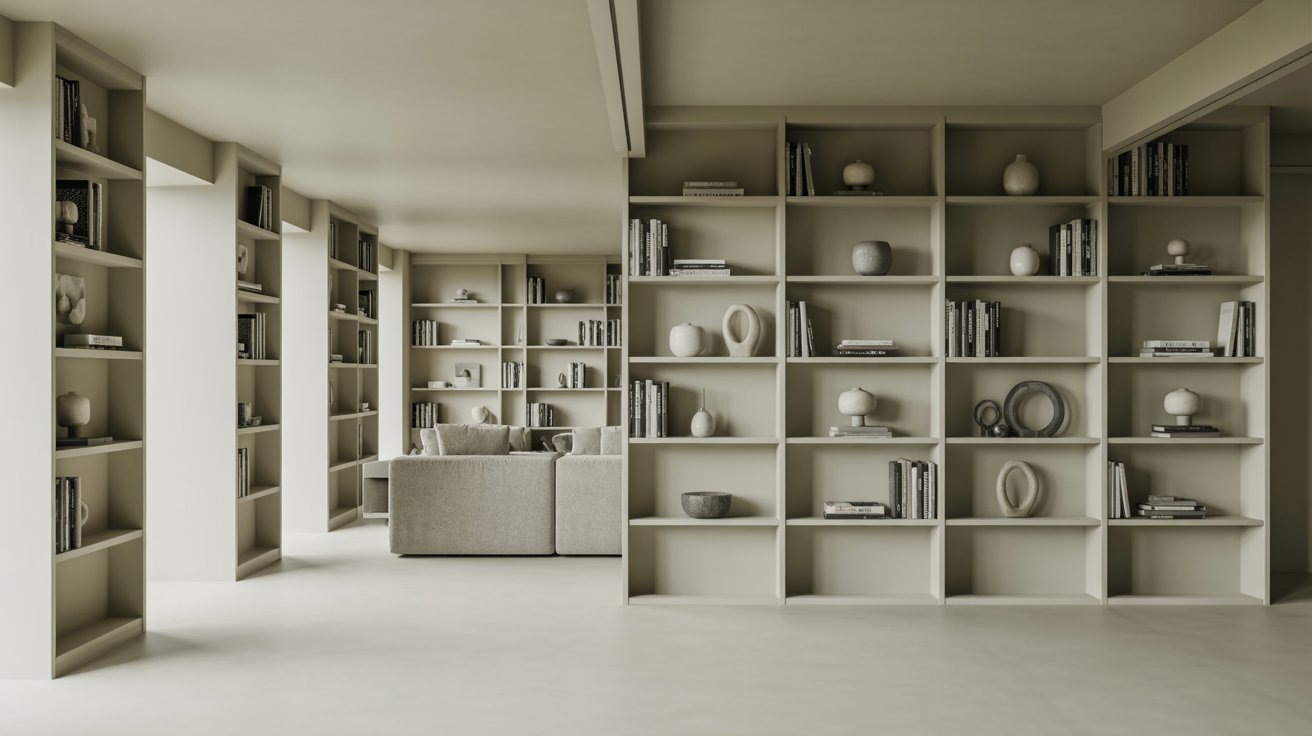
Painting built-in shelves the same color as the ceiling creates a sense of continuity that feels intentional and polished. The shelves seem to grow out of the ceiling rather than stand against it.
This works particularly well in rooms with colored or bold ceilings. The shelves become an extension of the architectural feature rather than a separate element.
It's a subtle design choice, but it's one of those details that makes a room feel professionally put together.
25. Built in Bookshelves with Sliding Panels
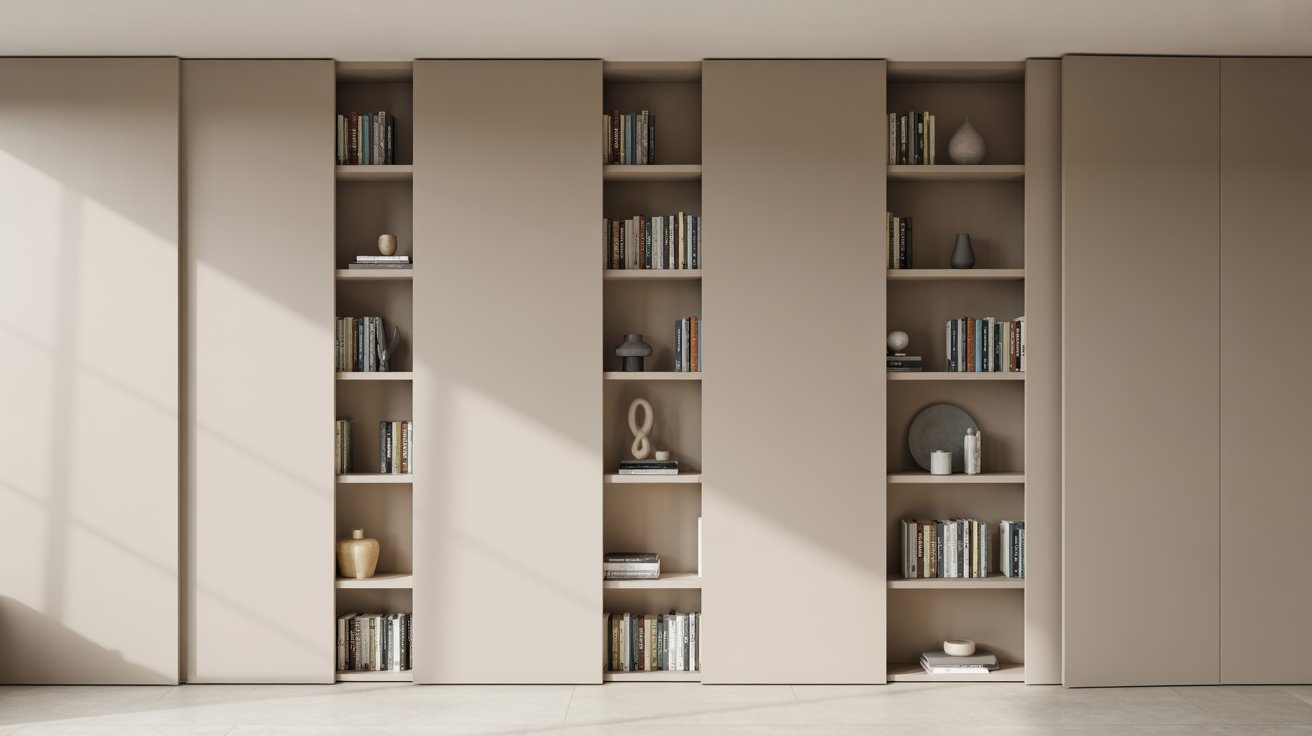
Sliding panels in front of shelves work like pocket doors for your books. They cover sections when closed and slide away when you need access.
This is a good solution for rooms where you want the option to conceal the shelves entirely. A sleek panel face keeps the room looking clean when the books are out of sight.
Panels can be mirrored, painted, or fabric-covered. Each option changes the overall feel of the room significantly.
26. Compact Apartment Vertical Shelving
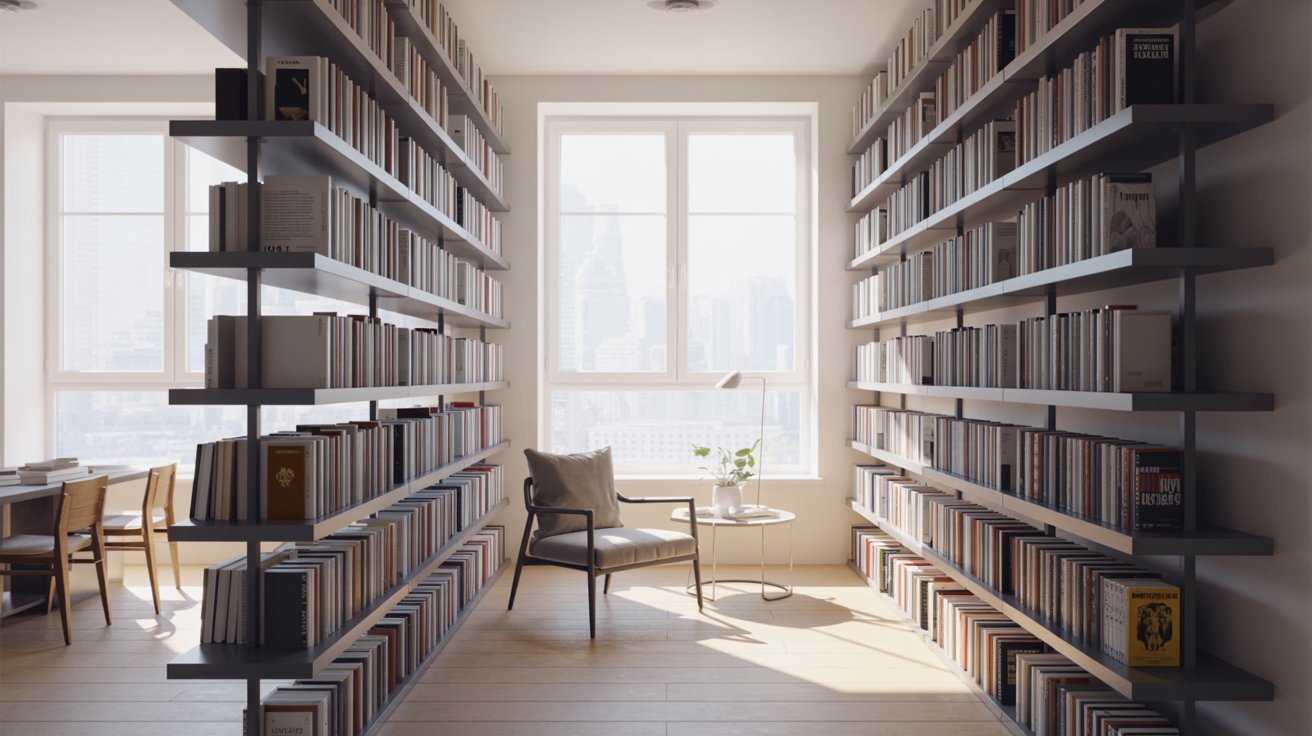
In a small apartment, going vertical is one of the smartest decisions you can make. Slim built-in shelves that reach the ceiling store more than wide, low alternatives while taking up less floor space.
Keep the depth shallow to avoid the shelves feeling like they're closing in on the room. Twelve to fourteen inches is usually enough for most books.
A full-height slim shelf can hold hundreds of books without making a small room feel crowded. It's one of the most practical applications of vertical space in apartment living.
27. DIY Modular Floor to Ceiling Bookshelves
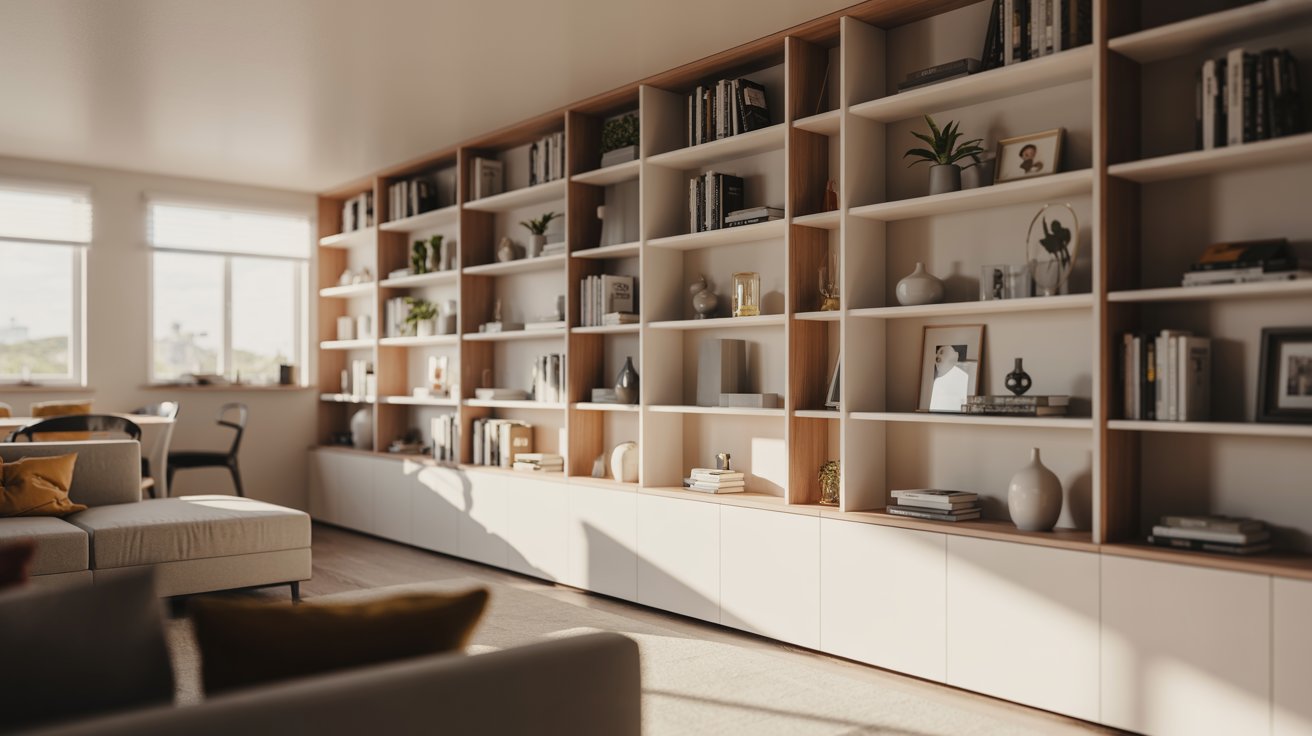
Modular shelving units stacked and secured to reach ceiling height are one of the most accessible ways to create floor to ceiling built in bookshelves without hiring a contractor.
Systems like IKEA BILLY or similar modular ranges can be customized with different finishes, doors, and configurations. They look far more built-in than most people expect.
Start with what you can afford and add sections over time. The modular approach makes it easy to grow your shelving as your collection and your budget both expand.
Styling Tips for a Perfect Bookshelf Look
Styling a tall bookshelf is its own skill. The books are just the starting point. Getting the overall look right takes a little thought about balance, color, and variety.
Here's what actually works:
- Mix books with objects: Candles, small plants, framed photos, and decorative items break up the rows and add visual interest
- Leave negative space: Not every shelf needs to be full. Empty space makes the whole setup feel intentional, not crammed
- Stack horizontally and vertically: Alternating between upright books and horizontal stacks adds rhythm to the layout
- Add plants: A trailing plant or small potted succulent brings life to an otherwise static display
- Keep a consistent color theme: A loose color palette across your decor items ties the shelves together without making it look forced
Step back and look at the shelf as a whole before calling it done. What catches your eye first? What feels too heavy or too sparse? Small adjustments make a bigger difference than you'd expect. Give it a few rounds of editing before settling on a final arrangement.
Common Mistakes to Avoid
Even well-planned bookshelves can fall flat when a few key things go wrong. Most of these mistakes are easy to avoid once you know what to look out for.
Here are the ones I see most often:
- Overcrowding shelves: When every inch is packed, the shelves look cluttered rather than curated. Leave room to breathe
- Ignoring wall support: Heavy shelves loaded with books put real stress on walls. Make sure your installation is properly anchored into studs
- Poor lighting planning: Overhead lighting rarely does tall shelves justice. Plan for shelf lighting or floor lamps from the start
- No visual theme: Random objects placed without a connecting idea make shelves look chaotic rather than personal
- Wrong shelf depth: Too deep and books disappear at the back. Too shallow and larger books won't fit at all. Standard depth of 10 to 12 inches works for most collections
Getting these basics right from the beginning saves a lot of frustration later. Most mistakes aren't hard to fix individually, but fixing several at once while books are already on the shelves is a real headache. Plan before you build.
Conclusion
Here's what I know after going through all of this. Floor to ceiling built in bookshelves aren't just a design choice. They're a commitment to how you want your space to feel every single day.
And that's worth getting right. You don't need a big budget or a big home. You just need a clear vision and a willingness to start.
So pick your style. Measure your wall. Take that first step.
Which idea from this list are you actually going to try? Tell me in the comments. I read every single one.
Frequently Asked Questions
Are Floor to Ceiling Built in Bookshelves Expensive?
The cost depends heavily on the material and whether you go custom or modular. MDF and modular systems like IKEA can keep the project very budget-friendly while still looking polished.
Can I Build Floor to Ceiling Built in Bookshelves Myself?
Yes, a DIY version is completely doable with basic tools and a clear plan. Modular shelving units stacked to ceiling height are the easiest starting point for most people.
What Is the Best Material for Built in Bookshelves?
Solid wood is the most durable option and ages well over time. MDF is a more affordable alternative that gives a smooth, paint-ready finish ideal for a custom look.
How Do I Style Tall Bookshelves Without Clutter?
Mix books with a few decor items and leave some sections intentionally empty. Negative space is what separates a styled shelf from a cluttered one.
Do Floor to Ceiling Bookshelves Make a Room Look Smaller?
No, they actually do the opposite when planned well. Full-height shelves draw the eye upward and make rooms feel taller and more spacious.


