


If you’ve been looking for a way to justify your screen time while learning literature, let’s look at the Nibble app review and how this app actually works in practice!
We’ve all experienced that strange, modern guilt that comes after spending 45 minutes scrolling through a social feed only to realize we haven’t actually learned or enjoyed a single thing. It feels like a minor failure of will, but the reality is that our brains are often just looking for a reset during the gaps in our day. Actually, the average global internet user now spends nearly 7 hours a day on screens, with over half of that time on mobile devices.
Much of this time is spent in what researchers call micro-moments, or those 5 to 10-minute windows where we are waiting for something or taking a quick break. This is where the Nibble app makes a lot of sense. Nibble is a microlearning app for adults that delivers short, interactive lessons across subjects such as literature, history, psychology, philosophy, biology, math, art, personal finance, and more. And by treating literature learning as a microlearning activity, it turns those previously wasted minutes into a structured learning adventure!
Nibble Literature Lessons That Help You Learn and Read During Short Daily Breaks
Most of us have a shelf of someday books — classics we plan to read when life finally slows down. But life rarely slows down. The Nibble app essentially breaks those someday topics into manageable, interactive chunks that fit into the life you actually have. With over 6 million downloads and a positioning as a top educational app for adults, the platform focuses on efficiency.
The literature category in the app is surprisingly robust, featuring lessons that usually run under 10 minutes. It offers a curated experience. For example, if you have a coffee break, you can open a lesson on Victorian Gothic literature. You get a mix of short, punchy paragraphs and blocks, visual cards, amazing design, and interactive questions that keep you from zoning out.
Nibble Gives Literature Context Before You Open the Full Book
Various bits of Nibble app feedback, you will find that users often appreciate how it helps them unscroll. One recurring comment from Trustpilot users is that the app feels like a smart version of social media. You get the same swipe-based satisfaction but leave the session knowing something new about Jane Eyre or the structure of a Shakespearean sonnet. What the learning section typically includes:
- 400+ total lessons across the app, with a significant portion dedicated to the humanities and literature
- 20+ topics that range from deep dives into specific authors like Kafka or Hemingway to broader movements like Romanticism.
- Interactive formats like chatting with a historical figure or playing a quick game to match themes to their respective eras.
The goal here is to provide the cultural scaffolding that makes that novel more rewarding when you finally pick it up. You can explore Nibble app topics like social dramas, gothic fiction, epic journeys, dystopias, and more.
Literature Feels Easier When Lessons Stay Focused on One Idea
One of the biggest hurdles to learning as an adult is cognitive overload and intensified learning. When you try to learn everything about Modernism in one sitting, your brain often retains none of it. This is a well-documented phenomenon in cognitive science. Actually, errorless learning and retrieval practice (quizzing yourself) are significantly more effective when focused on narrow, specific concepts.
So, is Nibble app worth it? The answer depends on what kind of learning you actually have time for during a normal week. Nibble works well for people who want short, focused sessions that fit between other parts of the day, especially when long educational content already feels mentally heavy after work.
Short Literature Lessons Feel Easier to Finish After a Long Day
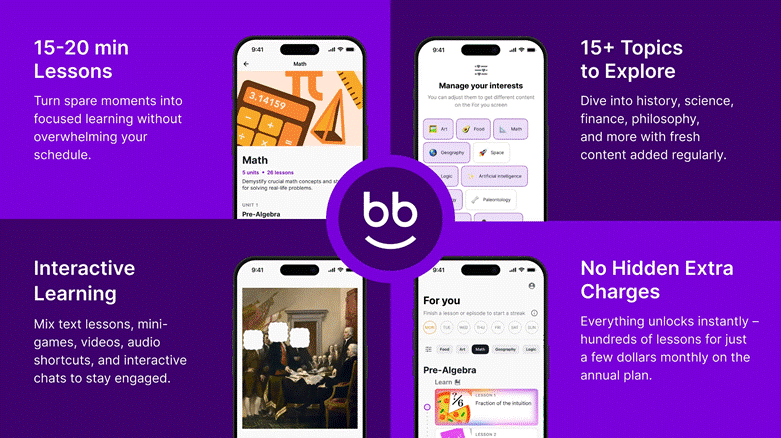
The app and web platform keep lessons tightly focused on one specific idea at a time. A lesson usually stays much narrower, for example, symbolism in Kafka, Shakespearean tragedy structure, or the social background behind Gothic fiction. That smaller scope helps information settle more naturally because your attention stays on one concept long enough to remember it.
The learning process feels lighter partly because the app removes the pressure of finishing huge chapters or academic-style reading sessions. You finish one short lesson, answer a few questions, and move on without feeling mentally overloaded. Typical 10-minute Nibbles might cover:
- A single literary concept
- One author profile
- One specific movement
This focus on single-topic design is a deliberate move to keep adult learners from feeling discouraged. It’s much easier to commit to learning one thing well than to try to learn everything at once.
Audio Literature Shortcasts Fit Moments When Reading Feels Heavy
Sometimes, after eight hours of looking at a computer for work, the last thing you want to do is read more text on a screen. This is where Nibble Shortcasts come in. These are bite-sized audio episodes, usually 8-11 minutes, designed for eyes-free learning.
Audio learning has exploded because it fills the dead space of our daily routines. Whether you’re commuting or at the gym, you can listen to a session on the philosophy of Oscar Wilde or the origins of ancient mythology.
The format feels more like a conversational explainer you’d hear on a high-quality podcast. It’s conversational and designed to land with impact. For literature fans, this is a great way to stay connected to the themes of storytelling and mythology during times when you can’t hold a book or a phone.
The App Keeps Literature Connected to History, Art, and Philosophy
One of the most interesting things about using the app is how it encourages interdisciplinary thinking. Literature is deeply tied to the world around it, and the app’s structure reflects this by linking categories such as History, Art, and Philosophy.
For instance, you might finish a lesson on Romantic poetry and see a suggested follow-up on the French Revolution or the rise of Landscape Painting in the 19th century. This creates a web of knowledge that makes retention much easier. Educational psychology calls this contextual learning, like we remember facts better when they are anchored to other relevant pieces of information.
By seeing how Mary Shelley’s Frankenstein was a reaction to the scientific anxieties of its time (Biology and Ethics categories) or how cinema has adapted classical tropes, you start to see the world as a more connected place. It makes you feel like a more well-rounded person, which is a major driver for the 30 million people who have turned to lifelong learning apps like this one.
Interactive Quizzes Help Literary Terms Stay in Your Memory Longer
We’ve all had that experience of reading a fascinating article on Wikipedia only to forget every single detail two days later. This happens because passive reading is a poor way to store long-term memories. To make knowledge stick, you need active recall.
Nibble integrates quizzes directly into the flow of the lessons. These are quick check-ins like Match this author to their quote or Which of these traits defines a Gothic hero? These interactions force your brain to retrieve the information you just saw, which reinforces the neural pathways associated with that knowledge.
Common interactive elements include:
- Match-the-pair: Linking literary terms to their definitions.
- Visual cards: Identifying an author from a portrait or a book from a first-edition cover.
- Timed challenges: Gamifying the review process to improve recall speed.
Nibble App Price Feels Simpler Than Most Subscription Learning Platforms
The pricing structure stays fairly straightforward compared with many education apps that separate features behind multiple upgrades or extra purchases. According to Nibble’s official pricing breakdown, the platform currently offers a monthly plan for around $11.99, a 3-month plan for around $19.99, and an annual plan for around $49.99, though regional pricing may vary slightly by platform and location.
One practical detail users often mention in reviews is that the subscription unlocks the full lesson library immediately. You are not buying individual literature lessons or quizzes separately afterward. The same subscription covers literature, psychology, history, philosophy, audio lessons, games, and interactive quizzes across the app and the web platform.
That setup works well for people who move between subjects depending on mood or attention span. Typical subscription that the Nibble app price includes:
- 400+ interactive lessons
- Literature, history, philosophy, and other topics
- Audio Shortcasts and quizzes
- App and web platform access with offline lessons
- New lesson additions throughout the year
Nibble offers a free trial (commonly a 7‑day trial) so you can explore content before committing, and the app lists from 15 to 20+ topics with new lessons every week. As the app positions itself as bite‑sized, you get swipeable lessons designed to replace mindless scrolling. It feels like a smart social feed feeling (quick sessions that leave you with a takeaway).
What needs caution: The free trial requires you to enter payment info on most platforms and will auto‑renew unless canceled at least 24 hours before the trial ends.
Try Rechargeable Literature Learning Sessions with Nibble
In the end, we are the sum of what we pay attention to. If we spend our free moments on noise, we feel noisy. If we spend them on the great stories and ideas that have shaped human history, we feel a bit more grounded.
The Nibble app review highlights that learning literature doesn’t have to be a heavy, serious undertaking. It can be something you do while your coffee brews. By using microlearning, interactive quizzes, high-quality audio, and thoughtfully designed challenges, the app makes the world’s greatest ideas accessible to anyone with a smartphone and 10 minutes to spare. It’s an invitation to stay curious without the overwhelm, and for many, that’s exactly the kind of screen time they’ve been looking for!