


Looking for an honest None of This Is True summary? You are in the right place. I have read this book cover to cover, and I only recommend books I have actually thought hard about.
In this article, I will cover the full plot summary, major themes, character breakdown, my personal review, and what critics and readers say. By the end, you will know exactly if this book deserves a spot on your reading list.
No fluff. No carelessly dropped spoilers. Just a clear, trustworthy breakdown from someone who actually read it.
Let's get into it.
Synopsis of None of This Is True
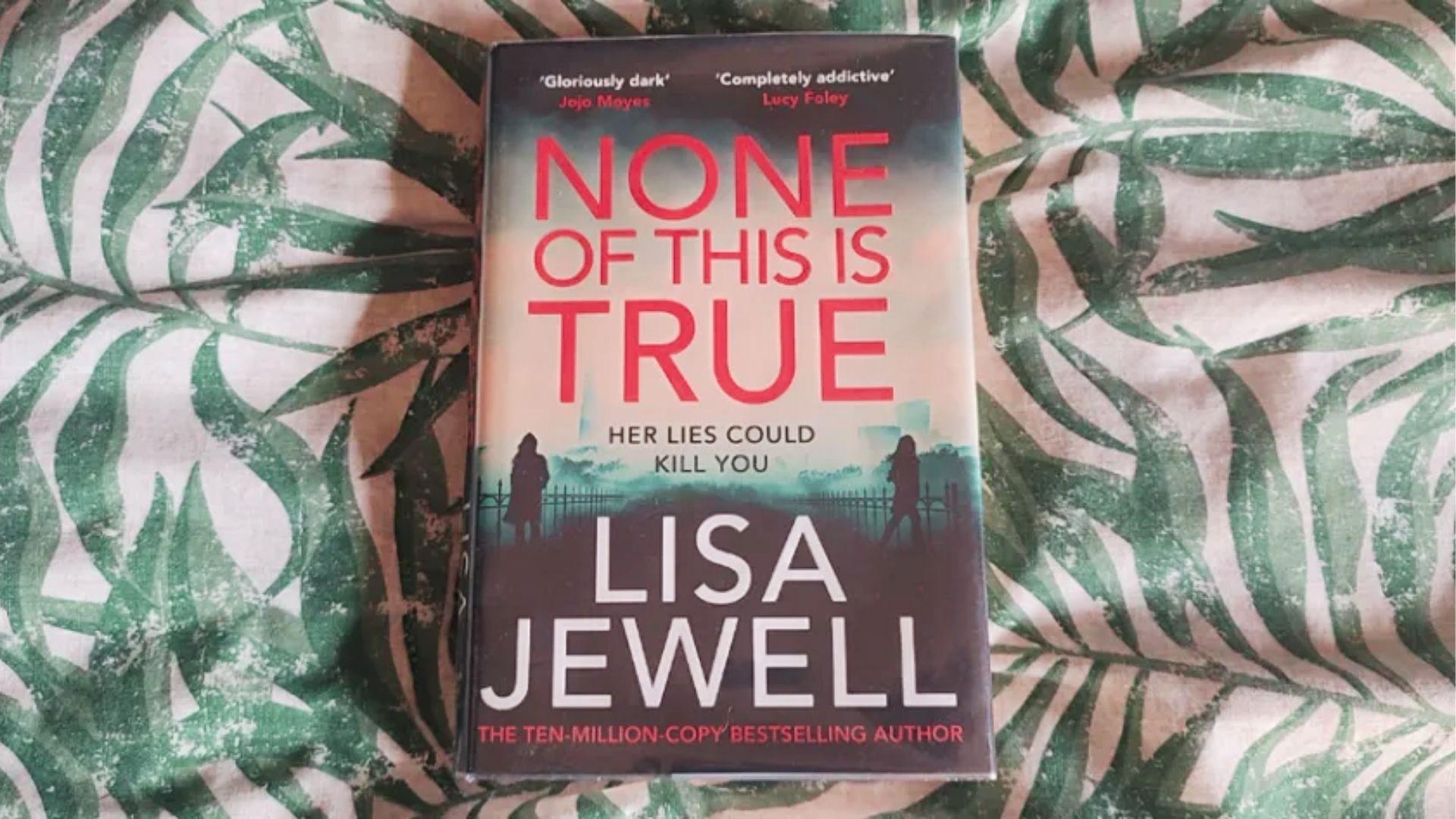
The story follows Alix Summer, a successful podcast host who meets Josie Fair on the morning of their shared birthday. Josie is quiet, unremarkable, and oddly fixated on Alix from the very start. What begins as a passing encounter slowly becomes something far more dangerous.
Josie convinces Alix to feature her as the subject of a podcast series, presenting herself as a woman with a story worth telling. Alix agrees.
As the recordings progress, the layers of Josie's life begin to peel back in deeply disturbing ways, and by the time Alix realizes how close Josie has gotten, it may already be too late.
The novel is told through multiple lenses:podcast transcripts, documentary footage, and police interviews. That structural choice keeps the reader perpetually off balance, always assembling the full picture from fragments that do not quite line up.
Major Themes in None of This Is True
Jewell builds her story around ideas that are uncomfortable, psychologically rich, and grounded in things that feel disturbingly plausible.
Obsession and Identity
At its core, this novel is about what happens when someone wants to become you. Josie does not simply admire Alix. She studies her, mirrors her, and works her way into every corner of her life with terrifying patience.
Jewell examines obsession not as spectacle but as a slow, methodical process. That restraint is what makes it so unsettling.
Performance and the Stories We Tell About Ourselves
The podcast format is not just a structural device. It is the novel's central metaphor. Every interview is a performance. Every subject chooses what to reveal and what to hide.
Jewell is deeply interested in the gap between the story someone tells about their life and the reality underneath it.
Alix is a professional at drawing out other people's truths. The novel asks what happens when someone turns that skill against her.
Domestic Danger and Proximity
The threat in this book does not arrive from a stranger in the dark. It comes from someone who has been invited in, who knows the layout of your home, who has sat at your kitchen table.
Jewell has always been interested in how violence and instability can live inside ordinary domestic spaces.
That interest is fully realized here. The horror of the novel is largely about proximity and what it costs to let someone get close.
Unreliable Accounts and Contested Truth
The multiple narrative layers mean that the reader is never given a clean, authoritative version of events.
Police reports contradict podcast transcripts. Documentary footage raises questions that interview recordings leave open.
Jewell does not resolve these contradictions tidily. She lets them sit, and that discomfort is entirely intentional.
Character Analysis
Every major figure in None of This Is True carries real contradiction and real psychological weight.
Alix Summer
Alix is smart, professionally accomplished, and genuinely good at her job. She is also someone who underestimates a threat because it does not fit the shape she expects danger to take.
Jewell gives her a full, complicated inner life, a marriage with its own quiet tensions, a career that means more to her than she always admits, and a deep professional confidence that Josie learns to use against her.
Watching Alix slowly realize the scale of what she is facing is one of the most effectively drawn arcs in the novel.
Josie Fair
Josie is one of the more carefully constructed antagonists in recent thriller fiction. She is not theatrical or obviously menacing. She presents as ordinary, slightly awkward, and desperate for connection. That presentation is exactly what makes her dangerous.
Jewell gives Josie a backstory that is genuinely tragic, and the novel does not let you forget that tragedy even when Josie's actions become impossible to excuse. That complexity is the point.
She is not a monster from the start. She becomes one gradually, in ways the novel tracks with real psychological precision.
The Supporting Cast
The people around Alix, her husband, her colleagues, the listeners who follow her podcast, all become part of the novel's examination of how close we look at the people in our lives and how much we miss them.
Several figures who appear minor in early chapters turn out to carry significant weight in the story's resolution. Jewell plants those details carefully, and a second read reveals how much was visible all along.
Writing Style and Narrative Voice
Jewell's writing here is controlled, structurally ambitious, and built around a central question:how do we know what actually happened?
Form as Function
The choice to tell the story through podcast transcripts, documentary footage, and police interviews is not a gimmick. Each form carries its own assumptions about reliability and its own blind spots.
Transcripts flatten vocal tone. Documentaries frame their subjects. Police interviews have agendas. Jewell uses those built-in limitations to keep the reader in a state of productive uncertainty throughout.
Pacing and Tension
The novel builds slowly and with purpose. Jewell is not in a hurry to get to the violence.
She spends real time on the ordinary moments of Josie and Alix's developing relationship, and that investment pays off when things begin to go wrong.
The dread accumulates because you have seen exactly what there is to lose.
Clarity Through Fragmentation
Unlike thrillers that create confusion through deliberately obscure prose, Jewell writes clearly. Each individual fragment of the story is easy to follow.
The disorientation comes from having to hold multiple accounts simultaneously and decide which one to believe.
That is a harder thing to pull off than surface-level confusion, and Jewell manages it consistently.
Critical Reception
None of This Is True was published in 2023 and landed at the top of bestseller lists almost immediately.
Jewell had already built a devoted international readership with novels like The Family Upstairs and Then She Was Gone, and this book confirmed her place as one of the most reliable voices in contemporary psychological fiction.
Readers responded to the structural inventiveness, the slow-burn dread, and the novel's refusal to offer easy answers about who Josie is or what she deserves.
Critics praised Jewell's control of multiple narrative formats and her ability to build genuine menace from domestic, recognizable material. Some noted that the fragmented structure requires patience in the early sections. Most found the payoff more than worth it.
Notable Reviews and Ratings
None of This Is True earned strong responses across major reading platforms and review outlets.
Goodreads: 4.07 out of 5 stars based on a large volume of ratings. Readers consistently highlight the structural ambition and the character of Josie as particular strengths. Many describe the experience of reading it as one they could not walk away from mid-chapter.
Amazon: 4.3 out of 5 stars based on a substantial number of reviews. Reviewers praise the pacing and the way the novel rewards careful reading. Many note that they went back to check earlier sections after reaching the ending.
Awards and Recognition: None of This Is True became a New York Times bestseller and appeared widely on recommended reading lists for 2023.
What Reviewers Are Saying: Readers describe it as deeply unsettling in the best sense. Many say the structural format made the reading experience feel unlike other thrillers they had picked up.
Critics praised Jewell for building a story that is as much about how we understand truth as it is about crime.
My Personal Reading Experience
None of This Is True got inside my head in a way I was not fully prepared for. Josie pulled me in even when she was making me deeply uncomfortable, which I suspect was exactly the intention.
The podcast format worked on me more than I expected. Reading the transcripts felt like genuinely trying to parse someone's account of their own life and figure out what they were leaving out. That sense of active interpretation made the reading experience unusually engaging.
I thought I had a handle on where the story was going more than once. Jewell corrected me each time without ever feeling like she was cheating. The clues were present. I had just been looking at the wrong ones.
The ending is not clean, and it is not meant to be. It leaves you holding several uncomfortable questions at once. That is what stayed with me after I put the book down.
About the Author: Lisa Jewell

Lisa Jewell is a British author born in London. She began her fiction career with lighthearted contemporary novels before moving into the psychological thriller space, where she has found her largest and most devoted readership.
She is best known for Then She Was Gone, The Family Upstairs, and None of This Is True, all of which became international bestsellers.
Jewell's work consistently examines what hides inside families, domestic spaces, and close relationships. She has a particular talent for making the ordinary feel threatening and for building characters whose inner lives remain genuinely difficult to read until the final pages.
Conclusion
I hope this None of This Is True summary helped you decide whether to pick it up. Josie unsettled me from page one, yet I kept making excuses for her, which says everything about how well Jewell writes.
That tension between sympathy and dread is something I have rarely felt so strongly in a thriller. If you enjoy stories that make you question your own judgment, this one is for you.
Read it and come back to tell me: did you see Josie clearly from the start, or did she fool you too?
Frequently Asked Questions
Is None of This Is True Based on a True Story?
No, the novel is entirely fictional. Lisa Jewell created the story from her interest in obsession and domestic danger.
How Long Does It Take to Read None of This Is True?
The novel runs around 370 pages and most readers finish it in six to nine hours. Many end up reading it in one or two sittings.
What Age Is Appropriate for Reading None of This Is True?
The book is best suited for readers aged 16 and above. It contains psychological manipulation, domestic violence, and disturbing scenes of harm.
Did None of This Is True Win Any Literary Awards?
It became a New York Times bestseller and received strong recognition across the thriller community. Book clubs widely adopted it throughout 2023.
Is There a Sequel to None of This Is True?
No sequel exists and Lisa Jewell has not announced plans for one. She has continued writing new psychological thrillers with fresh characters and settings.