


Alt text: Person studying HR certification without a degree on laptop in a modern workspace
You do not need to spend four years or lakhs on a degree to work in HR. I know because I looked into this myself when I wanted to switch careers without going back to school.
The truth is, you can potentially break into HR in three to six months with the right certification.
In this blog, I will walk you through how to get HR certification without a degree. I will cover the best certifications, exact steps, costs, timelines, salary expectations, and mistakes to avoid.
I have researched Society for Human Resource Management (SHRM) and HR Certification Institute (HRCI) guidelines closely, so everything here is accurate and practical. No filler, no fluff.
Can You Really Get an HR Certification Without a Degree?

Yes, and thousands of people do it every year.
Most entry-level HR certifications do not require a degree. They require work experience, a training course, or in some cases, just passing an exam. That is a much lower bar than a four-year program.
HR is a field where results matter. Employers want someone who can handle onboarding, screen resumes using ATS software, and manage employee records correctly. A certification proves you can do that. A degree does not always.
According to HRCI, the aPHR certification has no education or experience requirement. SHRM also offers paths for non-degree candidates. So this is not an unusual route. It is a legitimate one.
Best HR Certifications (How to Get HR Certification Without a Degree)

You have more options than you think, and several are fast, affordable, and fully recognized by employers.
Entry-Level HR Certifications Without a Degree
These are the best starting points if you have no degree and little HR experience.
aPHR (Associate Professional in Human Resources) from the HR Certification Institute is built for people just starting out. No experience required. No degree required. You just need to pass the exam. It covers HR operations, recruitment basics, employee relations, and compliance.
SHRM-CP (Society for Human Resource Management Certified Professional) is one of the most recognized credentials in the field. You can qualify without a degree if you have HR work experience. SHRM reports this certification is valued by over 300,000 HR professionals worldwide.
PHR (Professional in Human Resources) from HRCI requires at least one year of HR experience but not a degree.
Online HR Certification Programs Without a Degree
Platforms like Coursera, LinkedIn Learning, and HRCI offer full online programs. Many prepare you directly for the aPHR or SHRM exams.
Some give you a standalone certificate upon completion, which still adds value to your resume.
Skill-Based HR Certifications for Non-Degree Candidates
These focus on specific areas like recruiting, payroll, or HR analytics.
Examples include the Talent Acquisition Specialist certification and the HR Analytics Certificate from Wharton Online. These are great for building a specialty without doing a full degree program.
Online HR Certification Programs Without Degree (Flexible & Fast Options)
These programs work around your schedule. Most are self-paced, meaning you study when it suits you. Several can be completed in weeks, not years.
Here is a quick comparison based on cost, speed, and job readiness. Use this to pick what fits your timeline and budget.
| Program | Duration | Cost | Certification Type | Job Readiness |
| aPHR (HRCI) | 2 to 4 months | $300 to $400 | Industry recognized | High |
| SHRM Essentials | 6 to 8 weeks | $750 to $1,000 | Professional | High |
| Coursera HR Fundamentals | 1 to 3 months | Free to $49/month | Course certificate | Medium |
| LinkedIn Learning HR Path | 2 to 6 weeks | $39.99/month | Platform certificate | Medium |
| Cornell HR Certificate | 3 to 5 months | $3,600 | University certificate | High |
If you want speed and low cost, go with the aPHR. If you want a more prestigious credential, the Cornell HR Certificate or SHRM Essentials are worth the investment.
Step-by-Step: How to Get HR Certified Without a Degree
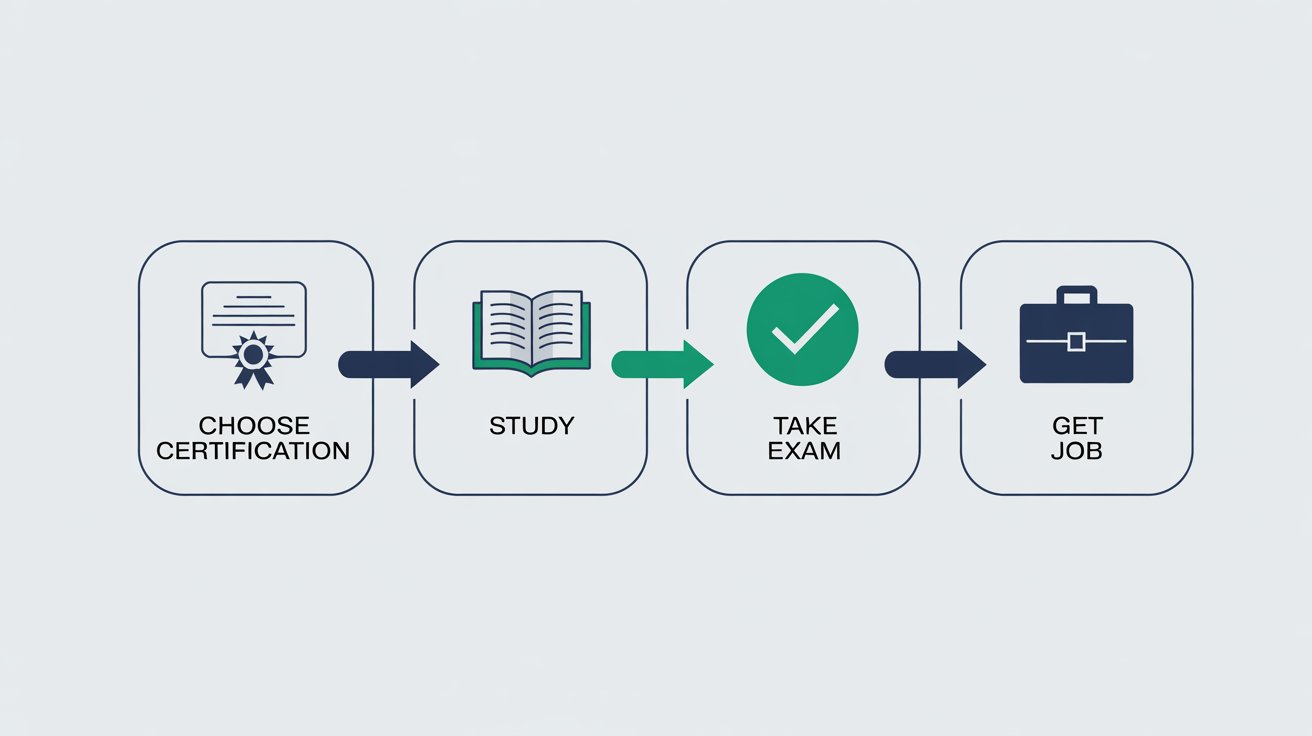
Follow this in order and you will avoid the confusion most beginners run into.
Step 1: Choose the Right Certification Path
Start by asking yourself two things. How much time do you have? How much can you spend?
If you are brand new to HR, start with the aPHR. If you have some related experience, such as handling employee grievances, running payroll, or using scheduling software, aim for the PHR or SHRM-CP.
Step 2: Meet Basic Eligibility Requirements for HR Certification
Each certification has different requirements. The aPHR has none beyond passing the exam.
The PHR requires at least one year of HR experience. SHRM-CP requires HR work experience or a combination of education and time in the field.
Always read the eligibility page on the official HRCI or SHRM website before you register. This saves time and money.
Step 3: Prepare for the Exam or Course
Buy a study guide or enroll in a prep course. HRCI and SHRM both sell official study materials. You can also find free practice exams on their websites.
Give yourself 6 to 12 weeks to prepare. Study consistently every day rather than cramming everything at the end.
Focus on areas like employment law, recruiting, compensation basics, and HR operations.
Step 4: Take the Certification Exam
Most exams are offered at testing centers or online. Book your exam date once you feel ready.
The aPHR is a computer-based test with 100 questions. You get two hours.
Take practice tests until you are consistently scoring 75 percent or above. That is a good sign you are ready.
Step 5: Build Real HR Skills After Getting Certified
The certification opens the door. Experience keeps you in the room.
After you pass, look for internships, HR assistant roles, or even volunteer work at small businesses.
Real tasks like managing onboarding paperwork, setting up ATS tools, or processing leave requests build the experience employers want.
What Most People Get Wrong About HR Certification Without a Degree
This is where most people trip up. And I want to be direct about it. A lot of people pass the aPHR and then wonder why they are not getting callbacks.
Here is what they miss:
The aPHR alone will not get you hired. You still need real HR exposure, even if it is just an internship or helping a small business set up their onboarding process.
Many candidates ignore ATS tools entirely. If you do not know how to use applicant tracking software like Greenhouse, Workday, or BambooHR, you are walking into interviews underprepared.
Networking matters more than most people realize in early HR roles. A lot of HR jobs are filled before they are even posted. Connecting with HR professionals on LinkedIn and attending SHRM local events puts you in those conversations.
The certification proves you know the theory. Your experience and network prove you can actually do the work.
Skills You Need to Succeed in HR Without a Degree
You do not need a degree, but you do need specific skills.
- Communication: HR is about people. You will write offer letters, handle sensitive conversations, and document employee issues clearly.
- Organization: You will track compliance deadlines, manage employee files, and coordinate interviews.
- Problem-solving: You will deal with real situations, like an employee complaint about a manager or a payroll discrepancy.
- Knowledge of labor law basics: You do not need to be a lawyer, but knowing rules around termination, leave policies, and workplace rights matters a lot.
- Confidentiality: HR handles sensitive data. Discretion is non-negotiable.
You can build all of these through online courses, HR software practice tools, and on-the-job learning.
How to Get an HR Job Without a Degree
The certification gets you noticed. Your skills get you hired.
Start by targeting small and mid-size companies. They care more about what you can do than where you went to school.
Large corporations sometimes filter resumes by degree, but smaller businesses focus on ability.
On your resume, list your certification at the top. Then highlight specific HR tasks you have done, even if it was during an internship.
Mention tools you know, like Workday, BambooHR, or any ATS platform.
Networking matters too. Join local SHRM chapters. Attend HR webinars. Connect with HR professionals on LinkedIn.
A referral moves your resume past the filters that a degree requirement cannot.
Salary Expectations After HR Certification (No Degree)
Based on industry averages from HR job listings across the U.S., here is what you can realistically expect at each stage.
HR Assistant: $38,000 to $48,000 per year. This is typically your entry point right after certification.
HR Coordinator: $48,000 to $60,000 per year. You move here after a year or two of hands-on experience.
HR Generalist: $60,000 to $75,000 per year. At this level, you are managing multiple HR functions, from recruiting to compliance.
HR Manager: $80,000 to $100,000 or more. This takes several years and usually additional certifications.
The ceiling is high. Your skills and results drive it, not the degree.
Is HR Certification Without a Degree Worth It?
For most people, yes, it absolutely is.
The cost of an aPHR exam is around $300 to $400. Compare that to tens of thousands of dollars for a four-year degree. The return on investment is clear if you put in the work.
That said, it is not a magic pass. You need to combine the certification with real experience, the right tool’s knowledge, and active networking.
Do all three, and the degree becomes much less relevant to most employers.
Pros and Cons of Getting HR Certified Without a Degree
Before you commit, it helps to look at both sides clearly.
Here is an honest breakdown to help you make the right call:
| Pros | Cons |
| Saves time and money vs. a four-year degree | Some large companies still filter by degree |
| You can start working in HR much sooner | Senior roles may still prefer degree holders |
| SHRM and HRCI credentials are respected | Certification exams have upfront costs |
| Many programs are fully online and self-paced | Certifications need renewal every few years |
| No experience needed for aPHR | Without experience, options can still be limited |
For most people, the pros outweigh the cons, especially if you are starting out and want to build a career without years of study.
Common Mistakes to Avoid When Getting HR Certified Without a Degree
Skipping the eligibility check: Always confirm you qualify before paying for an exam. HRCI and SHRM list requirements clearly on their websites.
Choosing a certification no one recognizes: Stick to HRCI or SHRM credentials. These carry real weight with hiring managers.
Stopping after the certification: The cert starts your career. It does not run it for you. Keep learning about tools like ATS platforms, payroll systems, and HR compliance updates.
Ignoring real-world experience: A certification without experience limits your options. Pair the two together from the start.
Rushing through prep: Failing and retaking the exam costs more money and time. Give yourself at least six weeks of consistent preparation.
Conclusion
Getting into HR without a degree is not a backup plan. It is a real, proven path.
I have seen people go from zero HR background to landing coordinator roles, simply by getting the right certification and gaining hands-on experience.
The steps are clear. Pick a certification, confirm eligibility, prepare well, and get practical experience behind you. Do not wait until everything feels perfect.
HR is a people-first field. Employers care about what you can do. Combine your certification with ATS tool knowledge, real experience, and active networking, and the degree gap closes fast.
Start with the aPHR if you have zero experience. Set a 60-day study plan and book your exam today.
Frequently Asked Questions
Can I get an HR certification with no experience at all?
Yes. The aPHR from HRCI requires no prior HR experience and no degree. It is designed specifically for people entering the field for the first time.
How long does it take to get HR certified without a degree?
Most entry-level certifications take two to four months to prepare for and pass. Faster programs on platforms like Coursera can be completed in a few weeks.
Is the aPHR worth it for someone without a degree?
Yes, it is one of the strongest options available. It is affordable, accessible, and recognized by employers as a legitimate entry-level credential in the HR field.
Do HR certifications expire?
Most do. HRCI certifications require recertification every three years through continuing education credits, webinars, or retaking the exam.
Can I work in HR with only a certification and no degree?
Yes. Many HR assistants, coordinators, and generalists work without degrees. Certification combined with hands-on experience can take you far in this field.


