


Everyone in My Family Has Killed Someone has been sitting on my list forever.
I kept pushing it back for other books, other genres, other excuses. Then one rainy afternoon I finally opened it. Two sittings later, I was done.
And honestly? I just sat there for a bit after finishing it. Not ready to move on yet.
If you are trying to figure out whether this one is worth your time, stay here. I am going to break down everything.
The story, the characters, the themes, and my real unfiltered take.
Quick Book Overview
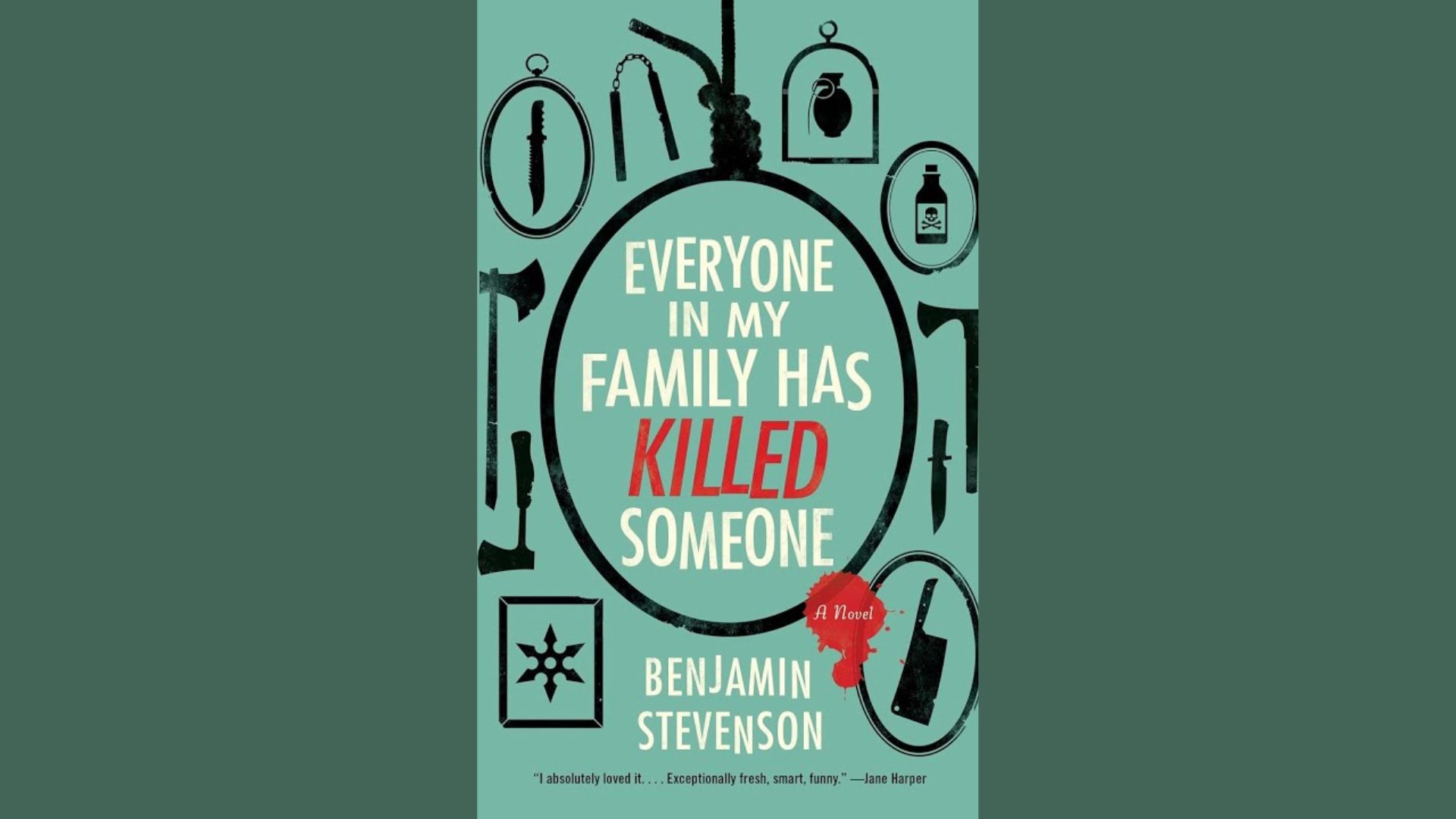
Everyone in My Family Has Killed Someone is a darkly funny murder mystery by Australian author Benjamin Stevenson, published in 2022.
It centers on Ernest Cunningham, who reunites with his completely dysfunctional family at a remote ski resort.
From page one, Ernie makes one thing crystal clear: everyone in his family has killed someone.
What makes this book stand out is how it blends classic locked-room mystery with sharp dark comedy and metafiction. Ernie knows he is telling a story and he wants you to know it too.
Self-aware, clever, and genuinely hard to put down once it gets its hooks in you.
Everyone in My Family Has Killed Someone Summary (Spoiler-Free)
The Cunningham family reunion was already uncomfortable before anyone died.
Ernie’s brother just got out of prison, and the tension between them is thick from the moment they arrive at a snowy mountain resort.
Then a body shows up in the snow. A storm cuts off the resort completely. Nobody is going anywhere.
Suddenly everyone is a suspect, including people Ernie loves.
What follows is sharp, funny, and genuinely gripping. Ernie narrates with a self-awareness that pulls you in as a co-detective rather than just a passive reader.
Think Agatha Christie, but make it self-aware. It absolutely works.
Major Themes
Stevenson packs this novel with ideas that reward you the more you sit with them.
Family and Moral Complexity
The book is genuinely interested in how ordinary people end up doing extraordinary things.
Every Cunningham family member has a reason. None of those reasons are simple. Stevenson refuses to make anyone a clean villain.
Truth vs Storytelling
This is one of the sharpest themes in the book. Ernie constantly questions what it means to tell the truth inside a narrative.
The novel asks whether a story can ever be fully honest, or whether the act of telling it always shapes what it becomes.
Identity and Belonging
Several characters spend the whole book wrestling with where they fit inside the family unit.
The murder at the center of the story turns out to be tangled up in questions of identity and legacy in ways that make the resolution land harder than expected.
Justice and Consequences
The novel draws a very deliberate line between legal accountability and moral accountability.
They are not the same thing here, and Stevenson makes sure you feel that difference by the end.
Main Characters
Each character in this book carries real weight.
Ernest (Ernie) Cunningham
Ernie is the narrator, the detective, and the emotional center of the story. He is honest, witty, and completely self-aware about the kind of story he is telling.
His voice is the best thing about this book. He talks directly to you and somehow makes that feel natural rather than gimmicky.
Michael Cunningham
Ernie’s brother, freshly out of prison. His release is the reason the family has gathered, and his history with Ernie is what makes the whole thing personal.
He is not a simple character. Stevenson gives him a real dimension.
The Cunningham Family
The family functions almost as a collective character. Each member has secrets. Each one has something to hide.
They are flawed, funny, and unsettling in equal measure. Getting to know each of them is one of the genuine pleasures of reading this book.
Writing Style and Narrative Technique
Stevenson writes in close first person with a narrator who knows exactly what he is doing.
Ernie talks directly to you. He flags clues, explains structure, and hints at red herrings without giving them away.
It sounds like it should be irritating. It is actually one of the most fun reading experiences I have had in this genre.
The story moves between past and present, feeding you clues at exactly the right pace. Inspired by Agatha Christie, but with a darker, funnier voice that is completely Stevenson’s own.
Why Readers Love It
The book has a devoted following and a few genuine critics. Here is the full picture.
Strengths
Ernie’s narrative voice is the strongest thing about this book. It is specific, funny, and completely original. The metafictional elements feel earned rather than clever for the sake of it.
The fair-play mystery structure is deeply satisfying for readers who love classic detective fiction. The dark comedy lands consistently without ever undercutting the genuine tension.
Readers who love both Agatha Christie and modern dark humor find it almost impossible to put down.
Criticism and Limitations
The heavy self-aware narration will not work for every reader. Some people find it more distracting than engaging.
The nonlinear structure and layered plot can feel complex in the middle section. If you need momentum over intricacy, there are stretches that will test your patience.
The ending’s reliance on a long-lost family member also stretches credibility slightly for some readers.
Goodreads and Amazon Ratings
Readers have a lot to say about this one, and the numbers reflect a strongly positive response.
Goodreads: 3.9 out of 5 stars. The reviews praise the narrative voice consistently.
The most common note is that Ernie is one of the most memorable narrators readers have encountered in the genre. A smaller group finds the metafiction approach too self-indulgent.
Amazon: 4.3 stars. Readers there highlight the humor and the clever plotting most often.
Multiple reviewers mention finishing it in a single sitting and immediately wanting to recommend it to someone.
One thing is clear across both platforms. Nobody reads this book and forgets Ernie Cunningham.
My Personal Opinion After Reading
I came in expecting a standard mystery. I got something stranger and far better.
Ernie’s voice hooked me immediately. The fair-play reveal felt genuinely earned, not just shocking.
Is it perfect? No. The middle drags slightly. But Stevenson is doing something original here, and it absolutely lands.
Who Should Read This Book:
This book is a strong fit for a very specific kind of reader.
- You love classic mystery fiction and enjoy seeing the genre played with intelligently
- You are drawn to dark comedy that does not sacrifice real tension
- You like unreliable or self-aware narrators who talk directly to you
- You loved books like The Thursday Murder Club, Magpie Murders, or anything by Agatha Christie
- You are okay with a story that asks you to pay close attention throughout
If that sounds like you, go read it right now.
About the Author

Benjamin Stevenson is an Australian author and stand-up comedian, and honestly that combination explains everything about this book.
His comedy background feeds directly into how he handles dark material without ever letting it get too heavy. That timing instinct shows in every single chapter.
Everyone in My Family Has Killed Someone was his breakout in crime fiction.
It pulls from his love of classic fair-play mysteries, especially Agatha Christie, but adds a modern self-aware voice that belongs entirely to him.
The sequel, Everyone on This Train Is a Suspect, continues Ernie’s story with equally strong results. Stevenson is one to watch.
Conclusion
Everyone in My Family Has Killed Someone is not the kind of mystery you finish and move on from.
Ernie’s voice stays with you. The structure stays with you. The ending earns its place once you let it settle.
Funny, clever, and genuinely surprising in the ways that matter most.
If this post helped you decide, share it with someone who loves a good locked-room mystery.
Already read it? Drop your thoughts on the ending in the comments. Did you spot the killer early?
Frequently Asked Questions
Is Everyone in My Family Has Killed Someone part of a series?
Yes. It is followed by Everyone on This Train Is a Suspect, continuing Ernie’s story in a new setting.
Is this book suitable for readers new to the mystery genre?
Yes. Ernie flags clues as they appear, making it a great entry point for fair-play mystery newcomers.
How long does it take to read?
Most readers finish it in 6 to 9 hours.
What makes this different from other thrillers?
The self-aware narrator, metafictional structure, and fair-play format. No cheap shock twists here.
Is the dark comedy appropriate for sensitive readers?
The humor is dry and situational. Some deaths are described in detail, so sensitive readers should take note.