
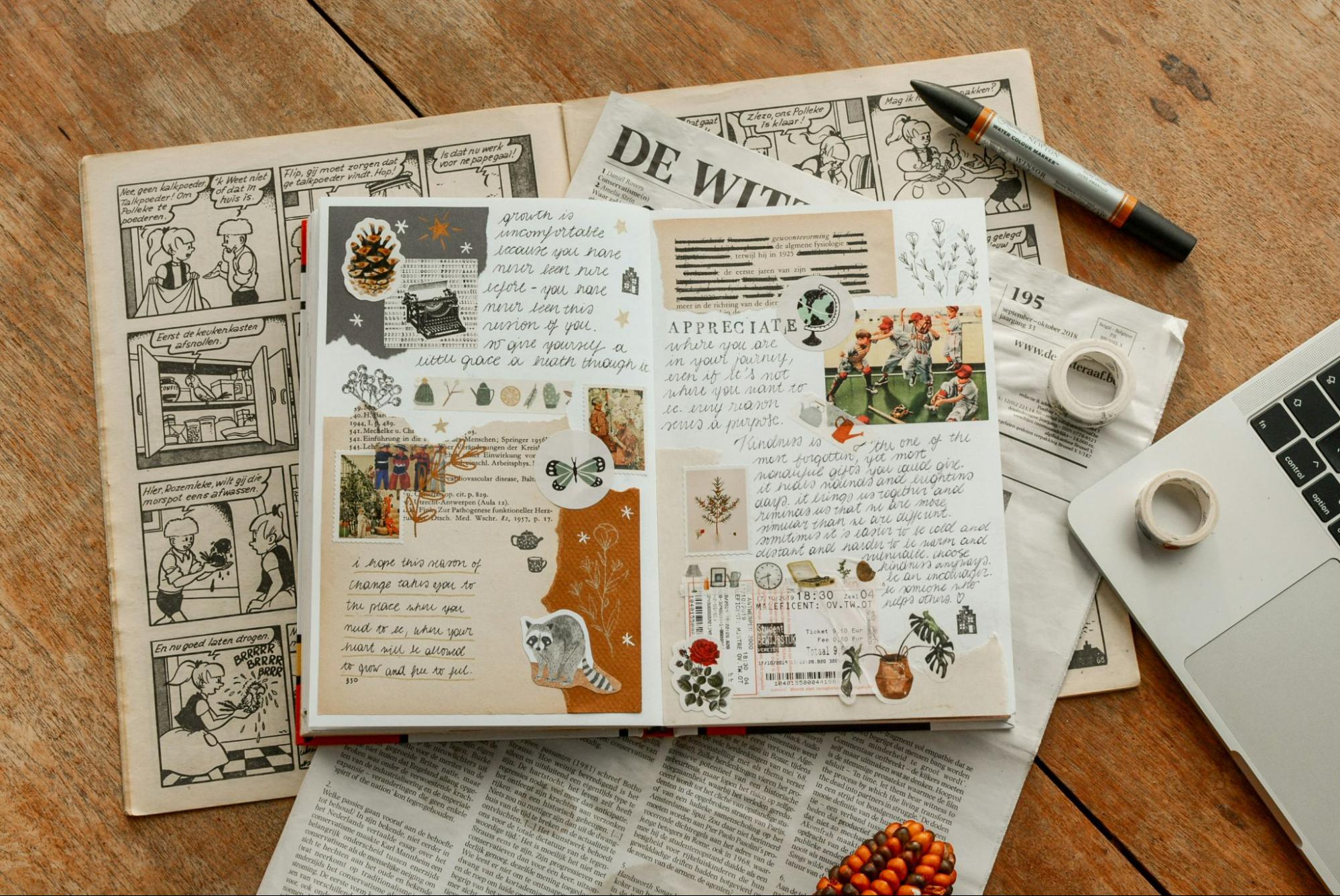
A lot of reading journals start strong. There’s a neat opening page, a list of books for the year, maybe a little doodle in the corner, and then somewhere around March the pages go quiet. Custom stickers won’t fix a reading slump on their own, but they give you a small, physical reason to open the journal again, and that’s often enough.
This is a roundup of ways readers use stickers to track progress, stay motivated and make a long reading list feel less like homework. Some ideas work for one person with a notebook. Others are built for book clubs, where a shared sticker can turn into a bit of a ritual.
Why a sticker beats a checkbox (sometimes)
A checkmark records that something happened. A sticker does the same job, but it also gives you a tiny reward and leaves a visual trail you can flip back through. Ten stickers on a page look like progress in a way ten ticks don’t.
There’s some research behind the general idea. A meta-analysis summarized by the American Psychological Association found that monitoring progress toward a goal made people more likely to reach it, and the effect was larger when progress was physically recorded or reported to others. Those studies mostly looked at health goals rather than reading, so treat it as a useful nudge, not proof that stickers will double your page count.
The logic carries over, though. Sticking it down turns a vague plan like “read more this year” into something you can see on the page.
Sticker ideas for your reading journal
Nothing here needs special supplies. A sheet of small round stickers and a fine pen will cover most of it. Readers who prefer personalized designs can also browse options such as stickerbeat custom stickers to compare available shapes and finishes.
The sticker bookshelf
Draw a simple row of shelves across a two-page spread. Every finished book gets a sticker spine, and you write the title along it. Thin rectangle stickers work well here because they already look like book spines.
Come December, you’ve got a picture of your whole reading year on two pages. Some readers match sticker shades to genre, which makes it obvious at a glance when you’ve read nine thrillers in a row and nothing else.
Chapter dots for long books
Big books are where a lot of reading goals stall. One fix is to give the book its own page and lay out one box per chapter. Moby-Dick has 135 chapters plus an epilogue, which sounds grim until you’re filling in dots and watching the grid shrink.
For novels split into larger sections, like Middlemarch and its eight books, a bigger sticker at each section break gives you another milestone to look forward to. It’s a small thing. It helps on stubborn weeks.
Mood stickers instead of star ratings
Star ratings get flat fast. Try a small set of face or symbol stickers instead: one for “couldn’t put it down,” one for “slow but worth it,” one for “made me cry on the bus.” Make up your own categories. Nobody’s grading this.
Looking back, mood stickers often say more than a number would. Patterns show up quickly, like the fact that you rate short books higher, or that every book you loved came from the same friend.
A “did not finish” sticker, minus the guilt
This one’s underrated. Give abandoned books their own sticker, maybe a little bookmark shape, and note the page where you stopped. Quitting a book is a choice, not a failure, and logging it keeps the journal honest instead of quietly empty.
Bringing stickers into a book club
Plenty of book clubs already run on small rituals. The snacks, the member who always flips to the ending before chapter one, the debate about whether the ending even counted. Stickers slot into that pretty easily.
The American Library Association’s I Love Libraries site suggests members take notes as they read and bring them to the meeting, including passages that stood out or didn’t make sense. Small flag stickers make that easier. Mark the passage in your journal with a page number, then show up knowing exactly what you want to talk about instead of flipping around mid-discussion.
One practical note: if you’re reading a library copy, keep the stickers in your journal and off the book itself.
A few other ways clubs use them:
- A monthly pick sticker, added to a shared club journal or to each member’s own notebook
- Discussion prompt stickers with a short question printed on each, handed out so quieter members have an easy way in
- A finisher sticker for anyone who made it to the last page, giving members a small way to celebrate completing the book
- A theme sticker for clubs running a challenge, like a book set in a different country every month
Making a sticker for your own club
For book clubs that enjoy creating their own traditions, designing a shared sticker can be a fun project. It’s easier than it sounds. A simple design with the club name, a small icon and maybe the year is often enough.
Format matters a little. Kiss-cut stickers have their designs cut through the sticker material while the backing stays intact, making them convenient to peel. If your printer offers multi-design sticker sheets, you can also arrange a full set of monthly designs on one page. Die-cut stickers are cut to the shape of the design, so they suit a single logo that goes on a journal cover or a water bottle.
Before settling on a design, it helps to compare the shapes and finishes printers offer for reading journals or club keepsakes. Check whether the printer provides a digital proof before production. This can help catch text that becomes difficult to read at smaller sizes.
If members plan to write on their stickers, a matte finish is often easier to write on than gloss. Test your pens on one sticker before doing a whole sheet.
Keeping it fun instead of a chore
The fastest way to ruin a sticker system is to turn it into homework. Decorating the journal can be part of the fun, but if it starts taking longer than the reading, it’s quietly replacing the reading.
Keep the sheet and the journal near the book you’re reading so logging takes ten seconds. When life is busy, set goals in chapters or reading sessions instead of whole books. And don’t backfill the weeks you missed. A gap on the page is just a gap.
For clubs, keep the stickers optional. Some members will love them and some will roll their eyes, and there’s room for both at the same table.
Frequently asked questions
What kind of stickers work best in a reading journal?
Small round dots and thin rectangles cover most uses. Kiss-cut sheets keep a set together so nothing gets lost between sessions.
Can I put stickers in library books?
It’s best not to. Library copies are shared, so keep stickers in your journal or on a bookmark you own.
How do stickers help a book club?
They give members a quick way to mark passages, keep a record of the club’s reads and celebrate finishing a tough pick.
Does a club need a custom design?
No. Store-bought sheets work fine. A custom design mostly matters when the group wants something that feels like its own.