


Looking for an honest Tender Is the Flesh summary? You're in the right place. I'll help you decide whether Agustina Bazterrica's controversial novel is worth reading.
This is one of the most unsettling books I've ever encountered. It's not horror in the traditional sense.
Instead, it creates a chilling world that feels disturbingly plausible and forces readers to confront uncomfortable questions about society, morality, and human nature.
In this post, I'll cover the plot without major spoilers, the main themes, character analysis, and my personal thoughts.
You'll also find out what critics say and who should read this book. I'll be honest about both its strengths and its limitations.
Let's jump in.
Synopsis of Tender Is the Flesh
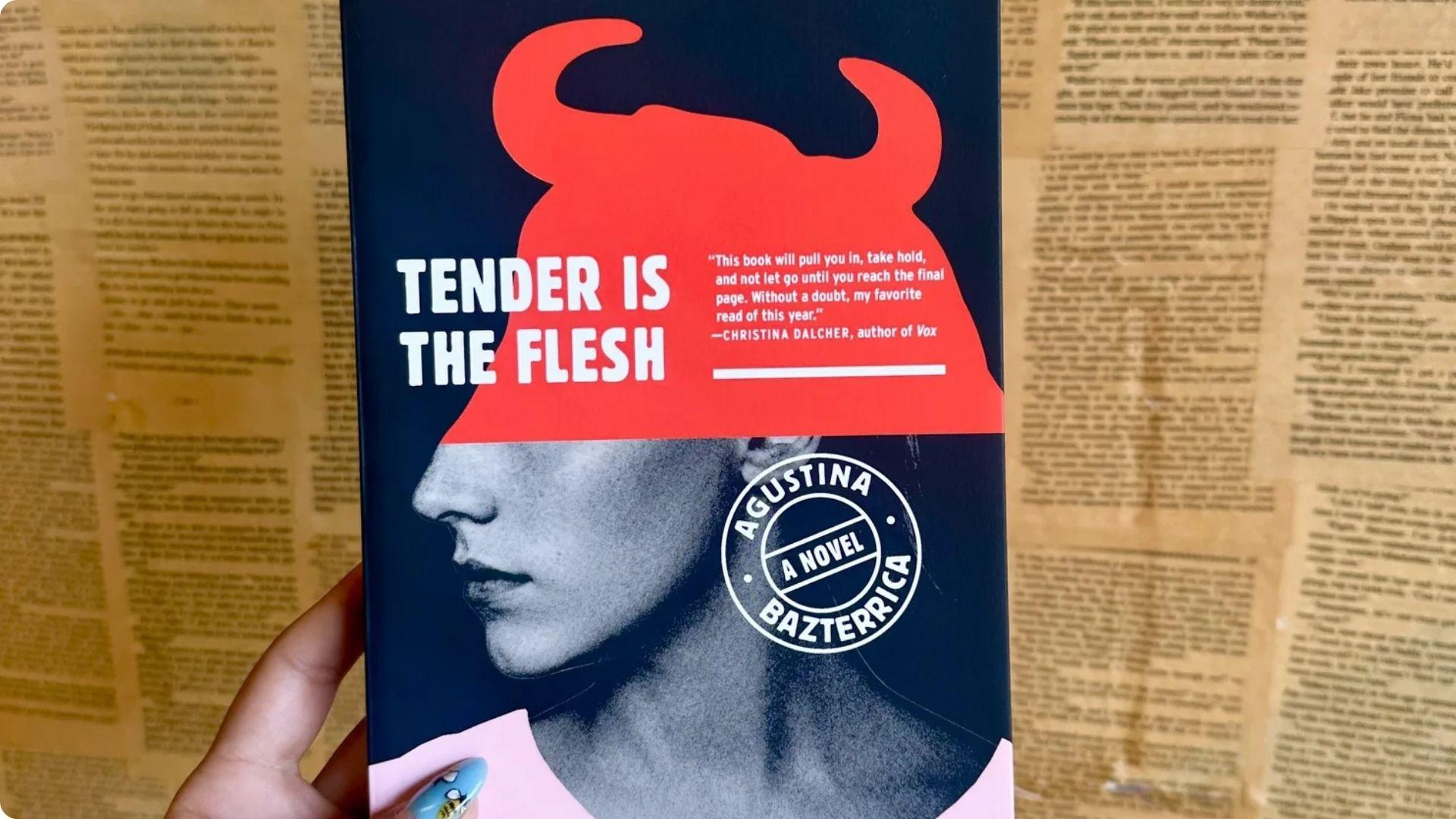
The novel takes place in a near-future society transformed by a global crisis.
A mysterious virus has allegedly contaminated all animal meat, making it deadly for human consumption.
Governments around the world respond with a drastic solution known as "The Transition." Animals are exterminated, and humanity begins breeding humans specifically for consumption.
In this new world, people raised for slaughter are no longer referred to as humans. They are called "head" or "special meat."
Language itself has been altered to make the practice acceptable.
The story follows Marcos Tejo, a manager at a human-processing plant.
Every day, he oversees the slaughter and distribution of human meat while trying to emotionally distance himself from the reality of what he does.
Marcos is struggling with grief, a failing marriage, and the decline of his aging father.
His life becomes even more complicated when he receives a female specimen as a gift from a business associate.
As Marcos develops an unusual connection with her, he begins questioning the society around him and his own role within it.
The story steadily builds toward one of the most shocking endings in modern dystopian fiction.
Major Themes in Tender Is the Flesh
Bazterrica uses extreme horror to talk about deeper social and philosophical questions.
Dehumanization and Language
One of the novel's most powerful ideas is how language shapes morality.
The government changes the words people use. Humans bred for slaughter are no longer called people. By removing human labels, society becomes capable of accepting horrific acts.
The novel suggests that language can be used to justify almost anything when enough people agree to it.
Consumerism and Industrialization
The book serves as a harsh critique of industrial production and mass consumption.
Human beings are treated as products. They are bred, processed, packaged, and sold through highly organized systems.
Bazterrica forces readers to consider how modern industries can disconnect consumers from the realities behind production.
Morality Under Social Pressure
Many characters know something is wrong with the system.
Yet most continue participating because society has normalized it.
The novel asks a difficult question:How much of our morality comes from personal conviction, and how much comes from social acceptance?
Humanity and Hypocrisy
Throughout the story, characters claim to value ethics and compassion while simultaneously benefiting from cruelty.
Bazterrica talks about the gap between what people believe about themselves and what they are actually willing to tolerate.
The result is a bleak but fascinating examination of human nature.
Character Analysis
Each character reflects a different response to the world created by The Transition.
Marcos Tejo
Marcos is the emotional center of the novel.
Unlike many people around him, he recognizes the horror of what society has become. Yet he continues working within the system.
He is intelligent, reflective, and deeply damaged by grief.
Much of the novel's tension comes from watching him navigate the conflict between his conscience and his survival.
Cecilia
Marcos's estranged wife exists mostly through memories and conversations.
Her grief over the loss of their child has created distance between them.
She represents the emotional wounds that shape many of Marcos's decisions throughout the story.
Marcos's Father
Marcos's father suffers from declining health and dementia.
His condition highlights themes of memory, humanity, and dignity.
Through him, the novel examines how society values people only when they remain useful.
The Female Specimen
The unnamed woman given to Marcos becomes one of the novel's most important symbols.
Her existence forces readers to confront the central contradiction of the story.
Though society labels her as livestock, her humanity remains impossible to ignore.
Writing Style and Narrative Voice
Bazterrica's writing style is one of the book's greatest strengths.
Sharp and Unflinching Prose
The prose is direct, economical, and brutally effective.
Bazterrica avoids excessive description. Instead, she delivers horrifying details with clinical precision.
This restraint makes the violence feel even more disturbing.
Atmosphere of Constant Unease
The novel creates a feeling of dread that rarely lets up.
Even ordinary scenes feel uncomfortable because readers are constantly reminded of the society's horrifying foundations.
The atmosphere becomes almost suffocating by the final chapters.
Symbolism and Social Commentary
While the plot works as dystopian horror, the novel also functions as a broader social critique.
Many scenes operate on multiple levels, examining power, exploitation, consumer culture, and moral compromise.
Readers who enjoy literary fiction will find plenty to analyze beneath the surface.
Critical Reception
Tender Is the Flesh received widespread attention after its English translation was published.
Critics praised its originality, provocative themes, and willingness to confront uncomfortable subjects.
The novel won Argentina's prestigious Premio Clarín Novela before gaining international recognition. Many reviewers described it as one of the most disturbing dystopian novels of the decade.
Some readers, however, felt the world-building could have been deeper and that the characters sometimes function more as symbols than fully developed individuals.
Others found the relentless bleakness difficult to endure.
Still, even critics who disliked parts of the book often acknowledged its ability to provoke thought and spark discussion.
Notable Reviews and Ratings
Tender Is the Flesh continues to generate strong reactions from readers around the world.
- Goodreads: 3.77 out of 5 stars based on more than 442,000 ratings and over 89,000 reviews. Readers frequently praise its shocking premise, social commentary, and unforgettable ending. (Goodreads)
- Amazon: 4.3 out of 5 stars based on thousands of customer reviews. Readers often highlight its disturbing atmosphere and thought-provoking themes.
- Awards and Recognition: Winner of the Premio Clarín Novela, one of Argentina's most prestigious literary awards. The novel later became an international bestseller. (Goodreads)
- What Reviewers Are Saying: Many readers describe it as horrifying, provocative, and impossible to forget. Others praise its critique of consumer culture and dehumanization. Some readers consider it one of the most disturbing books they've ever read, while others view it primarily as social satire rather than pure horror. (Reddit)
My Personal Reading Experience
Reading Tender Is the Flesh felt like watching a slow-motion train wreck.
The premise grabs your attention immediately, but what stayed with me wasn't the violence. It was the normalization of the violence.
Bazterrica creates a world where horrifying acts have become routine. That idea disturbed me far more than any graphic scene.
Marcos is a fascinating protagonist because he exists in a moral gray area. You sympathize with him at times, yet you're constantly aware of his complicity.
And then there's the ending.
I won't spoil it, but it's one of those endings that forces you to rethink everything you've just read. I finished the final page and sat silently for several minutes trying to process it.
Few books have managed to shock me that effectively.
About the Author: Agustina Bazterrica

Agustina Bazterrica is an Argentine author, cultural manager, and short-story writer known for literary horror and speculative fiction.
Born in Buenos Aires, she studied arts and became an active figure in Argentina's literary community.
Before achieving international success, she worked extensively in writing workshops, cultural events, and literary programs.
Tender Is the Flesh won the Premio Clarín Novela and introduced her work to readers worldwide.
The novel's success established her as one of the most distinctive voices in contemporary literary horror.
Her fiction often talks about power, violence, social structures, and the darker aspects of human behavior.
Conclusion
I hope this Tender Is the Flesh summary helped you decide whether the book is right for you.
This isn't a comfortable read. It isn't designed to entertain in the traditional sense. Instead, it challenges you, unsettles you, and forces you to examine ideas you'd probably rather avoid.
If you enjoy thought-provoking dystopian fiction, dark social commentary, and books that linger in your mind long after you finish them, this novel is worth your time.
Just don't expect to walk away feeling comfortable.
Frequently Asked Questions
Is Tender Is the Flesh based on a true story?
No. The novel is entirely fictional, though it draws on real-world concerns about industrial systems, consumer culture, and dehumanization.
How long does it take to read Tender Is the Flesh?
The novel is approximately 220–230 pages depending on the edition. Most readers finish it in four to six hours.
What age is appropriate for reading Tender Is the Flesh?
The book is intended for adults. It contains graphic violence, disturbing themes, sexual content, and intense psychological horror.
Why is Tender Is the Flesh so controversial?
Its depiction of legalized cannibalism and its graphic examination of dehumanization have made it one of the most debated horror novels of recent years.
Is there a sequel to Tender Is the Flesh?
No. The novel is a standalone story with no direct sequel currently available.