


Looking for an honest The Covenant of Water summary? You're in the right place. I'll help you decide whether Abraham Verghese's acclaimed novel deserves a spot on your reading list.
I picked up this book expecting a historical family saga.
What I found was something much bigger:a sweeping story about love, loss, medicine, faith, and the invisible threads that connect generations.
In this post, I'll cover the plot without major spoilers, talk about the central themes, analyze the key characters, and share my personal thoughts on the novel.
You'll also find what critics and readers think, who will enjoy this book most, and whether its nearly 800 pages are worth the commitment.
Let's jump in.
Synopsis of The Covenant of Water
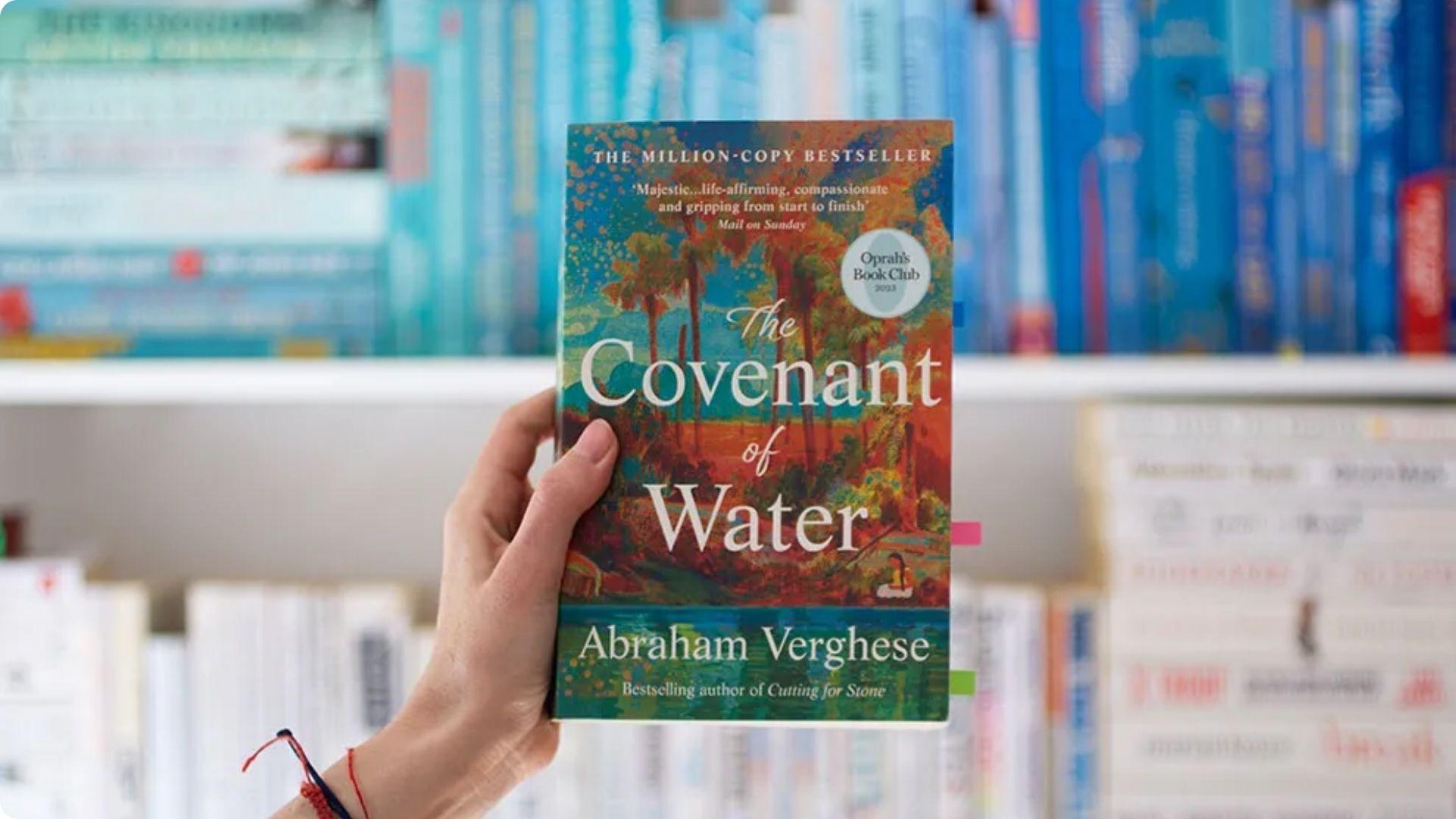
The Covenant of Water is set in Kerala, India, between 1900 and the 1970s and follows three generations of a Christian family haunted by a mysterious curse known as "The Condition."
For decades, family members have died by drowning, creating a deep fear of water despite living in a region filled with rivers and canals.
The story begins when a twelve-year-old girl, later known as Big Ammachi, is sent to marry a widower and becomes the heart of the family.
As the years pass, their lives intertwine with those of Digby Kilgour, a Scottish doctor, and others connected by love, loss, medicine, and hidden secrets.
Gradually, the truth behind The Condition is revealed, shaping the family's destiny across generations.
Major Themes in The Covenant of Water
Verghese talks about universal themes through family history, medicine, and deeply human relationships.
Family Legacy and Generational Bonds
Few novels capture the weight of family history as effectively as The Covenant of Water.
The characters inherit not only property and traditions but also fears, responsibilities, and unanswered questions. The past constantly shapes the present, often in ways the characters don't fully understand.
The novel asks whether we can ever truly escape the stories we inherit.
Medicine, Science, and Human Compassion
As a physician himself, Verghese brings extraordinary authenticity to the medical aspects of the story.
Medicine is not presented merely as science. It becomes a way of understanding people, relieving suffering, and uncovering truths hidden for generations.
The novel highlights both the limitations and the wonders of medical knowledge.
Love, Loss, and Resilience
Love appears in many forms throughout the story: romantic love, parental devotion, friendship, and community.
Yet every act of love carries the possibility of grief. The characters endure enormous losses, but Verghese consistently emphasizes resilience rather than despair.
Even in tragedy, the novel remains deeply hopeful.
Faith, Tradition, and Change
The family's Christian faith influences many of their decisions and values.
At the same time, the story unfolds during periods of tremendous social and political change in India. Characters must navigate the tension between honoring tradition and embracing modernity.
Verghese treats both perspectives with nuance and respect.
Water as Symbol and Mystery
Water functions as far more than a setting detail.
It represents life, death, renewal, fear, and destiny. Nearly every major event in the novel connects to water in some way.
By the end, the symbolism becomes one of the book's most powerful elements.
Character Analysis
The strength of The Covenant of Water lies in its unforgettable characters.
Big Ammachi
Big Ammachi serves as the emotional center of the novel.
She begins as a young girl entering an arranged marriage and gradually becomes a matriarch whose wisdom and compassion shape generations.
Her journey is one of growth, endurance, and quiet strength.
Philipose
Philipose is one of the family's most complex figures.
Brilliant and charismatic, he struggles with personal demons that affect both his life and the people around him.
His story illustrates how intelligence and success do not always protect someone from suffering.
Digby Kilgour
Digby brings a different perspective to the novel.
As a Scottish doctor working in India, he experiences both cultural discovery and profound personal transformation.
His storyline adds depth to the novel's exploration of medicine, identity, and belonging.
Elsie
Elsie's story is among the most emotionally affecting in the book.
Through her experiences, Verghese talks about vulnerability, courage, and the unpredictable ways life can change in an instant.
The Extended Family
One of the novel's greatest achievements is its large cast.
Even minor characters feel distinct and memorable. Together, they create a vivid portrait of a family evolving across decades.
Writing Style and Narrative Voice
Verghese's writing is one of the novel's greatest strengths.
Rich and Lyrical Prose
The descriptions of Kerala are breathtaking.
You can almost feel the humidity, hear the birds, and smell the spices carried through the air.
Verghese creates a world so vivid that reading often feels like traveling.
Historical Detail Without Overload
Historical fiction sometimes overwhelms readers with research.
Verghese avoids this trap. Historical details emerge naturally through the lives of the characters rather than through lengthy exposition.
The result feels immersive rather than educational.
Pacing and Length
At nearly 800 pages, this is undeniably a long novel.
The pacing is deliberate, especially in the early sections. Readers looking for constant action may find parts slow.
However, those who enjoy character-driven storytelling will likely appreciate the novel's patience.
Multiple Storylines
The narrative shifts between different characters and time periods.
While this occasionally requires concentration, the various threads eventually connect in satisfying ways.
The payoff is worth the investment.
Critical Reception
The Covenant of Water received widespread acclaim upon publication.
Critics praised Verghese's storytelling, emotional depth, and ability to balance intimate family drama with larger historical themes.
Many reviewers compared the novel to classic multi-generational epics while noting its distinctly modern perspective.
Some criticism focused on the book's length and occasionally leisurely pacing. Others felt certain subplots received more attention than necessary.
Even so, the overall response was overwhelmingly positive, with many critics calling it one of the strongest literary novels of recent years.
Notable Reviews and Ratings
Here are the notable recognition of the book on Goodreads and Amazon
Goodreads
3.99/5 stars based on 1.12+ million ratings and 120,000+ reviews.
Readers consistently praise the novel's atmospheric world-building, magical setting, and dreamlike storytelling, though some note its slow pacing and plot-light structure.
Amazon
4.5–4.6/5 stars based on tens of thousands of customer reviews.
Readers frequently highlight Erin Morgenstern's immersive prose, imaginative circus setting, and emotional romance.
Literary Recognition
The novel appeared on numerous best-of-the-year lists and earned significant critical attention worldwide.
Many reviewers considered it a major achievement in contemporary literary fiction.
What Reviewers Are Saying
Readers often describe the novel as expansive, moving, and deeply humane.
Many compare the experience to living alongside the family rather than simply reading about them.
The emotional investment required is significant, but so is the reward.
My Personal Reading Experience
Reading The Covenant of Water felt less like reading a novel and more like living with a family for several weeks.
The first thing that struck me was the emotional authenticity. These characters rarely feel like fictional creations. Their joys, fears, mistakes, and relationships feel remarkably real.
I was especially impressed by Big Ammachi. She became one of those rare literary characters who feels unforgettable long after the story ends.
The medical elements also fascinated me. Verghese brings a level of detail and humanity that few authors could achieve.
Was every page equally engaging? Not quite. There were moments when the pacing slowed, and I occasionally wished certain sections moved faster.
Still, the ending rewarded the patience. When the central mystery finally comes together, the emotional impact is substantial.
By the final pages, I felt genuinely attached to this family and reluctant to leave their world behind.
About the Author: Abraham Verghese

Abraham Verghese is a physician, professor, and bestselling author known for combining medicine with deeply human storytelling.
Born in Ethiopia to Indian parents, Verghese later moved to the United States and built a distinguished medical career.
Before The Covenant of Water, he gained international recognition for his novel Cutting for Stone, which became a global bestseller.
His medical background informs much of his fiction, allowing him to talk about illness, healing, and human connection with unusual depth and authenticity.
Verghese's work consistently focuses on empathy, family, and the ways people care for one another in difficult circumstances.
Conclusion
I hope this The Covenant of Water summary helped you decide whether the novel is right for you.
This is the kind of book that rewards patience. It asks for your time and attention, but it gives back unforgettable characters, emotional depth, and a story that lingers long after the final page.
If you enjoy sweeping family sagas, rich historical settings, and character-driven fiction, I think there's a good chance you'll love this novel.
After finishing it, I found myself thinking about its characters for days. Few books manage that. This one does.
If you've read The Covenant of Water, I'd love to know which character or storyline stayed with you the most.
Frequently Asked Questions
What is The Covenant of Water about?
It is a multi-generational family saga set in Kerala, India, following a family affected by a mysterious condition that causes repeated drownings across generations.
Is The Covenant of Water based on a true story?
No. The story is fictional, although it incorporates historical events, medical realities, and cultural details drawn from real life.
Why is it called The Covenant of Water?
The title reflects the family's deep relationship with water, which functions as both a source of life and a source of tragedy throughout the novel.
Is The Covenant of Water difficult to read?
The writing itself is accessible, but the book's length and large cast of characters require commitment and attention.
How long does it take to read The Covenant of Water?
At roughly 700–800 pages depending on the edition, most readers spend 15–25 hours reading the novel.
Is The Covenant of Water worth reading?
For readers who enjoy literary fiction, family sagas, historical novels, and richly developed characters, the answer is very likely yes.