


What if your dining room could do more than just hold a dinner table? A library dining room is a space that works as both a dining area and a home for your books.
It handles two jobs in one room, and it does both well. More people are choosing this kind of setup because it saves space and gives the home real character.
You get a spot to share meals and a quiet place to read. It looks good, reduces clutter, and makes every inch of your home pull its weight.
Design Essentials for a Functional Library Dining Room
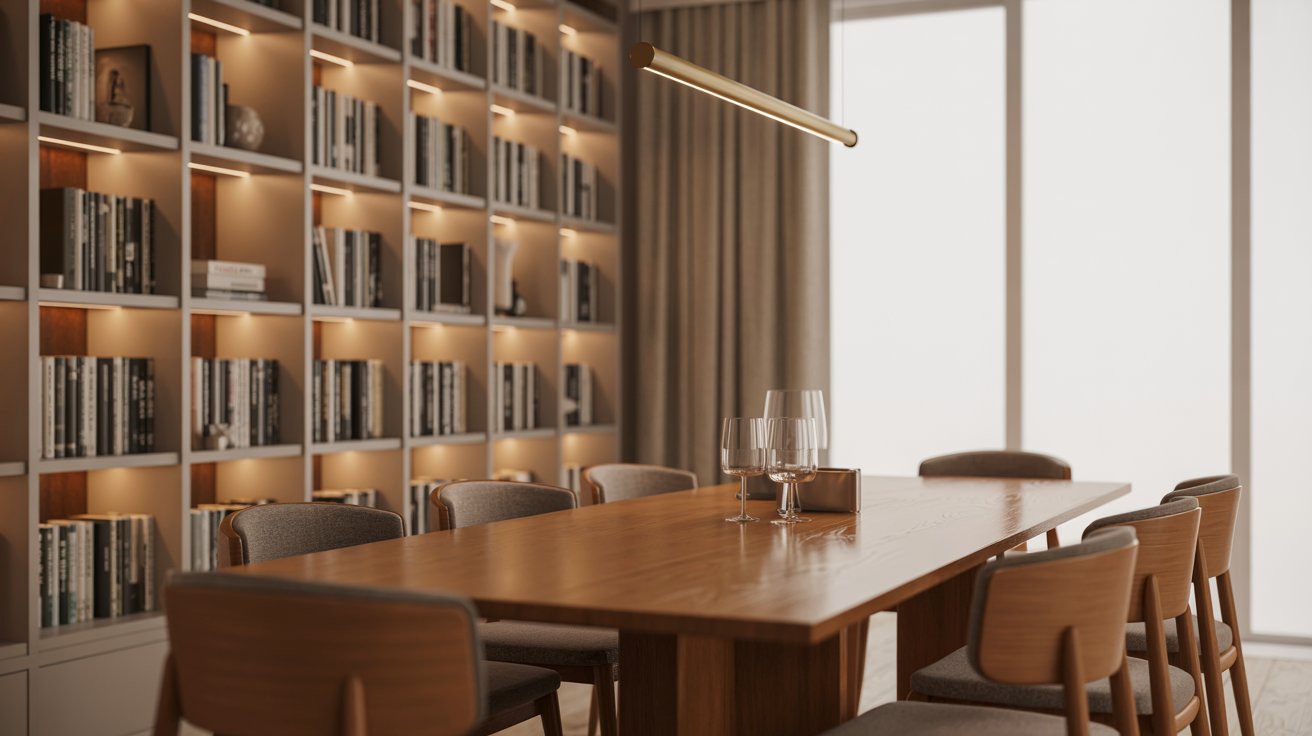
Layout planning matters more than most people think. In a dual-purpose room, every inch has a job to do. Make sure your bookshelves don't crowd the dining area.
You need enough room to sit, eat, and move around freely. Lighting is just as important. Use one light for the table and another for the shelves.
Keep books sorted and surfaces clear. A tidy space always works better and looks better too.
List of 11 Creative Library Dining Room Ideas
You don't need a separate room for your book collection. These ideas show how to bring books and dining together in one smart space.
1. Floor-to-Ceiling Bookshelves Around the Dining Area

Full wall shelving creates a bold library feel in any dining room. It works best in large or open-plan spaces. Line all four walls or just one. The height draws the eye up and makes the room feel grand and well-used.
2. Built-In Bookshelves with a Central Dining Table

Custom built-in shelves framing a dining table give the space a polished, put-together look. The cabinetry fits flush with the walls, so nothing feels out of place. It looks intentional, clean, and well-planned from every angle.
3. Cozy Corner Dining Library Setup

A corner nook with shelves on two walls is a smart pick for small homes. It uses space that often goes to waste. Add a round table and soft seating, and you have a warm, compact spot that works hard.
4. Library Dining Room with Statement Lighting

Good lighting ties the whole room together. A pendant light or chandelier hung over the dining table sets the mood for both meals and reading. Choose warm bulbs to keep the space feeling inviting, not cold or clinical.
5. Minimalist Dining Room with Floating Shelves
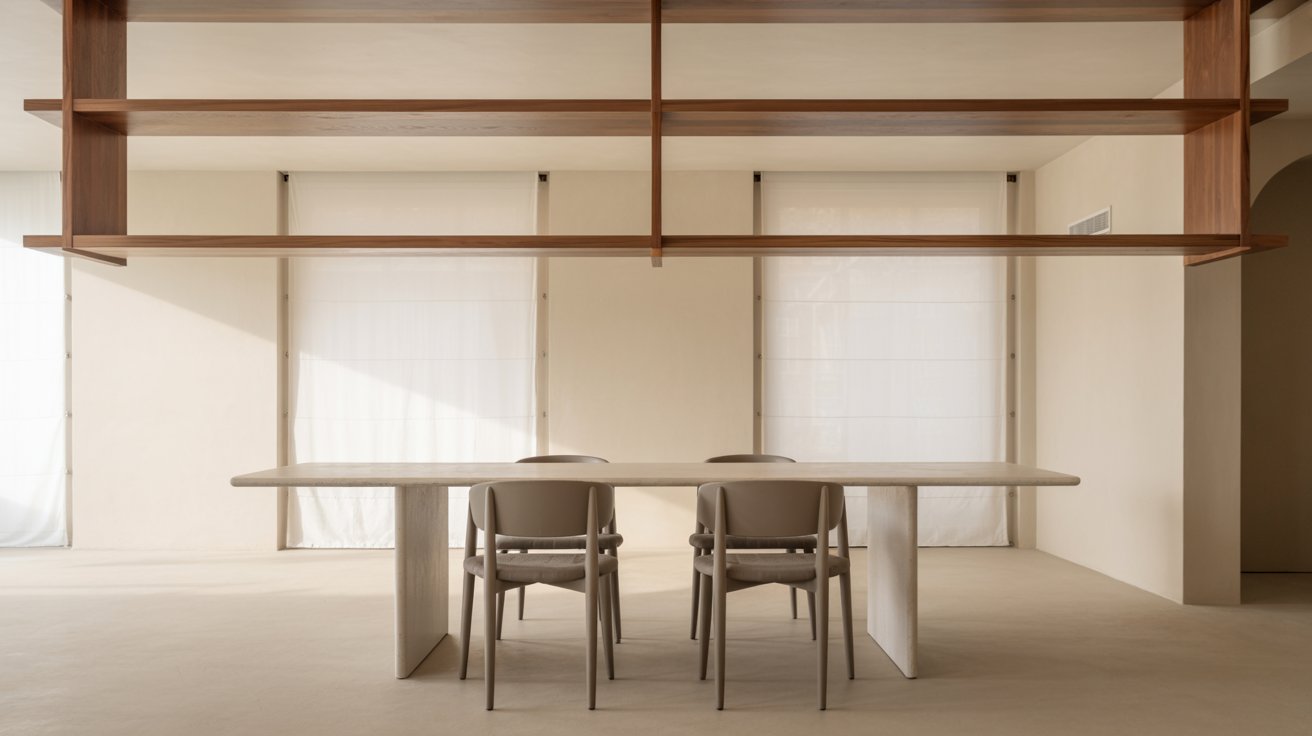
Floating shelves keep things light and open. There are no bulky cabinets taking up floor space. You get storage for your books without the room feeling heavy. This works well in modern homes that favour clean lines and a simple look.
6. Rustic Library Dining Room with Wooden Shelving
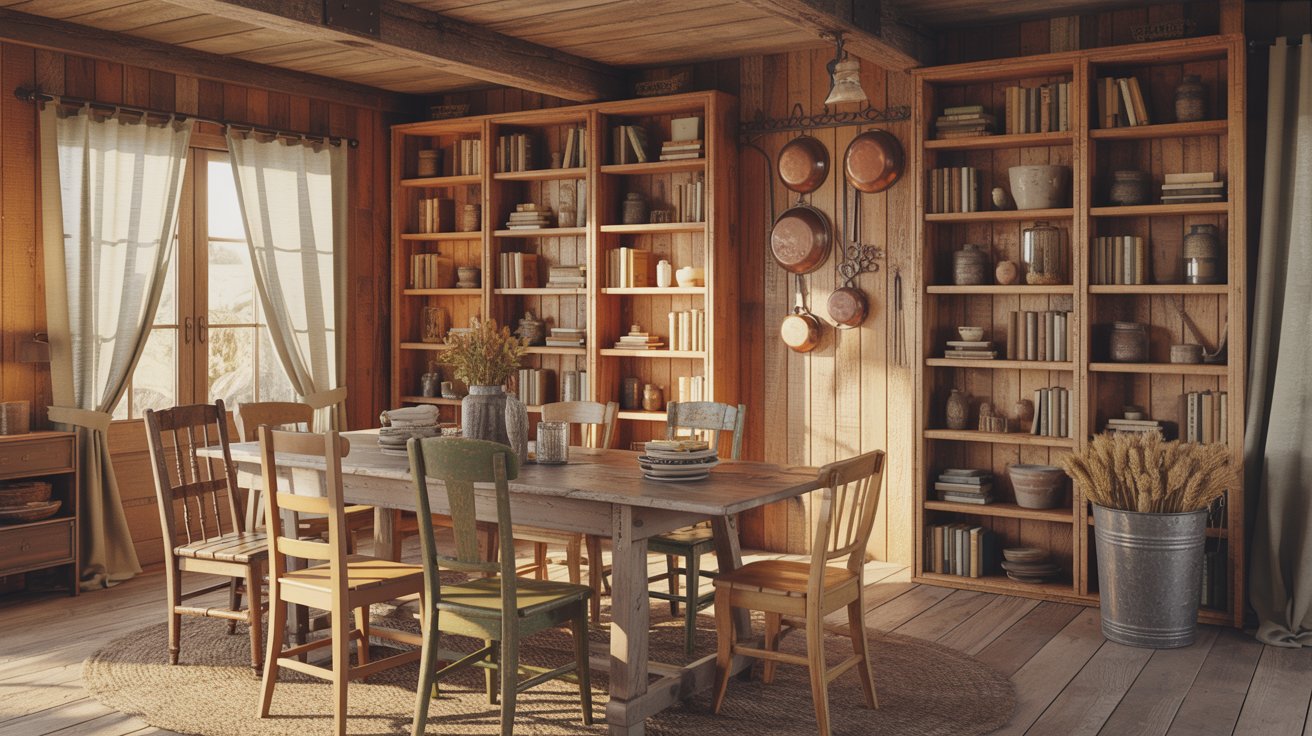
Warm wood shelving brings a homely, lived-in feel to any dining room. It suits farmhouse and vintage-style interiors well. Pair it with a wooden dining table and earthy tones to pull the whole look together in a natural way.
7. Modern Industrial Library Dining Space
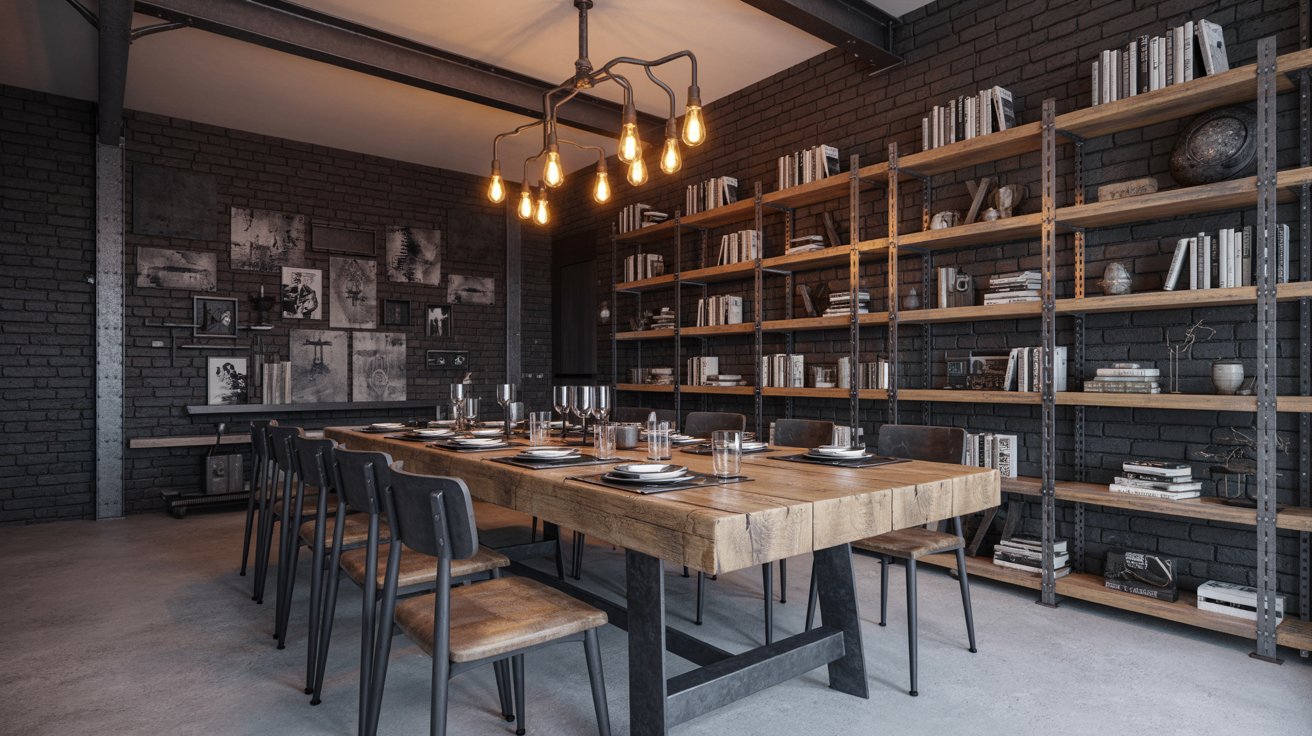
Metal shelves, exposed brick, and rough textures give this style its edge. It suits loft-style apartments and open-plan city homes. Keep the colour palette dark and neutral. Add Edison bulbs for that raw, no-fuss industrial look that still feels intentional.
8. Hidden Library Cabinets in Dining Room Walls
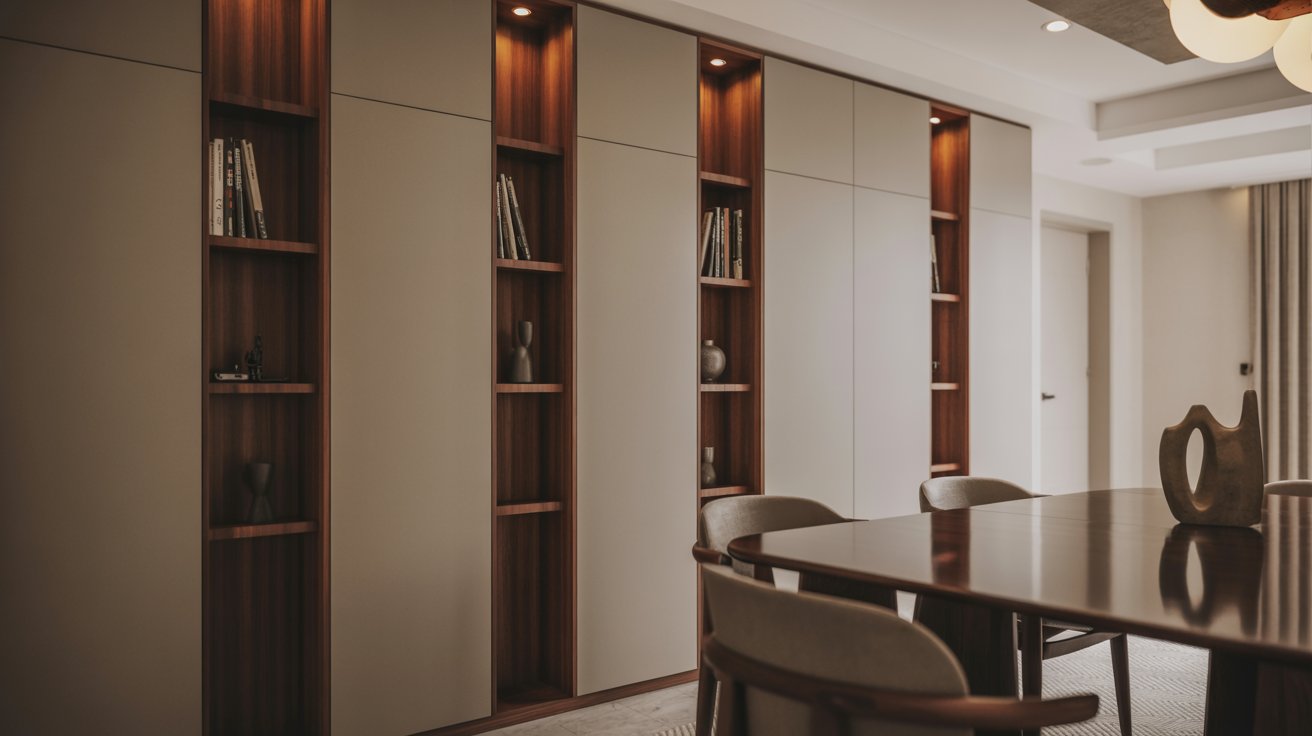
Concealed shelving behind panel doors keeps the room looking neat and clutter-free. When the doors are closed, no one would guess there are books behind them. It is a great choice for anyone who wants a tidy, low-key look.
9. Dining Table as a Reading Workspace Hybrid
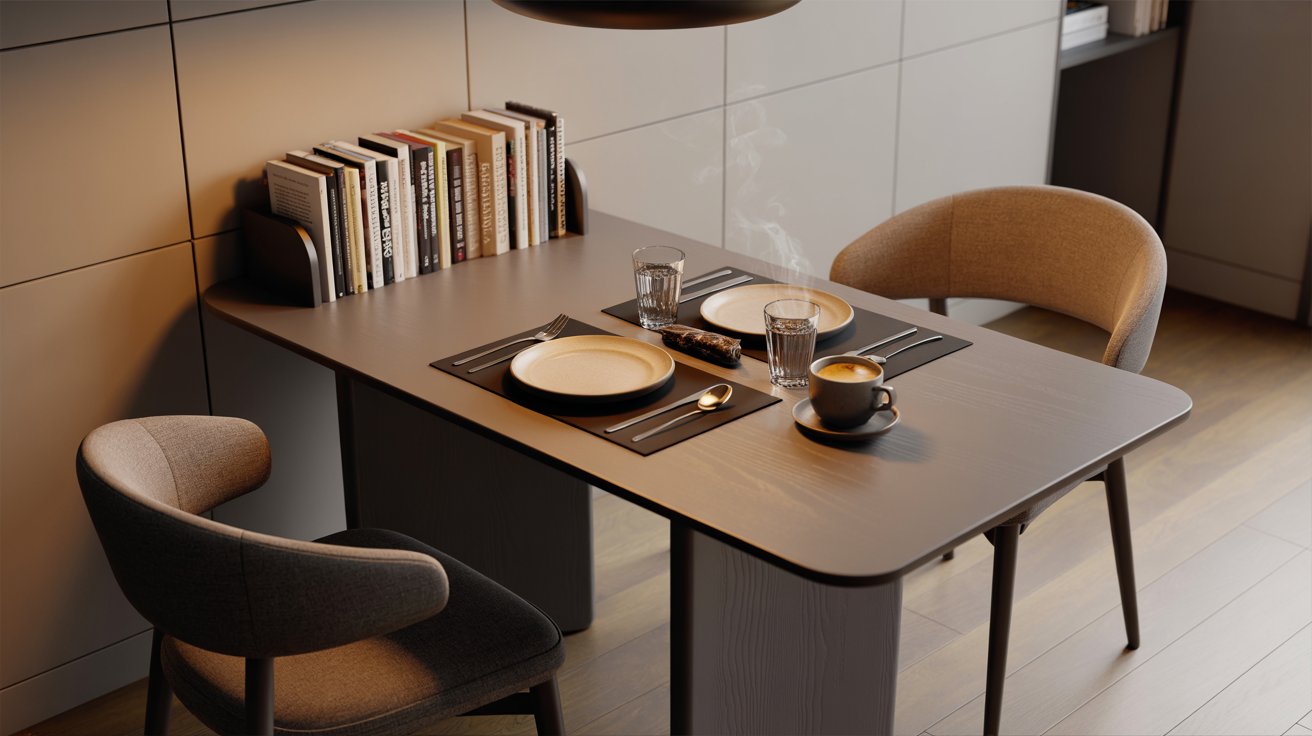
One table can handle meals, reading, and light work with ease. This setup suits studio apartments and small urban homes where every piece of furniture must do more than one job. Keep the table clear when not in use.
10. Library Wall Divider Between Dining and Living Area
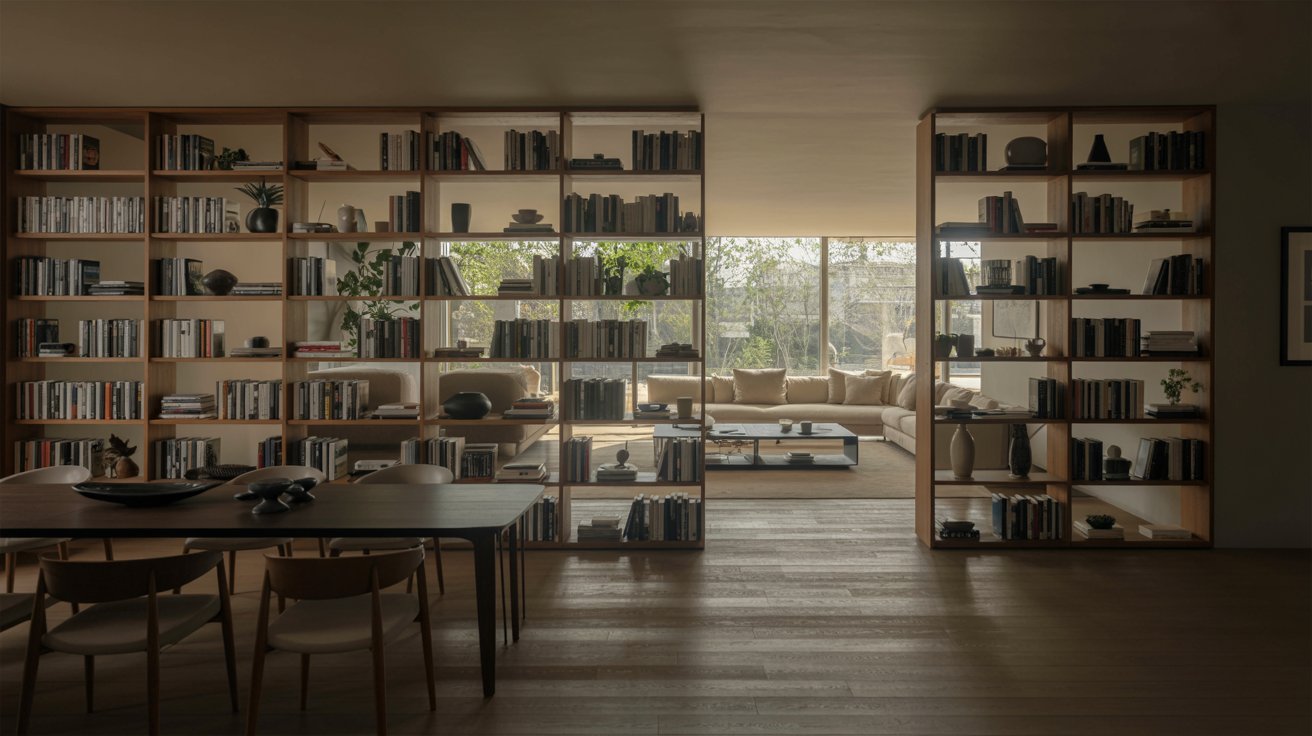
Bookshelves used as room dividers are both practical and good-looking. They break up an open-plan space without blocking light or airflow. You get a sense of separation between the dining and living areas while keeping the layout open and connected.
11. Luxury Library Dining Room with Ladder Shelves
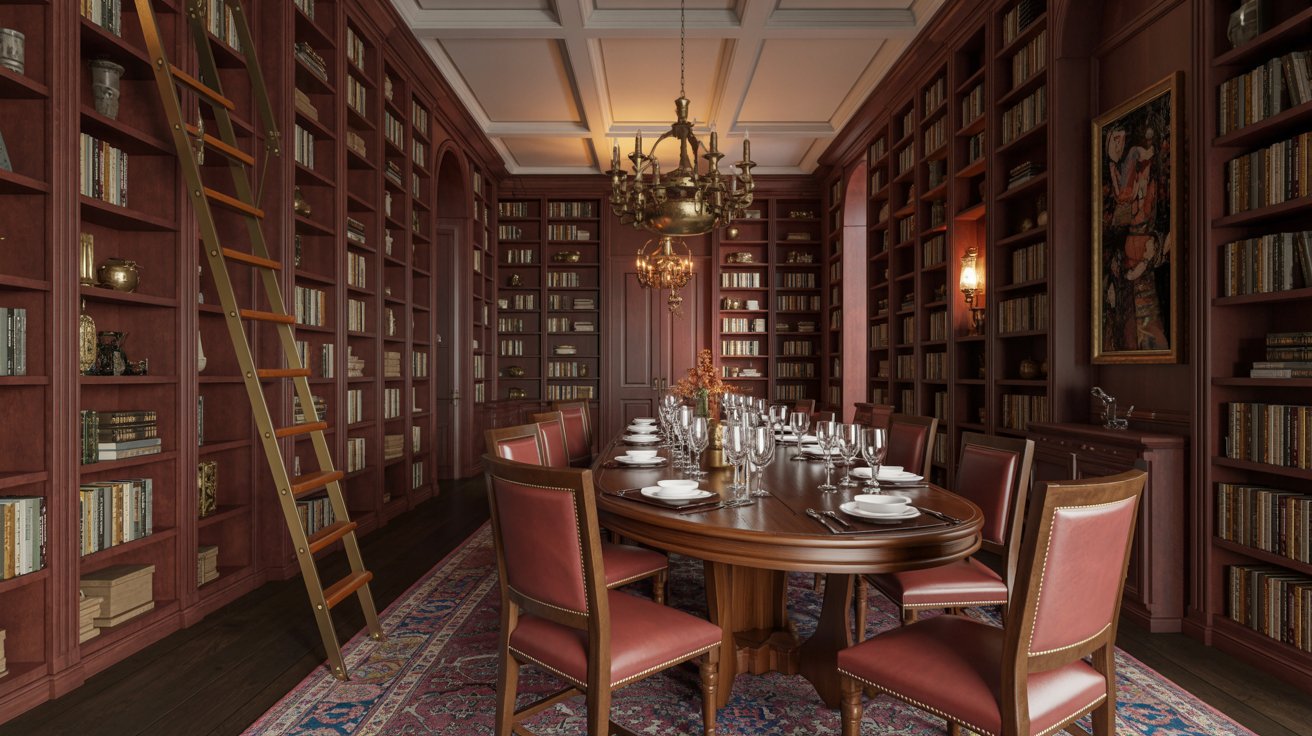
A rolling ladder adds a classic library touch to any dining room. It makes high shelves easy to reach and looks striking as a design feature on its own. This works best in rooms with tall ceilings and ample wall space.
Design Tips for a Functional Library Dining Room
- Make sure your shelves don't eat into your seating space. Every chair needs room to pull out comfortably.
- Use different lighting for the dining table and the book shelves. It helps each zone feel like its own spot.
- Pick materials that are easy to wipe down and built to last. Dining rooms get messy, and your shelves will too.
- Keep your books sorted and your decor minimal. A cluttered shelf makes the whole room feel chaotic.
- Group books by size, colour, or subject to keep things looking neat. A little order goes a long way in a dual-purpose room.
Conclusion
A library dining room is one of the smartest things you can do with your space. You get a room that feeds you and fuels your love for books at the same time.
There is no single right way to do it. Work with what you have, keep it personal, and make it feel like you. Start with one wall, one shelf, or one good light. That is all it takes to get going.
Ready to redesign your dining room? Start planning your library dining space today and make every corner count.
Frequently Asked Questions
What is a library dining room?
A library dining room is a space that works as both a dining area and a book storage zone. It combines two functions in one room without needing extra square footage.
Can I create a library dining room in a small space?
Yes, you can. Corner shelves, floating wall units, and compact dining tables make it easy to pull off even in a small apartment.
What type of shelving works best in a dining room library?
Built-in shelves and floating shelves both work well. Your choice depends on your budget, room size, and how much storage you actually need.
How do I keep a library dining room from looking cluttered?
Sort your books by size or colour and keep decor minimal. A few well-placed items look far better than a shelf packed with random things.
What lighting works best for a library dining room?
Use a pendant or chandelier over the dining table and add separate shelf lighting for the books. Two light sources help each zone feel distinct and functional.


