

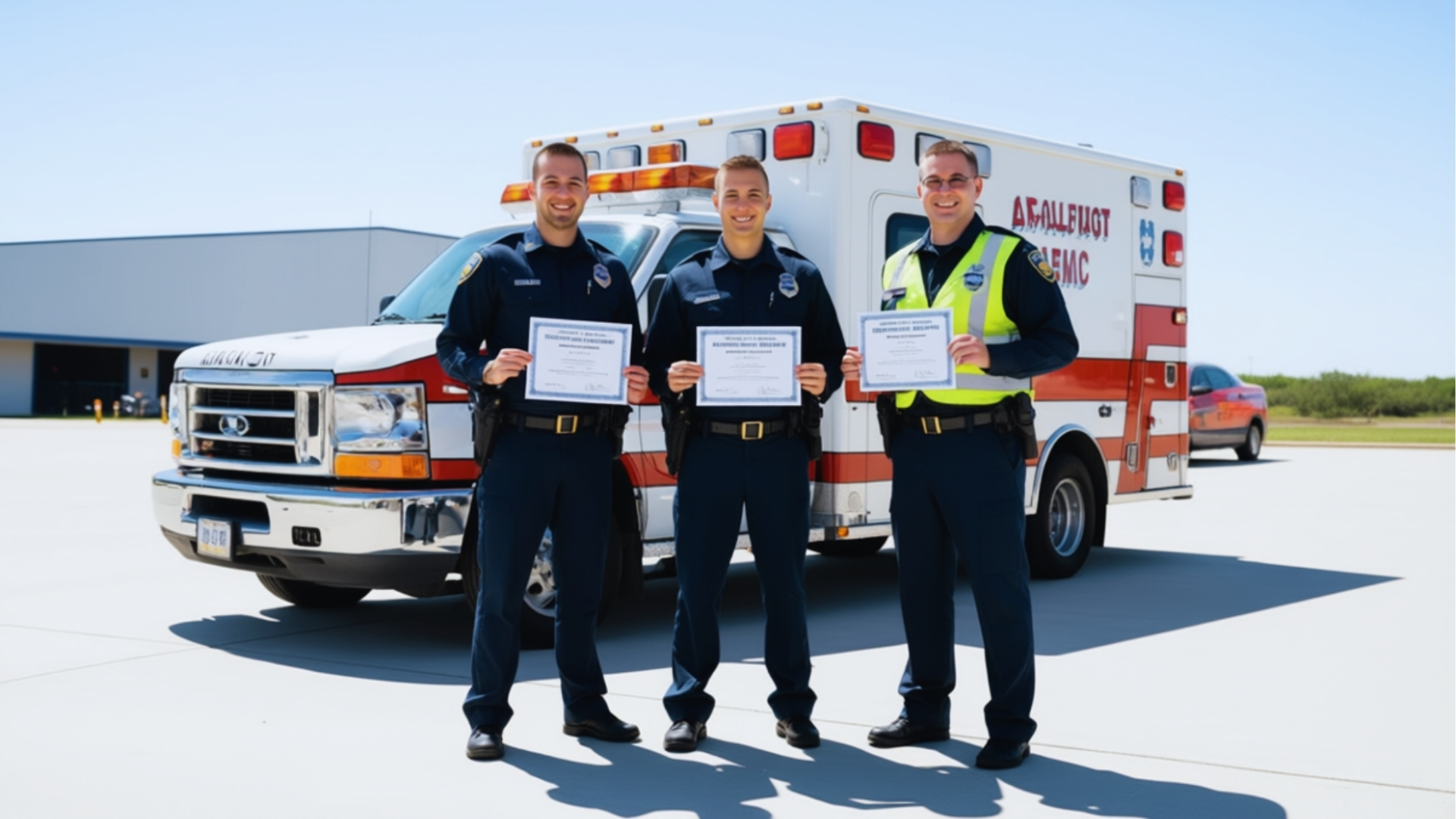
Alt text: Three uniformed EMTs standing in front of an ambulance holding certificates after completing an EMT training course.
So if you want to become an EMT, great choice. But before signing up, you need to know how much an EMT course costs, and that number can surprise people.
I’ve seen many students pick the wrong program simply because they didn’t know what to expect. This article breaks down every cost involved, from tuition to hidden fees.
You’ll find average tuition costs, extra fees, certification exam costs, hidden expenses, and smart ways to save money. You’re in the right place. Let’s get into it.
Understanding EMT Course Cost Breakdown

Knowing all the costs upfront helps you plan better and avoid surprises later. Most people only think about tuition when budgeting for EMT training, but the real total is often higher.
Beyond tuition, you’ll deal with book fees, equipment costs, exam fees, and a few other charges that catch students off guard.
I’ve talked to people who budgeted $1,200 and ended up spending close to $2,000 by the time they finished.
Understanding every layer of the cost helps you pick the right program and plan your money wisely from day one.
Average EMT Course Tuition Fees
The tuition fee is usually your biggest cost, but what’s included can vary a lot by program.
Typical Price Range ($1,000 to $1,750)
Most EMT basic courses fall in this range. Community colleges tend to be on the lower end. Private training centers often charge more.
What base tuition usually covers:
- Classroom instruction hours
- Skills lab sessions
- Clinical or ride-along hours
- Basic course materials (sometimes)
Not every program includes the same things. Always ask what’s included before paying.
Books and study materials ($200 to $300)
Your tuition rarely covers everything. Most programs ask you to buy textbooks separately. A standard EMT textbook can cost $80 to $150 on its own.
Other required items may include study guides, online access codes, and practice exam subscriptions. Some students find used books online to cut this cost.
That’s a smart move if the edition matches your course. Required equipment like stethoscopes, blood pressure cuffs, and trauma shears can also add to your total before training even begins.
Certification exam cost (around $200)
After finishing your course, you must pass the NREMT exam. The fee runs around $80 to $120 per attempt at the national level.
Some states charge their own licensing fees, pushing your total closer to $200 or more.
If you don’t pass on the first try, you’ll pay the same fee again. Always budget for at least one retake, just in case.
Hidden Costs You Should Consider
These small costs often go unnoticed but can add up fast during your training.
Uniforms and CPR Certification
Most programs require a specific uniform. This might be a polo shirt, cargo pants, or boots. Budget around $50 to $150 for this.
CPR certification is also required for EMT training. If you don’t have a current CPR card, you’ll need to take a class. That usually costs $30 to $60.
Travel and Miscellaneous Expenses
Clinical hours often take place at hospitals or ambulance stations. These sites might not be near your training center. Gas, parking, or bus fare can quietly drain your wallet.
Other misc costs include:
- Background check fees ($30 to $70)
- Drug screening ($20 to $50)
- Immunization records or health checks
These aren’t always listed upfront. Ask your program coordinator about all required steps before enrollment.
Factors That Affect EMT Course Cost
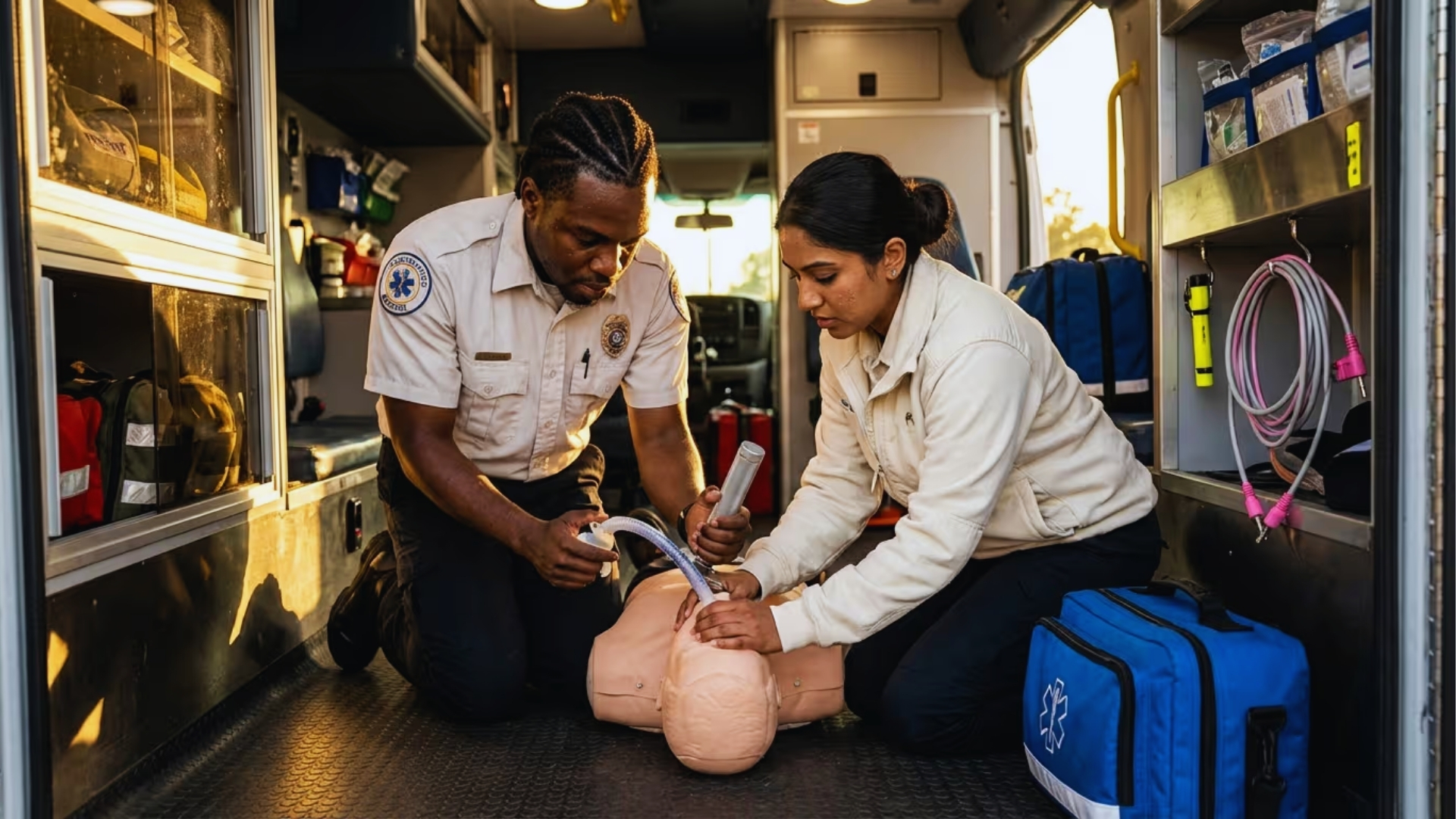
Several things can change what you pay, so it’s worth knowing what moves the price.
Location and Training Provider
Where you live plays a big role. EMT programs in cities tend to cost more than those in smaller towns. Programs at community colleges are usually the most affordable option.
Private training companies offer more flexible schedules but often charge higher rates. Hospital-based programs can vary widely depending on the state.
Course Format (Accelerated vs Standard)
Accelerated courses can run just 3 to 6 weeks. They’re intense but faster. These often cost more per week because of the compressed schedule.
Standard courses spread over 3 to 6 months. These tend to be more budget-friendly overall.
Pick based on how fast you need to finish and how much time you can give each week.
What’s Included in the Package
Some programs bundle everything together. That means books, gear, exam prep, and even your NREMT application fee are all in one price.
Others break it all apart. The base price looks low but you keep paying for add-ons.
Always ask this one question: “What exactly does the tuition cover?”
Tips to Save Money on EMT Training
Small, smart choices during enrollment can save you hundreds of dollars in training costs.
- Don’t pick the cheapest program blindly. A $1,200 course that covers everything can cost less overall than a $900 course with $400 in hidden fees.
- Always check student reviews and NREMT pass rates before enrolling. A low price means nothing if the program doesn’t prepare you well.
- Look for programs that include textbooks, access codes, and equipment in the tuition. This alone can save you $200 to $300.
- Some programs include the NREMT application fee in their package. That saves you over $100 right away.
- Fill out the FAFSA if you’re attending a community college. Even a small grant can cover a big chunk of your training cost.
- Ask about payment plans, employer reimbursement programs, workforce development grants, and scholarships through EMS organizations before paying anything upfront.
Conclusion
I know thinking about costs can feel overwhelming when you’re just trying to start a career that helps people. But now you have a clear picture of what to expect.
How much an EMT course costs isn’t a one-size answer; it depends on your location, program, and choices.
My advice? Compare at least three programs before deciding. Look beyond the base price.
Have questions or want to share your own experience? Drop a comment below. And if this helped, share it with someone else considering EMT training.
Frequently Asked Questions
How much does an EMT course cost on average?
Most EMT courses cost between $1,000 and $1,750. Additional fees for books, exams, and supplies can bring the total closer to $2,000 or more.
Is financial aid available for EMT training?
Yes. Many community colleges accept FAFSA for EMT programs. Some states also offer workforce grants to help cover the cost of emergency services training.
How long does an EMT course take to complete?
Standard EMT courses run 3 to 6 months. Accelerated programs can be completed in as little as 3 to 6 weeks, depending on the training center and state requirements.
What is the NREMT exam fee?
The NREMT cognitive exam currently costs around $80 to $120 per attempt. State licensing fees may apply on top of this, pushing total certification costs near $200.
Can I work as an EMT while paying off my training?
Yes. Many EMTs start entry-level positions shortly after certification. Some employers even offer tuition reimbursement if you commit to working with them after completing your training.