


What would you risk to break a system built to keep you powerless?
In this Red Rising summary, you will get a clear look at Darrow’s rise from a Red miner on Mars to a rebel inside the Gold elite.
I have followed this series closely and studied how its themes of power and loyalty shape each turning point.
Here, you will see the key plot events, major characters, central conflicts, and reader reactions without losing the tension of the story.
If you want a structured recap before reading or revisiting the book, this guide will help you step into its world with clarity.
Overview of Red Rising
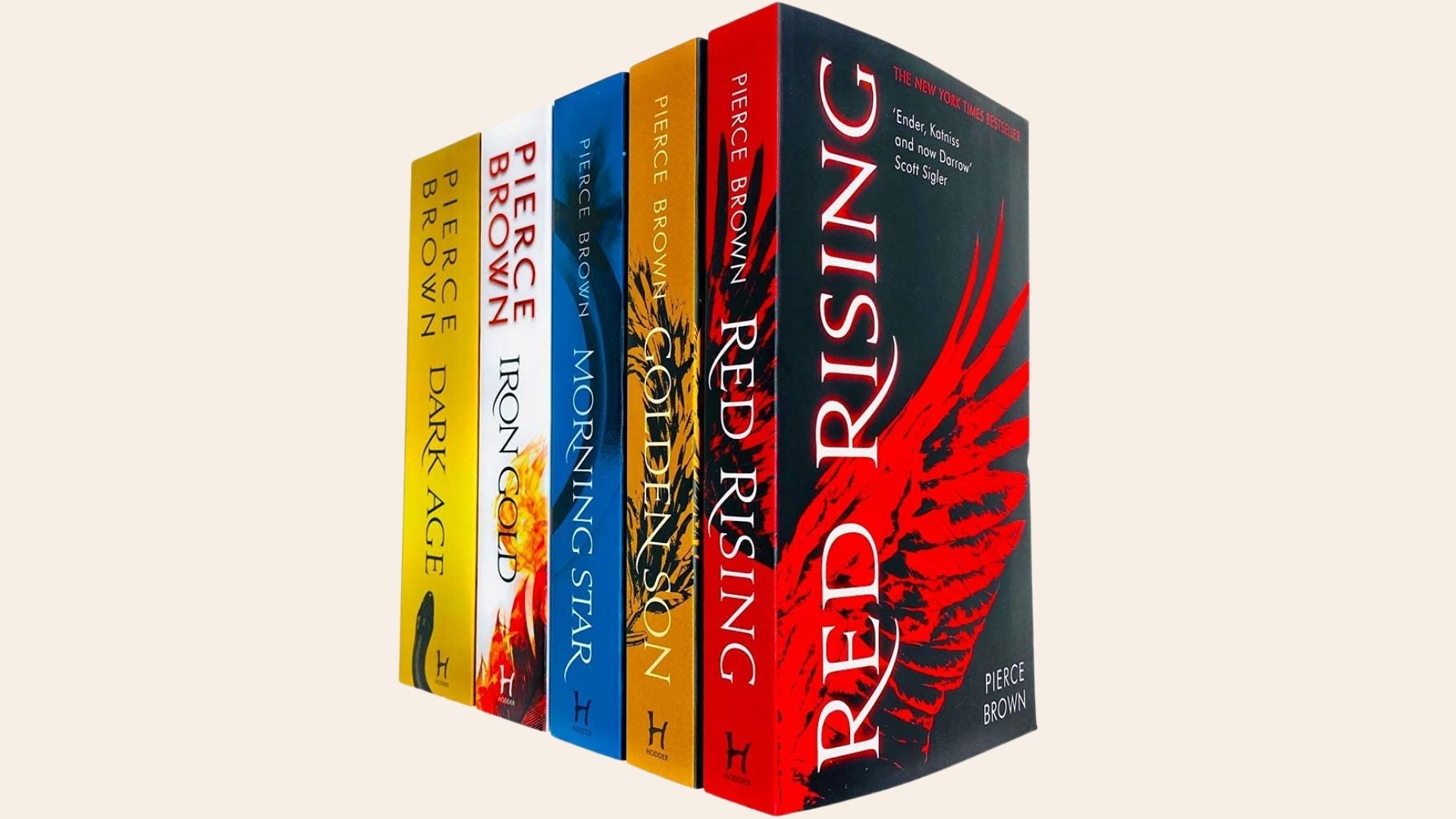
Red Rising by Pierce Brown unfolds in a dystopian future where society is divided into rigid, color-coded castes.
Darrow, a young Red miner on Mars, believes his labor is helping terraform the planet for future generations.
When he found out that the ruling Gold elite had long deceived and oppressed his people, his world collapsed.
Fueled by loss and anger, Darrow infiltrates the Gold class to spark rebellion from within. The novel examines power, identity, loyalty, and the cost of ambition in a deeply unequal world.
Red Rising Summary: Plot Overview
In Red Rising by Pierce Brown, Darrow infiltrates the ruling Gold class after living as a Red miner. This section summarizes the main plot events.
1. Life as a Red
Darrow is born into the lowest caste, a Red miner laboring beneath Mars. He believes his dangerous work is terraforming the planet for future settlers.
Life is harsh, tightly controlled, and filled with propaganda. His loyalty to family and community defines him, even as injustice quietly shapes his worldview.
2. The Tragedy and Call to Action
Darrow’s world shatters after a devastating personal loss tied to the regime’s cruelty. He learns that the surface of Mars has long been livable, exposing the lie enslaving his people.
Grief turns to anger as rebels recruit him, offering a dangerous mission to infiltrate and dismantle Gold power.
3. Upgradation into a Gold
To infiltrate the ruling class, Darrow undergoes extreme physical modification and intense education to pass as a Gold.
His body is reshaped, and his mind trained in politics, combat, and strategy. This process forces him to suppress his origins while maintaining focus on vengeance and systemic change.
4. The Institute
At the Institute, elite Gold youths compete in a brutal survival game designed to shape future rulers. Darrow must form alliances, command followers, and outwit rivals.
Violence, strategy, and manipulation dominate the environment, testing his leadership skills and his ability to balance empathy with calculated force.
5. The Rebellion’s Early Moves
Within the Institute’s war games, Darrow shifts from reactive fighter to strategic leader.
He builds loyalty among outcasts, challenges dominant houses, and learns when to show mercy or ruthlessness. Betrayals and shifting alliances sharpen his instincts, proving rebellion requires patience, calculated risk.
6. Climax and Turning Points
As the competition intensifies, Darrow orchestrates decisive confrontations that alter the balance of power.
His tactical risks pay off, earning both respect and suspicion. Key revelations test friendships and motives. By the final battles, he proves himself capable.
7. Ending and Setup for Sequels
The novel concludes with Darrow securing victory at the Institute, positioning himself within Gold society’s upper ranks.
However, larger political forces loom beyond the school’s walls. His success marks only the beginning of systemic upheaval, directly setting the stage for the sequel, Golden Son.
Themes and Literary Elements
The novel centers on themes that drive its conflict and character development. Below are the key literary elements in Red Rising.
Class Struggle and Oppression
The novel centers on a rigid, color-based hierarchy where Reds are exploited by the ruling Gold elite.
It examines systemic inequality, propaganda, and control, showing how power is preserved through violence, misinformation, and inherited privilege within a tightly structured society.
Revenge, Identity, and Loyalty
Darrow’s mission begins with revenge but evolves into a broader conflict about identity and allegiance.
As he lives among Golds, he struggles to balance his Red origins with his assumed persona, questioning who he is and where his loyalties truly belong.
Friendship, Mentorship, and Political Intrigue
Alliances shape survival at the Institute, where trust is fragile and strategy matters.
Mentors and rivals influence Darrow’s growth, while manipulation and calculated decisions reflect the larger political systems that govern their world. Personal bonds often clash with ambition and power.
Hero’s Experience in a Futuristic Sci-Fi Context
Darrow’s arc follows a classic hero’s story structure within a futuristic setting. He leaves his ordinary world, faces trials, gains allies, and confronts powerful enemies.
Advanced technology and interplanetary society frame a narrative rooted in transformation and resistance.
Key Characters in Red Rising
This section introduces the key characters in Red Rising who drive the plot, shape alliances, and challenge Darrow at every turn.
Darrow

Darrow begins as a Red miner and becomes the central force of rebellion after infiltrating the Gold society.
Intelligent, driven, and often conflicted, he balances calculated strategy with deep emotional motivation rooted in loss and injustice.
Mustang (Virginia au Augustus)

Virginia au Augustus, known as Mustang, is a skilled strategist and one of the most perceptive students at the Institute.
She challenges Darrow intellectually, questions authority, and plays a critical role in shaping alliances and long-term political thinking.
Sevro au Barca

Sevro au Barca is fiercely loyal, unpredictable, and resourceful. Often underestimated by others, he proves necessary to Darrow’s survival.
His blunt humor contrasts with the brutality of the Institute, while his commitment to rebellion runs deep.
The Jackal and Other Antagonists

Adrius au Augustus, known as the Jackal, represents calculated cruelty and political ambition.
Alongside other rival Golds, he challenges Darrow through manipulation, betrayal, and strategic warfare, embodying the ruthless mindset of the ruling elite.
Writing Style and World-Building
In Red Rising, Pierce Brown uses a direct, fast-paced narrative that blends intense action with strong emotional undercurrents.
The first-person perspective keeps readers closely aligned with Darrow’s thoughts, fears, and strategic decisions.
The world-building focuses on a colonized Mars structured by a strict color hierarchy, supported by advanced technology, political control, and carefully constructed social systems that reinforce inequality.
Sci-Fi, Fantasy, and “Spice” Elements
Red Rising by Pierce Brown combines dystopian science fiction with elements often associated with epic fantasy, including rival houses, shifting alliances, and power struggles.
The plot contains intense violence, political maneuvering, and morally complex characters whose decisions carry lasting consequences.
Advanced genetic engineering, terraforming, and interplanetary colonization shape the setting, while the rigid caste-based structure functions as the central force driving conflict and rebellion.
Red Rising Summary: Goodreads and Amazon Ratings
This section looks at how readers rated Red Rising and what they appreciated or criticized.
Goodreads Rating: 4.26 out of 5 from over 1 million ratings, indicating a strong overall reception.
Many readers highlight the layered power struggles, fast pacing, and character tension, while some note that the early chapters feel slower compared to the Institute arc.
Amazon Rating: 4.6 out of 5 stars from tens of thousands of reviews across formats.
Reviewers frequently mention the gripping action, political maneuvering, and emotional stakes, while a smaller portion point out the brutality and familiar dystopian tropes.
Readers praise the intense plot, strategic mind games, and Darrow’s character arc. Some criticize early pacing, heavy violence, and similarities to other dystopian series.
Why Red Rising Is a Must-Read
Red Rising combines dystopian science fiction with political conflict and character-driven tension.
The Institute arc delivers tight pacing, strategic mind games, and consistent stakes that maintain momentum.
Beyond action, the novel examines power, hierarchy, and moral compromise.
Its strong reception has influenced modern sci-fi readers, sparked active fan discussions, and helped shape conversations around contemporary dystopian and space-based fiction.
About the Author

Pierce Brown is an American science fiction writer best known for the Red Rising saga. Born in 1988, he studied political science and economics before turning to fiction.
He wrote Red Rising early in his career, drawing inspiration from classical mythology, Roman history, and modern dystopian narratives focused on power and rebellion.
Following Red Rising, he continued the series with Golden Son, Morning Star, and later installments, expanding the universe.
The series has appeared on bestseller lists and received strong critical and reader recognition, establishing Brown as a prominent voice in contemporary science fiction.
Final Thoughts
This Red Rising summary highlights how Pierce Brown crafts a story built on hierarchy, strategy, and transformation.
Darrow’s shift from miner to infiltrator drives a plot shaped by conflict, loyalty, and calculated risk.
The Institute trials, political tension, and character decisions give the novel a lasting impact.
From my perspective, its strength lies in how personal motives intersect with systemic change, making the rebellion feel grounded and purposeful.
Read the book and judge Darrow’s choices yourself. Start the series and see where his rise leads!
Frequently Asked Questions
Is Red Rising Part Of A Series?
Yes. Red Rising is the first book in a series by Pierce Brown. It is followed by Golden Son, Morning Star, and later sequels.
What Age Group Is Red Rising Suitable For?
It is recommended for older teens and adults due to violence and mature themes. It is often categorized as adult science fiction.
Is Red Rising Similar To The Hunger Games?
Both feature oppressive systems and deadly trials. Red Rising places more focus on political strategy and class hierarchy.
Does Red Rising Have A Movie Or TV Adaptation?
No official film or TV adaptation has been released.
Is There Romance In Red Rising?
Yes. Romance exists but does not dominate the main political and rebellion plot.