


Auburn Reed and Owen Grants, keeper of secrets, artist of confessions. Read the complete Confess summary, character breakdown, and honest review right here.
This romance novel does something that sets it apart from the genre's more predictable entries, it builds a love story on the weight of secrets rather than the rush of attraction alone.
The confessions that structure the novel are not gimmicks. They carry moral and emotional consequences that the characters are forced to sit with long after the truth is out.
I read it in a single sitting and spent the next day thinking about how much the story had managed to hide in plain sight.
If you are looking for a thorough breakdown of Confess, this is the right place to start.
Synopsis of Confess
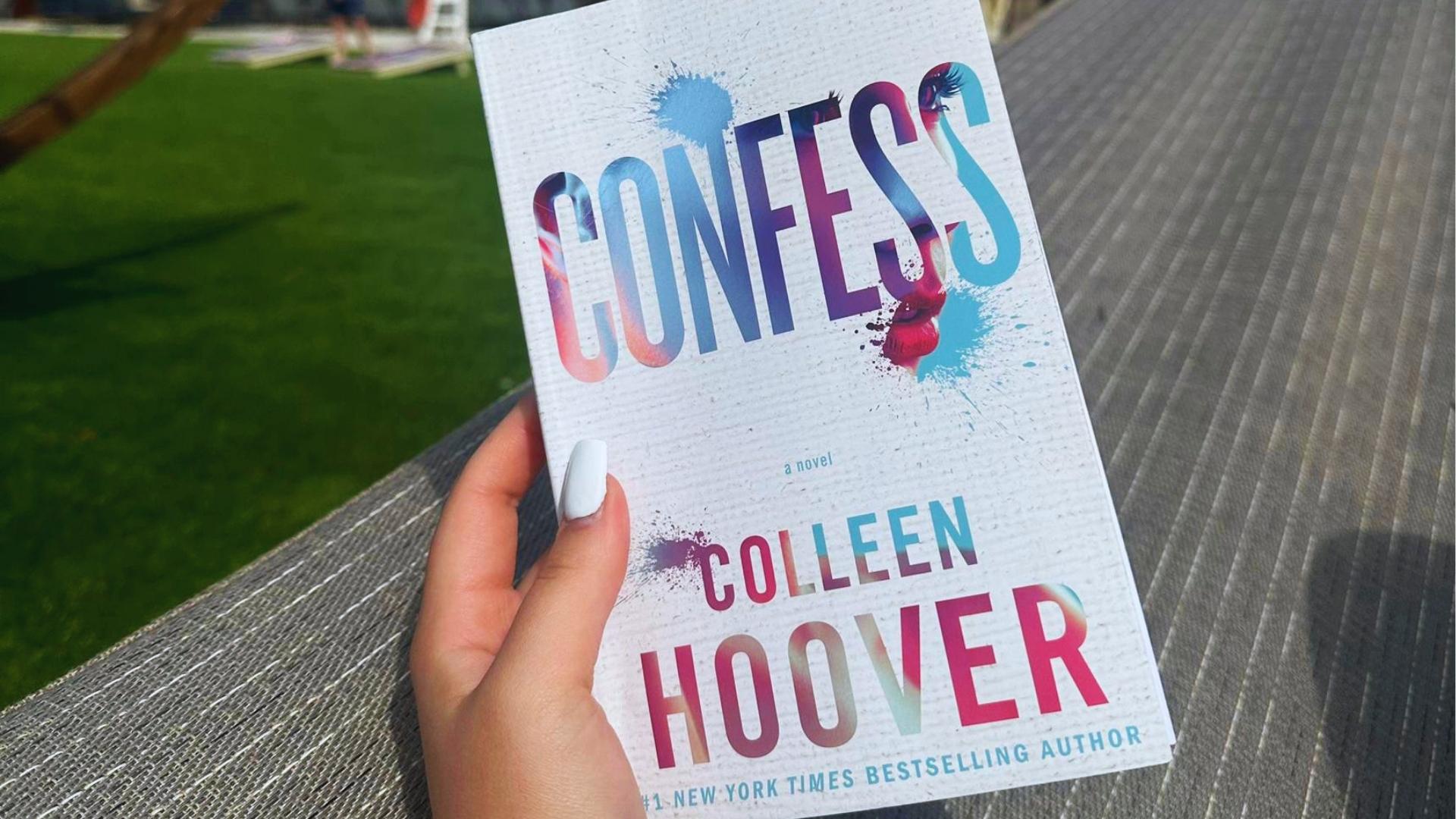
Auburn Reed is nineteen years old and newly arrived in Dallas when she walks into an art studio and asks for a job.
The studio belongs to Owen Grants, a painter who uses anonymous confessions submitted by strangers as inspiration for his work.
Auburn takes the job and a relationship begins, cautious at first, then fast and disruptive.
She shares custody of her late boyfriend's son with his wealthy and controlling family, an arrangement that depends entirely on her maintaining a life they approve of.
Owen, it becomes clear, is concealing a criminal involvement that complicates everything he touches.
As their relationship deepens, the confessions on the studio walls begin to feel less like anonymous art and more like an indictment of the choices both of them are making.
Themes Discussed in Confess
A sharp, affecting look at honesty as a moral burden, the risks love demands, and the cost of carrying secrets that were never yours to keep.
Honesty as Structure and Risk
The confessions that line Owen's studio walls are the novel's central metaphor, and Hoover uses them with precision.
The book treats honesty not as a virtue that arrives naturally but as something people have to choose, repeatedly, against strong incentives not to.
Auburn and Owen are both concealing things from each other and from the people around them, and the slow process of disclosure is where the novel does its most serious work.
Love Under External Pressure
Confess is not a story about two people in an uncomplicated romance. Auburn's custody situation means that her relationship with Owen is never just personal.
Every choice she makes about him has consequences outside the two of them.
Hoover structures the novel so that the external stakes feel genuinely threatening rather than melodramatic, which gives the central relationship its tension.
Complicity and the Weight of Loyalty
Several characters in the novel are complicit in situations they did not create but are sustaining through their silence. Hoover does not treat this as simple moral failure.
She shows how loyalty, fear, and love can all produce the same outcome as cowardice, and how difficult it is to tell those motivations apart from the inside.
Character Analysis
Through two central figures shaped by grief, guilt, and competing obligations, the romantic arc here is earned by the weight of what each character carries.
Auburn Reed
Auburn is the novel's most carefully drawn figure. Her situation, grieving a first love while trying to hold together a custody arrangement and build an independent life at nineteen, is handled with real specificity.
She is not passive, but her choices are constrained in ways the reader can follow and respect even when they are frustrating.
Owen Grants
Owen's chapters are driven by quiet tension because the reader senses early that his circumstances are more serious than he is letting on.
His commitment to the confessions project is not a quirky artistic habit.
It is an attempt to process a moral situation he cannot talk about directly, and that framing gives his character more depth than a standard love interest typically gets.
Trey's Family
The Larson family functions as the novel's institutional antagonist.
Their control over Auburn through the custody arrangement is the kind of power that operates through law and money rather than direct threat, which makes it harder to confront and more genuinely frightening.
Hoover handles them as a system rather than a set of individual villains, which is the right call.
Adam
Adam, Owen's associate, carries significant weight in the novel's second half.
His presence forces Owen's concealed situation into the open and serves as the mechanism by which the plot's central secrets become unsustainable.
He is not a sympathetic figure, but he is a coherent one.
Writing Style and Narrative Voice
Hoover's prose in Confess moves quickly and prioritises emotional immediacy over descriptive depth, which suits the story it is telling.
The Confession Structure
The anonymous confessions that appear throughout the novel, rendered as if painted on Owen's studio walls, are one of the book's strongest formal choices.
They function as a kind of chorus, reflecting the emotional state of the main narrative without being directly tied to it. Hoover manages the balance carefully, the confessions never feel like interruptions.
They feel like commentary. By the final act, readers understand exactly why the confessions were the right frame for this particular story.
Dual Perspective Narration
The novel alternates between Auburn's and Owen's points of view, and Hoover keeps both voices distinct. Auburn's chapters tend toward pragmatism and controlled anxiety.
Owens carries more ambiguity, a quality that pays off once the full shape of his situation is revealed. The structure rewards readers who pay attention to what each narrator is not saying.
Critical Reception
Confess was originally published in 2015 and drew on Hoover's skill at building romance plots that engage with emotional and moral complexity rather than simply delivering genre satisfaction.
It became one of the most discussed books in the new adult romance category and has remained widely read more than a decade after its initial release.
Reviewers consistently praised the novel for its emotional depth, its strong dual narrative, and the way the confession device gave the story a distinctive visual and thematic identity.
Several noted that it read as more ambitious than Hoover's earlier work and that the dramatic stakes felt genuinely consequential rather than manufactured.
Notable Reviews and Ratings
- Goodreads: 4.05 out of 5 stars across hundreds of thousands of ratings.
- Amazon: 4.5 out of 5 stars across thousands of reviews.
Confess was also adapted as an Amazon Prime Video series in 2017, starring Katie Leclerc and Ryan Cooper.
The Adaptation

Confess was adapted as a seven-episode series for Amazon Prime Video, released in 2017.
The production preserves the novel's core structure, including the confession paintings as a visual motif, and maintains the alternating perspectives of the source material.
The studio setting translates well to screen, giving the production a distinctive visual identity that reflects the intimacy of the central relationship.
Hoover's strongest instincts, the slow reveal of each character's concealed situation and the moral seriousness with which the story treats its secrets, carry through to the adaptation intact.
Personal Reading Experience
Confess was not what I expected from the genre.
A straightforward new adult romance usually delivers its emotional beats in a predictable sequence, but this novel kept revising the reader's understanding of both characters through information that arrived at the right moment rather than the convenient one.
The confession device pushed the book from competent into genuinely resonant territory.
Structuring the entire setting around anonymous admissions of guilt, regret, and private fear makes the romantic plot feel earned in a way that is harder to achieve than it looks.
Auburn is the character who stayed longest. Her constraints are never softened, and the resolution earns its emotional weight by not arriving too easily.
About the Author Colleen Hoover

Colleen Hoover is a novelist based in Texas who began publishing independently before becoming one of the most widely read romance and new adult authors working today.
She is the author of more than twenty novels, several of which have spent extended periods on bestseller lists, and her readership expanded significantly through the CoHo community that formed around her work.
That background, writing for a committed and vocal readership, gives her fiction a strong awareness of what emotional honesty in the genre looks like and what substitutes for it.
Those instincts run through every page of Confess. The novel is widely considered one of her most formally inventive works, and the Amazon adaptation confirms that its storytelling found an audience well beyond its initial release.
Conclusion
This breakdown of the Confess characters and themes covers what makes the novel worth your time.
Hoover has built a story that works as both a fast, absorbing romance and a serious examination of how secrecy shapes the people who carry it.
The characters are the reason it holds together. Almost everyone has a coherent, painful reason for the choices they are making, and that coherence makes every revelation land with real force.
If you want fiction that takes both its story and its people seriously, this one delivers.
Frequently Asked Questions
Is Confess part of a series?
No. It is a standalone romance novel. Colleen Hoover has written other books, but this one does not connect to them narratively.
How long does it take to read Confess?
The novel is approximately 320 pages. Most readers finish it in five to seven hours, often in one or two sittings given its pacing.
What age is appropriate for reading Confess?
The book suits readers seventeen and older. It contains mature romantic content, emotionally heavy situations, and themes involving grief, custody disputes, and criminal involvement.
Is there a film or television adaptation of Confess?
Yes. Confess was adapted as a seven-episode series for Amazon Prime Video, released in 2017.
Who is the main character in Confess?
Auburn Reed and Owen Grants share the central narrative, alternating perspectives with anonymous confessions woven throughout as a device tied to Owen's work as a painter.