


Looking for a clear We Are Okay summary before committing to the book? You are in the right place.
This article covers everything: the full plot, themes, character breakdowns, and honest reader opinions. I will also share what makes this novel stand out and where it falls short.
You will find a full plot summary with spoilers, theme and character analysis, ratings and critical reception, and my personal take on the reading experience.
If you want to know whether this quiet YA novel is worth your time, this guide will help you decide.
Overview of We Are Okay
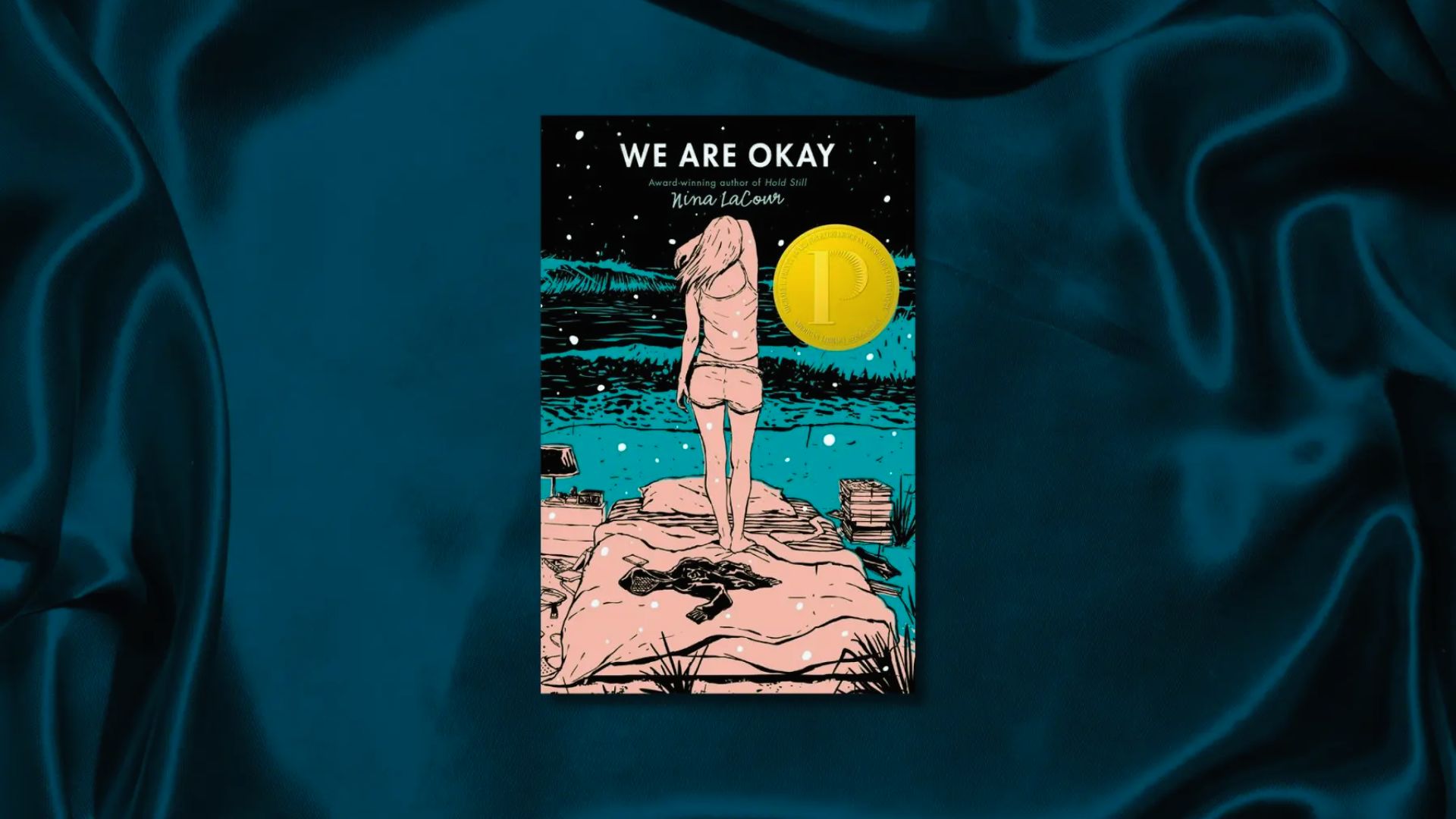
A quiet but emotionally heavy novel about grief, distance, and the courage to face what you have been running from.
We Are Okay is a young adult novel by Nina LaCour. The story follows Marin, a college student who has cut herself off from everyone after the sudden death of her grandfather.
She spends winter break alone in her dorm in New York, far from her California home.
Then her best friend Mabel shows up.What follows is a deeply personal story built on silence, memory, and slowly surfacing truth.
The setting is cold and still. The writing is spare and restrained. And the emotional weight builds slowly until it becomes impossible to ignore.
Major Themes in We Are Okay
The novel holds several layers of meaning beneath its restrained surface.
Grief and Loss
Grief in this novel is not loud. It is the silence after something breaks.
Marin mourns her grandfather and also the version of him she thought she knew. LaCour writes this layered loss with honesty and care.
Loneliness and Isolation
The empty campus mirrors exactly what is happening inside Marin.
Her isolation during winter break is not accidental. She has chosen distance because connection feels too dangerous. The cold dorm reflects her internal state perfectly.
Identity and Queer Love
This is one of the most grounded portrayals of queer young love in YA fiction.
The relationship between Marin and Mabel is quiet and emotionally honest. The queer representation feels thoughtful rather than performative.
Memory and Truth
Secrets do not just belong to the people keeping them. They shape everyone around them.
Marin’s grandfather’s hidden life forces her to re-examine everything she thought she knew about herself and her past.
Character Analysis
Each character in this novel carries quiet complexity beneath the surface.
Marin
Marin is not easy to read, and that is exactly the point.
She is introspective, guarded, and deeply private. Her withdrawal is a survival response, not indifference. Her arc is about allowing herself to feel what she has been avoiding.
Mabel
Mabel brings warmth into a story that otherwise lives in the cold.
She is persistent without being aggressive and shows up for Marin even after being pushed away. Her emotional honesty makes her easy to love.
The Grandfather
He is both the reason for Marin’s crisis and a person she genuinely loved.
He is not a villain but a flawed person whose hidden life complicates Marin’s grief. LaCour does not reduce him to a simple role.
Writing Style and Narrative Voice
The way LaCour writes is as much a part of the story as the plot itself.
Minimalist and Introspective Prose
LaCour writes with restraint. Every sentence earns its place on the page.
There is no excess here. The writing is clean, spare, and emotionally precise. LaCour trusts the reader to feel things without being told how to feel them.
This is harder to do than it sounds, and she does it well.
Nonlinear Storytelling
The flashbacks are not distracting. They are the story.
The novel moves between the present, Marin alone in her dorm, and the past, the life she left behind in California. These flashbacks do not feel like interruptions.
They build slowly toward the truth, giving the reader just enough to stay curious.
Atmosphere as Emotion
The winter setting is not just background. It is an emotional state made visible.
The cold, quiet campus is the perfect container for this story. LaCour uses atmosphere to express what her characters cannot say out loud.
The snow and silence feel earned rather than decorative.
Critical Reception
This novel received wide praise from critics, educators, and readers alike.
We Are Okay won the Michael L. Printz Award, which is one of the most respected honors in young adult literature.
Critics consistently highlighted its emotional sensitivity, lyrical prose, and honest portrayal of queer identity. It is frequently recommended in educational settings for its handling of grief and loss.
Reviewers praised it for being honest without being heavy-handed. Its quietness was seen as a strength, not a weakness.
Notable Reviews and Ratings
Reader and critic ratings reflect the novel’s strong emotional impact.
Goodreads: Rates the book at approximately 4.0 out of 5. Readers frequently mention its emotional realism and the way it lingers after you finish. Many describe it as understated but deeply moving.
Amazon: Ratings sit around 4.4 out of 5, with reviewers consistently pointing to its lyrical writing and honest representation.
My Personal Reading Experience
This was not a book I expected to stay with me as long as it did.
I went in expecting something slow and slight. What I found was a novel that rewards patience. The emotional payoff does not come from dramatic revelations or big scenes.
It comes from small conversations, quiet realizations, and the gradual thawing of a character who has been frozen in grief.
The stillness of the book is intentional. And once you accept that, it becomes something genuinely moving. It is the kind of novel you think about at odd moments, days after you finish it.
About the Author: Nina LaCour

Nina LaCour is an American young adult author recognized for her emotionally layered storytelling.
She is known for writing about grief, love, and identity with honesty and care. Her other works include Hold Still and Everything Leads to You, both of which discuss similar themes of loss and connection.
LaCour has received wide recognition for the thoughtfulness she brings to queer representation in YA fiction. Her writing tends to be quiet, poetic, and emotionally precise.
Conclusion
Honestly, yes. But it depends on what you are looking for.
If you want a reflective, intimate read that handles grief and queer identity with real care, We Are Okay delivers. The prose is lyrical without being showy.
The characters feel real. Emotional honesty is rare in YA fiction.It is slow. It is heavy. And it is worth it.
I found myself thinking about Marin long after I closed the book, and that says more than any rating could. If this sounds like your kind of read, give it a chance.
Have you read it? Share your thoughts in the comments below.
Frequently Asked Questions
Is We Are Okay an LGBTQ+ novel?
Yes, the novel features a central queer relationship between Marin and Mabel. The portrayal is grounded, tender, and treated with real care by the author.
Is We Are Okay a sad book?
The novel deals seriously with grief and loneliness throughout its pages. However, it ends on a note of quiet hope rather than despair.
Is We Are Okay a fast read?
No, the pacing is intentionally slow and character-focused. It prioritizes emotional depth over action or plot twists.
Has We Are Okay won any literary awards?
Yes, it won the Michael L. Printz Award, which is given annually for excellence in young adult literature.
What age group is We Are Okay written for?
The book is written for young adult readers, generally those aged 14 and older. However, adult readers who enjoy quiet, literary fiction will also find it rewarding.