


Looking for an honest My Sister the Serial Killer review? You’re in the right place. I’ll help you decide if Oyinkan Braithwaite’s novel is worth your time, no fluff and no spoilers without warning.
I expected a fast thriller but found something darker and more unsettling. I’ve read the book twice, and this review is based on that experience.
Inside, you’ll find a spoiler-free overview, clearly marked spoilers, themes, character analysis, reader reactions, and my honest opinion.
By the end, you’ll know if it’s worth reading.
Synopsis of My Sister the Serial Killer
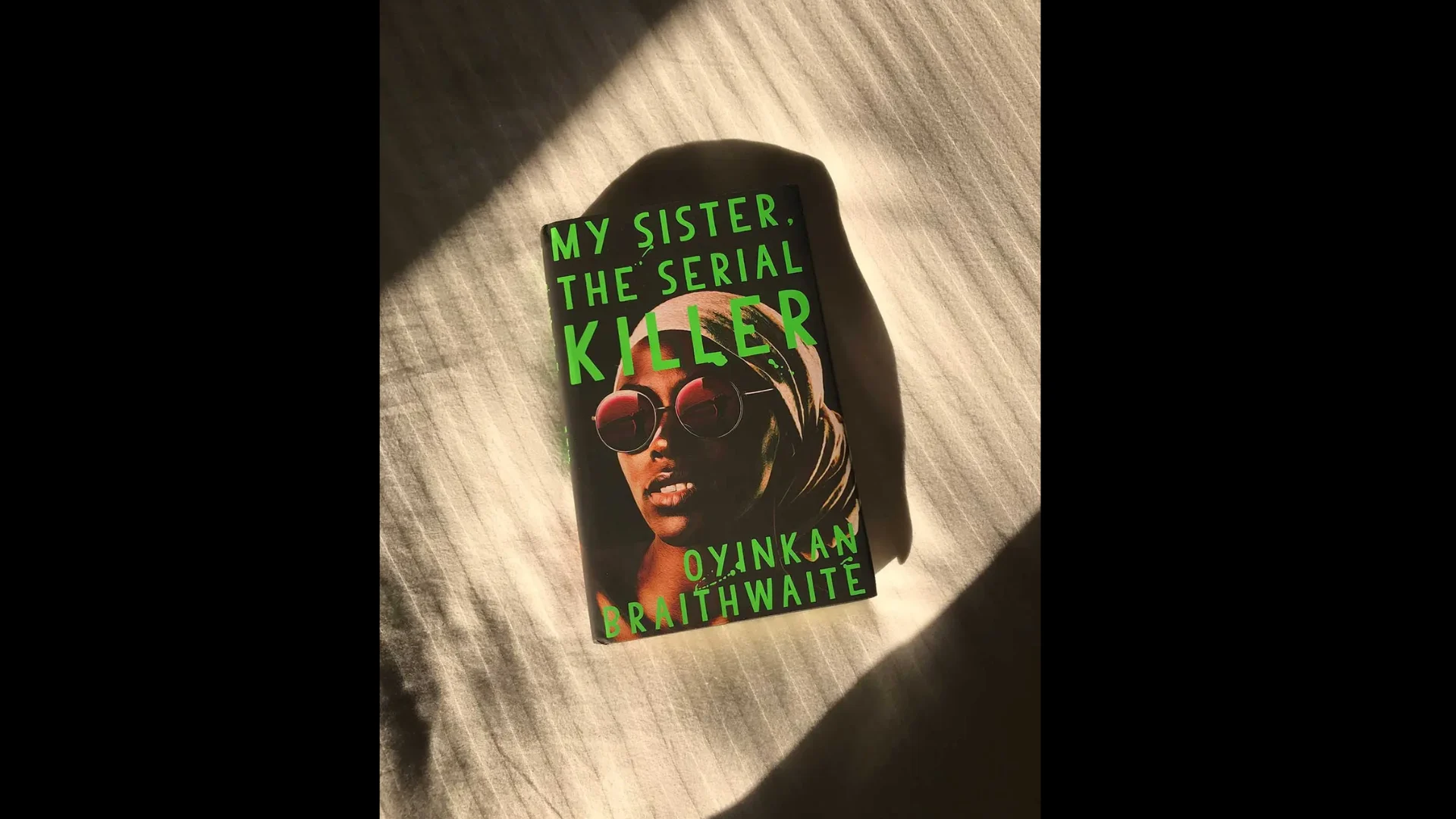
The story takes place in Lagos, Nigeria, and follows Korede, a head nurse whose younger sister Ayoola keeps killing her boyfriends. When Ayoola murders her third boyfriend, Korede helps clean the scene and dispose of the body. Though Ayoola claims self-defense, three deaths make the truth hard to ignore.
Korede struggles between loyalty and doubt. Her feelings grow more complicated when Dr. Tade Otumu, her long-time crush, falls for Ayoola. Knowing her sister’s history, Korede fears for him but feels trapped by her devotion to family.
The tension leads to a violent clash and a painful betrayal. In the end, Korede chooses her sister over everything else, suggesting the deadly cycle is likely to continue.
Major Themes in My Sister the Serial Killer
Oyinkan Braithwaite packs sharp social commentary into a fast-paced thriller. The story moves quickly. But the ideas it leaves behind stay with you.
Sisterhood, Loyalty, and Family Obligation
At its core, this is a story about how far I would go for my family. Korede feels responsible for Ayoola. She sees herself as the protector. The older sister. The one who cleans up the mess.
But here’s the brutal question the novel asks. When does loyalty become complicated? Korede keeps covering for Ayoola. Even when Ayoola manipulates her. Even when innocent men die. She doesn’t stop. She can’t.
Beauty, Privilege, and Power
Ayoola’s beauty is her shield. People trust her instantly. Men fall in love with her within minutes. Authorities can’t believe she’s dangerous. Meanwhile, Korede feels invisible.
This may be the novel’s sharpest point. Beauty works like social currency here. It grants protection. It shapes who gets believed and who gets ignored. Ayoola never has to explain herself. Korede always does.
Violence, Trauma, and Inherited Damage
The sisters grew up with an abusive father. His knife becomes a recurring symbol throughout the book. Ayoola carries it. Korede cleans up after it. One commits violence. The other enables it.
Both are shaped by what happened to them as children. The novel doesn’t let either sister off the hook. Damage doesn’t disappear. It mutates. It just shows up differently in each person.
Moral Ambiguity and Complicity
There are no clean heroes here. Ayoola is charming but dangerous. Korede is practical but morally compromised. By the end, Korede knowingly destroys an innocent man to protect her sister.
The novel refuses to resolve this. You finish the last page. You sit with discomfort. No one gets redeemed. No one gets punished cleanly. That’s the point.
Character Analysis
Each character shows you who they are through what they do, not what they say. No long explanations. No hand-holding. The actions are the evidence.
Korede
Korede is the narrator. I see this whole story through her eyes. That matters. Because what she chooses to show me and what she doesn’t is part of who she is.
She is organized. Disciplined. Obsessed with cleanliness. She works as a nurse and confides only in a coma patient, because there is no one else. That one detail tells you everything about her loneliness. She believes love belongs to women like Ayoola, beautiful women. That belief shapes every choice she makes. Her tragedy is not ignorance. She knows exactly what her sister is. She chooses her anyway.
Ayoola
Ayoola is beautiful, charismatic, and terrifyingly calm. She does not panic. She never seems to worry. That stillness is not peace, it is something colder.
Every killing carries the same excuse, self-defense. But patterns do not lie. Men interest her until they stop being new. Then they are gone. She carries traits from their abusive father, charm in public, and coldness in private.
And yet, you still find yourself liking her. That tension is not an accident. That is the whole point.
Dr. Tade Otumu
Tade is smart, well-liked, and completely blind to what is right in front of him. He is the hospital’s golden boy. I watch Korede love him quietly. He never notices.
He meets Ayoola. He ignores every warning. He falls fast, the way people do when they only see the surface. By the end, he is in prison for a crime he did not commit. He trusted the wrong person. That is all it took. Tade does not represent weakness. He represents what misplaced trust actually costs.
Writing Style and Structure
Braithwaite writes clean and sharp. Short sentences. No fluff. Every word earns its place. The tone is dark, sometimes funny, and always a little uncomfortable. Whether you laugh depends on how much bleak irony you can handle.
The whole story comes through my eyes, Korede’s perspective. I never get inside Ayoola’s head. Not once. That’s deliberate. It keeps her mysterious. It also makes me slightly unreliable. I care about Ayoola, and that colors everything I tell you.
The chapters are extremely short. Some are just a few pages. The pace never drags. It reads less like a novel and more like a dark TV series episode after episode. You don’t put it down easily.
Critical Reception
My Sister the Serial Killer landed with real force when it came out. It was longlisted for the Booker Prize and shortlisted for the Women’s Prize for Fiction. It also took home the Los Angeles Times Book Prize for Best Crime Thriller and the Anthony Award for Best First Novel. That is a strong debut by any measure.
Readers showed up too. The book holds solid ratings on Goodreads across thousands of reviews. On Amazon, I kept seeing the same words come up fast, fresh, different. Critics praised its sharp premise, its take on beauty and gender, and the way it slipped social commentary into a story that never felt like a lecture.
But not everyone was sold. Some felt the characters stayed a little too shallow. The ending left a few readers wanting more. And Ayoola, as magnetic as she is, strains belief at times. Every man she meets seems to fall apart around her. It works as a device. For some, it just goes a step too far.
Notable Reviews and Ratings
My Sister the Serial Killer made a strong impression on readers and critics from the start.
Goodreads: 3.68 out of 5 stars based on over 200,000 ratings. Most readers gave it 4 stars. Many describe it as a sharp, funny, and unsettling read, they finished it in one sitting.
Amazon: 4.4+ out of 5 stars across thousands of reviews and multiple editions. Readers consistently highlight the dark humor, the fast pace, and the tension between the two sisters. The Kindle edition draws especially strong responses.
Awards and Recognition: My Sister the Serial Killer was longlisted for the Booker Prize and shortlisted for the Women’s Prize for Fiction. It won theLos Angeles Times Book Prize for Best Crime Thriller and the Anthony Award for Best First Novel. It was also a New York Times Notable Book.
What Reviewers Are Saying:
Readers on Goodreads call it addictive. Many say it made them laugh out loud, then feel guilty about it. The short chapters and biting tone kept them hooked to the last page.
The New York Times praised Braithwaite’s voice as razor-sharp and wholly original. The Guardian highlighted her skill at turning dark material into something wickedly entertaining.
Jojo Moyes called it “outrageously good.” Yaa Gyasi praised its wit. Bernardine Evaristo described Braithwaite as a fresh and fearless new voice in fiction.
My Personal Reading Experience
This book made me uncomfortable. In the best way. I kept waiting for Korede to break to finally choose what’s right over loyalty to her sister. She never does. Not once.
What stayed with me wasn’t the blood. It was the quieter stuff. The jealousy she carries but never says out loud, the resentment that builds with every mess she cleans up, the exhaustion of always being the responsible one. She doesn’t get to fall apart. She just keeps going.
The ending won’t shock you. It isn’t meant to. It’s cold. Controlled. And somehow, that restraint is what makes it hit hardest. It’s a fast read. But it stays with you long after you’re done.
About the Author: Oyinkan Braithwaite

Oyinkan Braithwaite was born in Nigeria. She studied at Kingston University in London. Two worlds shaped her. That double lens shows in every page she writes.
Before this book, she worked in spoken word poetry. Not fiction. Poetry. That background explains her style, tight sentences, sharp timing, and no wasted words.
My Sister, the Serial Killer was her breakout. Her voice is controlled. Her social eye is sharp. I noticed it early. You will too.
Conclusion
I hope this review gave you clarity. This is not a traditional thriller. There is no detective work. No long investigation. It is tighter than that. More intimate. More unsettling.
Think of it as a character study wrapped inside a crime story. It is about sisters. Power. Beauty. And the moral lines we quietly redraw for the people we love.
You can finish it in a weekend. But the ethical discomfort? That stays longer. Would I recommend it? Yes, just come in with the right expectations.
Frequently Asked Questions
What is My Sister the Serial Killer about?
It follows Korede, a nurse in Lagos who repeatedly covers up her younger sister Ayoola’s murders, discussing themes of loyalty, beauty, and power.
How does My Sister the Serial Killer end?
Korede frames an innocent man to protect Ayoola, choosing family over morality. The haunting final scene strongly implies the killings will continue.
How long is the book?
The novel is around 240 pages long, with very short chapters. Most readers comfortably finish it over a single weekend.
Where is the book set?
The book is set entirely in Lagos, Nigeria, with the vibrant city serving as a vivid backdrop to the story’s dark events.
Is there a movie adaptation?
A film adaptation was reported to be in development, though no confirmed updates have emerged publicly since initial announcements around 2020.
Should you read it?
Yes, particularly if you enjoy dark, satirical thrillers centered on complex family dynamics, rather than stories focused heavily on forensic investigative detail.