


My to-read list used to stress me out more than it excited me.
Too many books. Not enough time. And a reading speed that wasn’t doing me any favours.
That’s when I started actually studying how to read a book fast. Not skimming. Not rushing. But reading with real technique behind it.
What I found surprised me. Speed isn’t the problem for most readers. Habits are.
If you’ve ever felt like reading takes too long or you can’t get through enough books, this guide was written for you.
What Does “How to Read a Book Fast” Really Mean?

Fast reading doesn’t mean skimming. Skimming is when you scan for keywords and skip entire sections. That’s useful sometimes, but it’s not the same as reading with speed and understanding.
True fast reading means processing text more efficiently. You’re taking in the same content, just with less wasted time and fewer mental detours along the way.
Most people read slowly because of three main habits. Subvocalization, which is silently saying every word in your head. Regression, which is constantly re-reading lines you already passed. And distraction, which breaks your focus and resets your momentum.
Understanding how to read a book fast really means identifying which of these habits is slowing you down most. Fix the root cause and the speed follows naturally.
7 Proven Ways on How to Read a Book Fast and Effectively
These aren’t shortcuts. They’re techniques that retrain how your brain processes text. Start with one or two and build from there. Trying all seven at once usually leads to none of them sticking.
1. Eliminate Subvocalization (Inner Voice)

Subvocalization is that inner voice that reads every word out loud in your head. Almost every reader does it. It feels natural, but it caps your reading speed at the pace of speech.
The average person speaks at around 150 words per minute. Your eyes and brain can process text much faster than that. Subvocalization is the ceiling holding you back.
To reduce it, try humming softly while reading or counting in your head. It sounds odd, but it occupies the part of your brain that wants to narrate each word. Over time, you start to recognise words visually without needing to sound them out mentally.
2. Use a Pointer or Guide (Finger or Pen Technique)

Running your finger or a pen under each line as you read forces your eyes to move forward at a steady pace. It stops them from drifting back to lines you’ve already read.
Regression, re-reading text you’ve already covered, is one of the biggest time wasters in reading. Most of the time you don’t need to go back. Your brain already got it.
A physical guide keeps your eyes moving in one direction. It also improves focus because your attention follows the pointer automatically. Try it for even one reading session and you’ll notice the difference.
3. Expand Your Peripheral Vision

Most readers look at one word at a time. But your peripheral vision can pick up words on either side of where you’re focused. Training yourself to read in clusters instead of individual words cuts the number of eye movements needed per line.
Start by trying to take in two or three words at a time. Then gradually push that to four or five. It takes practice, but your eyes are already capable of it.
Over time, you’ll find yourself reading entire phrases in a single glance. That’s one of the fastest ways to improve reading speed without sacrificing comprehension.
4. Practice Chunking Words

Chunking means grouping words into meaningful units instead of processing them one at a time. For example, instead of reading “the”, “cat”, “sat”, “on”, “the”, “mat” as six separate words, you read “the cat sat” and “on the mat” as two chunks.
Your brain already does this to some extent. You’re just training it to do it more deliberately and with larger groups.
The more you practise, the faster your brain learns to grab meaning from groups of words rather than building it word by word. This is one of the core mechanics behind reading fast and effectively.
5. Preview the Book Before Reading
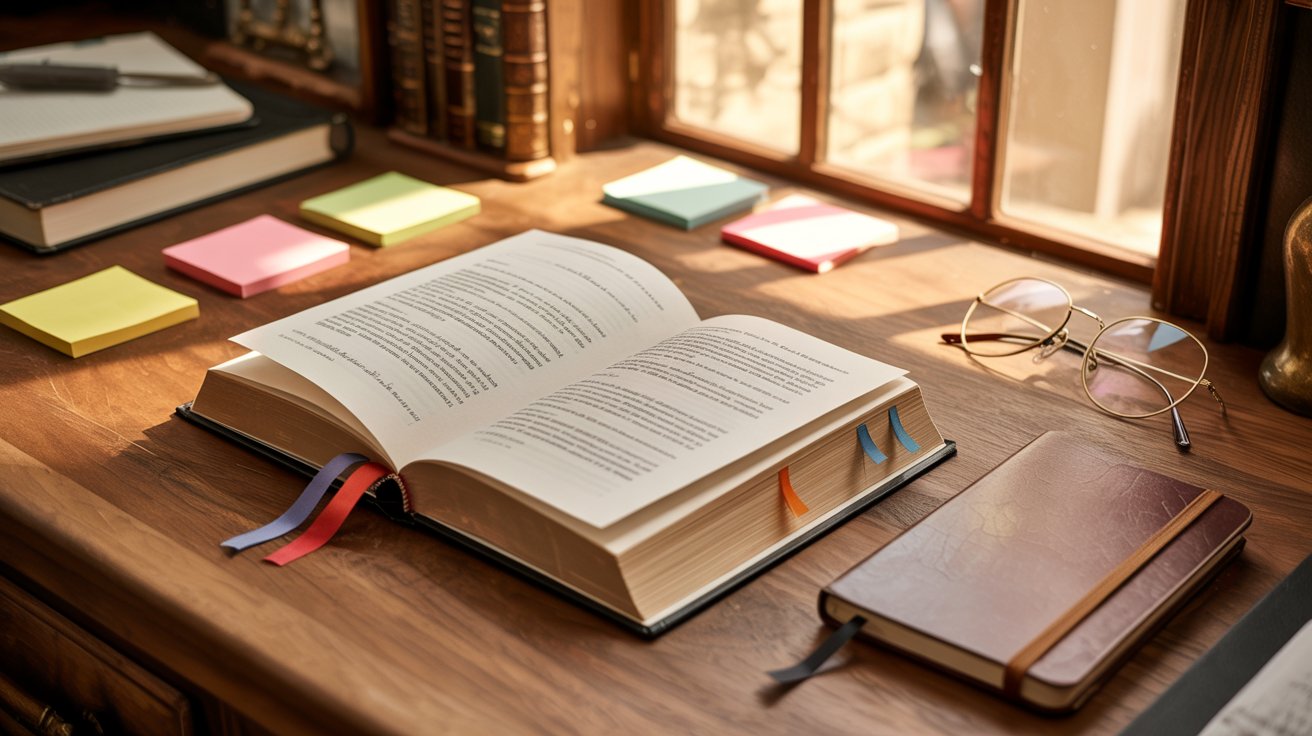
Before you read a single full page, spend five to ten minutes previewing the book. Read the chapter titles, subheadings, intro paragraphs, and any summaries or conclusions.
This builds a mental map of the content before you go in. When your brain already has a rough framework of what’s coming, it processes new information faster because it knows where to file it.
Previewing also helps you read with purpose. You’re not wandering through the text. You’re looking for specific things, and that focus alone speeds up your reading significantly.
6. Set Time-Based Reading Goals

Give yourself a set amount of time and a target number of pages before you start each reading session. Something like thirty pages in twenty minutes. It creates a gentle pressure that keeps your pace up.
Don’t make the targets extreme at the start. The goal is to gradually push your natural pace a little further each session. Small consistent improvements add up quickly over weeks.
Timed reading also makes you more aware of how often you drift off or re-read. When the clock is running, you’re more likely to stay focused and keep moving forward.
7. Eliminate Distractions for Deep Reading

Your phone is the biggest enemy of reading speed. Every notification pulls your attention out of the text and it takes several minutes to fully re-engage. That adds up fast across a reading session.
Find a quiet space, put your phone on silent or in another room, and treat your reading time as a focused block. Not half-reading while something plays in the background.
The environment you read in directly affects how fast and how well you process text. A distraction-free space isn’t a luxury. It’s a basic requirement for anyone serious about learning how to read a book fast and effectively.
Common Mistakes That Slow Down Reading Speed
Most people don’t realise their reading habits are working against them. The mistakes below are extremely common, and fixing even one of them can make a noticeable difference.
- Re-reading lines out of habit, not because you missed anything
- Reading every word at the same slow pace regardless of importance
- Holding the book too close or at an awkward angle, which strains your eyes
- Reading in short, broken sessions that never build real momentum
- Trying to memorise everything instead of focusing on key ideas
- Skipping the preview and going straight into dense chapters cold
- Multitasking while reading, music with lyrics, TV in the background, phone nearby
Every one of these habits costs you time. The good news is they’re all fixable with a bit of awareness and practice. Identify which ones apply to you and start there.
How to Measure and Track Your Reading Speed
Before you can improve, you need a baseline. Time yourself reading a page of your current book and count the words. Divide the word count by the minutes it took. That’s your words per minute, or WPM.
The average adult reads between 200 and 250 WPM. Anything above 300 is considered above average. Strong readers who practise regularly often reach 400 to 600 WPM without losing comprehension.
Track your WPM once a week, not every day. Daily measurement can feel discouraging when progress is slow. Weekly checks show a clearer trend and keep you motivated.
Also test your comprehension alongside your speed. After each timed session, write down three to five main points from what you just read. If you can do that easily, your comprehension is holding up alongside your speed.
Conclusion
Most people never fix their reading speed because they wait for the perfect moment to start. That moment doesn’t come.
You already know what’s slowing you down. Now it’s about doing something with that.
Pick one technique. Use it today. Then add another next week.
How to read a book fast is a skill that compounds. The more you practise, the less effort it takes.
If this guide helped you, share it with someone who never has enough time to read. And tell me in the comments which technique you’re starting with.
Frequently Asked Questions
What is the fastest way to learn how to read a book fast?
Start by eliminating subvocalization and practising daily timed reading sessions. These two changes alone produce noticeable speed improvements within a few weeks.
Can I learn how to read a book fast and effectively without losing comprehension?
Yes, by combining speed techniques with active recall and brief summarization after each session. Speed and comprehension can be built together with consistent practice.
How long does it take to improve reading speed?
Most readers see real improvement within two to four weeks of daily focused practice. The key is consistency, not intensity.
Does speed reading work for all types of books?
It works best for non-fiction and information-heavy books where you’re looking for key ideas. Fiction often benefits from a more balanced pace to fully absorb the story.
How many words per minute is considered fast reading?
The average reader manages 200 to 250 WPM. Practised fast readers often reach 400 to 700 WPM or more while maintaining solid comprehension.