


A lot of people pick up the Bible and wonder the same thing. How long is this actually going to take? I had that thought too.
The truth is, there is no one answer. Your reading speed, your goals, and how deep you want to go all play a role.
If you just want to read straight through, most people finish the Bible in 70 to 80 hours. That breaks down to about 15 minutes a day for a year.
Let me walk you through what that really looks like.
Average Time It Takes to Read the Entire Bible
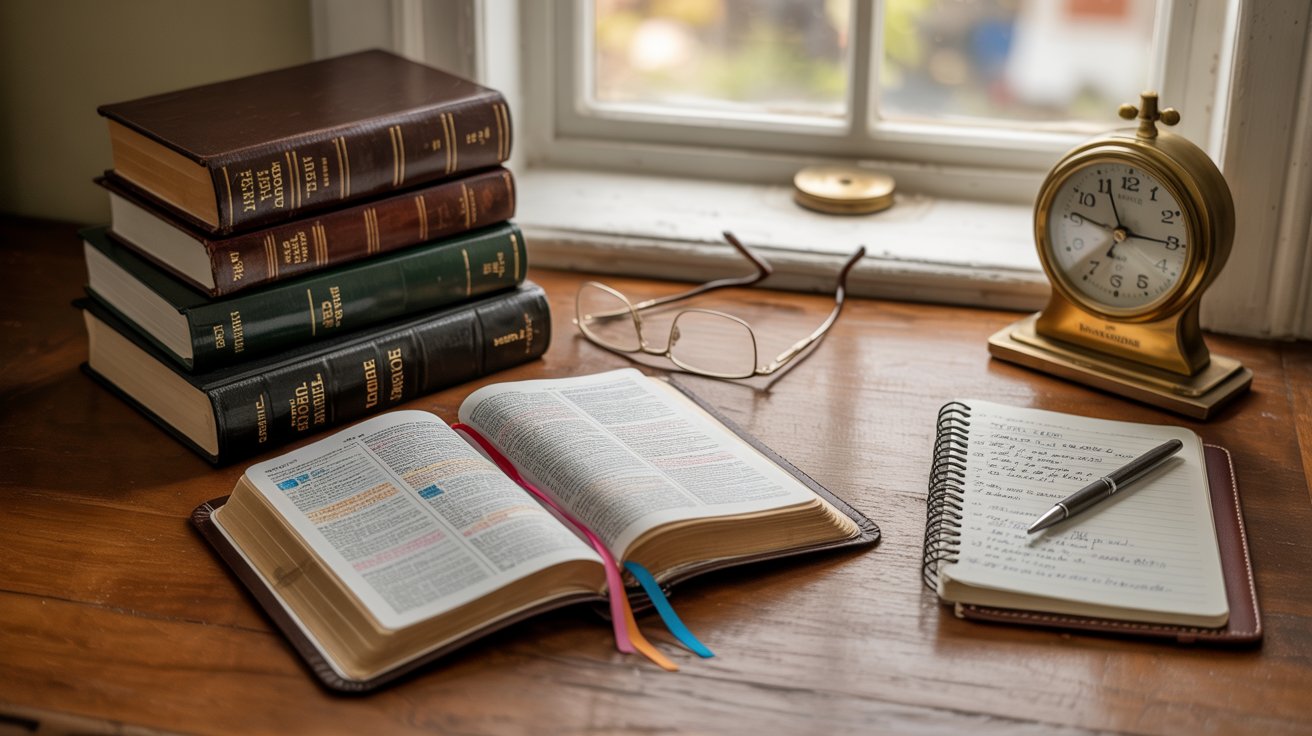
The Bible is a long book, but it is more doable than most people think. Once you break it down by time and habit, it all starts to make sense.
Total Hours Needed to Read the Bible
Most people take between 70 and 90 hours to read the Bible cover to cover. The Old Testament runs about 55 to 65 hours and the New Testament around 15 to 20 hours. Reading straight through is faster. Studying with notes and context can easily triple that time.
Average Bible Reading Speed
Most adults read between 200 and 300 words per minute. The Bible has around 774,000 words in total. At 200 words per minute, you are looking at about 65 hours. At 300 words per minute, that drops to around 43 hours.
The translation you pick also matters. Older versions like the King James Bible use formal language that slows you down. Modern ones like the New International Version use simpler words, so you move faster.
How Long It Takes by Daily Reading Habit
- 10 minutes a day puts you at finishing in about 2 to 2.5 years.
- 20 minutes a day gets you there in roughly a year and a few months.
- 30 minutes a day means you can finish in about one year.
- 1 hour a day and you are done in around three to four months.
- Pick a pace that fits your life. Even 10 minutes a day adds up.
How Many Chapters Should You Read Per Day?

It depends on your goal and how much time you have. Here is a simple breakdown of the most common reading plans to help you pick one that works for you.
Bible Reading Plan for 30 Days
This is a fast-paced plan. The Bible has 1,189 chapters, so reading it in 30 days means covering about 40 chapters a day. That takes roughly 2 to 3 hours of reading daily. It is a big commitment, but doable if you set aside dedicated time each day.
Bible Reading Plan for 90 Days
This plan brings it down to around 13 chapters a day. It takes about 45 minutes to an hour each day. It is a good fit for people who want to move through the Bible at a solid pace without burning out. Many motivated readers find this plan works well for them.
One-Year Bible Reading Plan
This is the most popular plan out there. You read around 3 to 4 chapters a day, which takes about 15 to 20 minutes. It is easy to stick to and fits into most daily routines. A lot of people use this plan because it feels steady without feeling rushed.
Two-Year Bible Reading Plan
This plan cuts the daily reading down to about 1 to 2 chapters a day. That is roughly 10 minutes of reading. It gives you more time to think about what you read. It is a great starting point if you are new to the Bible and want to take things slow.
Factors That Affect How Long It Takes to Read the Bible

Not everyone takes the same amount of time to read the Bible. A few things can speed you up or slow you down.
Your Reading Goal
Casual reading means you move at a relaxed pace with no set deadline. Devotional reading is more focused. You read a passage and sit with it before moving on. In-depth study takes the most time since you cross-reference verses and dig into meaning. Each goal leads to a very different time commitment.
Bible Translation Choice
Modern translations like the New Living Translation and New International Version use plain language, so you move faster. The English Standard Version is slightly more formal. The King James Version uses older English and tends to slow most readers down. If speed matters, start with a modern translation.
Reading vs Studying
Reading means moving through the text without stopping. Studying means highlighting, taking notes, and looking up context. Both have value, but studying takes much longer. If you mix both, expect your total time to go up.
Audio Bible vs Physical Reading
Audio Bibles play at around 150 to 160 words per minute by default. You can speed that up to 1.5x or 2x to finish faster. The biggest benefit is flexibility. You can listen while driving, cooking, or doing chores, which helps you stay consistent on busy days.
Fastest Ways to Read the Bible
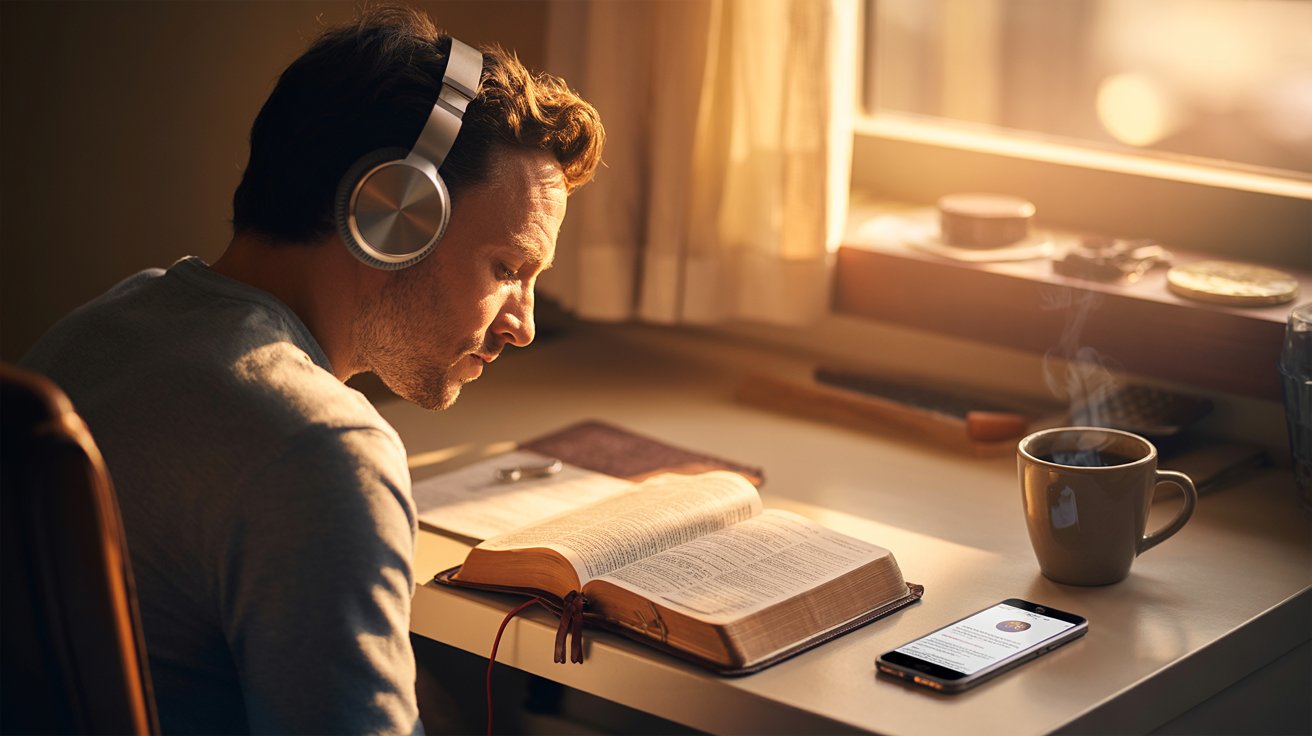
If you want to get through the Bible faster, it comes down to the right method and a consistent routine.
Using an Audio Bible
An audio Bible is one of the easiest ways to cover more ground. You can listen during your commute, workout, or even while doing household tasks.
Most apps let you adjust the playback speed. Running it at 1.5x or 2x can cut your total listening time significantly without losing much comprehension.
Following a Structured Reading Plan
A reading plan keeps you on track. Chronological plans take you through the Bible in the order events happened, which many people find easier to follow.
Canonical plans go book by book in the traditional order. Daily Bible apps like YouVersion send you reminders and track your progress automatically. Having a plan removes the guesswork and keeps you moving forward.
Removing Distractions While Reading
Pick a time that works for you and stick to it. Morning works well for most people because the day has not started yet.
Put your phone away, find a quiet spot, and read for your set amount of time. A simple daily routine does more for your progress than any reading trick. Consistency beats speed every time.
Is It Better to Read the Bible Quickly or Slowly?
Reading fast helps you see the big picture and understand how the whole story connects. Reading slowly gives you time to reflect and actually apply what you read.
Neither way is wrong. The best approach is a mix of both. Move through larger sections to get the overall flow, then go back and spend more time on passages that stand out to you.
Rereading key sections adds a lot more depth over time.
Common Challenges When Reading the Bible
- Books like Leviticus, Numbers, and Chronicles are tough for most readers. They are dense with laws, genealogies, and repetitive lists that can feel slow to get through.
- Staying consistent is one of the biggest challenges. Life gets busy, and skipping a few days can quickly turn into weeks.
- Setting small, realistic goals helps more than ambitious ones. Starting with 10 minutes a day is far better than planning an hour and giving up after a week.
- Complex passages can feel confusing without context. Using a study Bible or a simple commentary helps you understand what you are actually reading.
- Reading with context in mind makes a big difference. Knowing who wrote a book, when it was written, and why changes how much sense the text makes.
Final Thoughts
Speed is not the goal here. Consistency is. I have seen people finish the Bible in 90 days and others take three years.
Both got something valuable out of it. What matters is that you start and keep going. Pick a plan that fits your life, even if it is just 10 minutes a day.
That small habit adds up faster than you think. Start your reading plan today and take it one page at a time.
Frequently Asked Questions
How long does it take to read the entire Bible?
Most people finish the Bible in 70 to 90 hours of total reading time. Your speed and daily commitment will decide how fast you get there.
How many chapters should I read per day to finish the Bible in a year?
You need to read about 3 to 4 chapters a day to finish in one year. That takes around 15 to 20 minutes of reading daily.
Is it faster to listen to the Bible than to read it?
Audio Bibles play at around 150 to 160 words per minute, which is slightly slower than most readers. Speeding it up to 1.5x or 2x makes it much faster.
Which Bible translation is easiest to read quickly?
The New Living Translation and the New International Version are the easiest to move through. They use simple, modern language that most readers find comfortable.
Can a beginner read the Bible in one year?
Yes, a beginner can absolutely finish the Bible in one year. Sticking to a simple daily reading plan of 15 to 20 minutes makes it very manageable.