


I used these two words my whole life without questioning them. Bookcase. Bookshelf. I genuinely thought they meant the exact same thing.
Then a carpenter asked me to clarify which one I wanted. And I had no idea what to say.
That one awkward moment made me dig into something I assumed was simple. Turns out, are bookcases and bookshelves the same is a question with a surprisingly layered answer.
Culture plays a role. Design context plays a role. Even the country you live in changes the answer. Here's everything I found out.
Understanding the Basic Meaning of Bookcases and Bookshelves
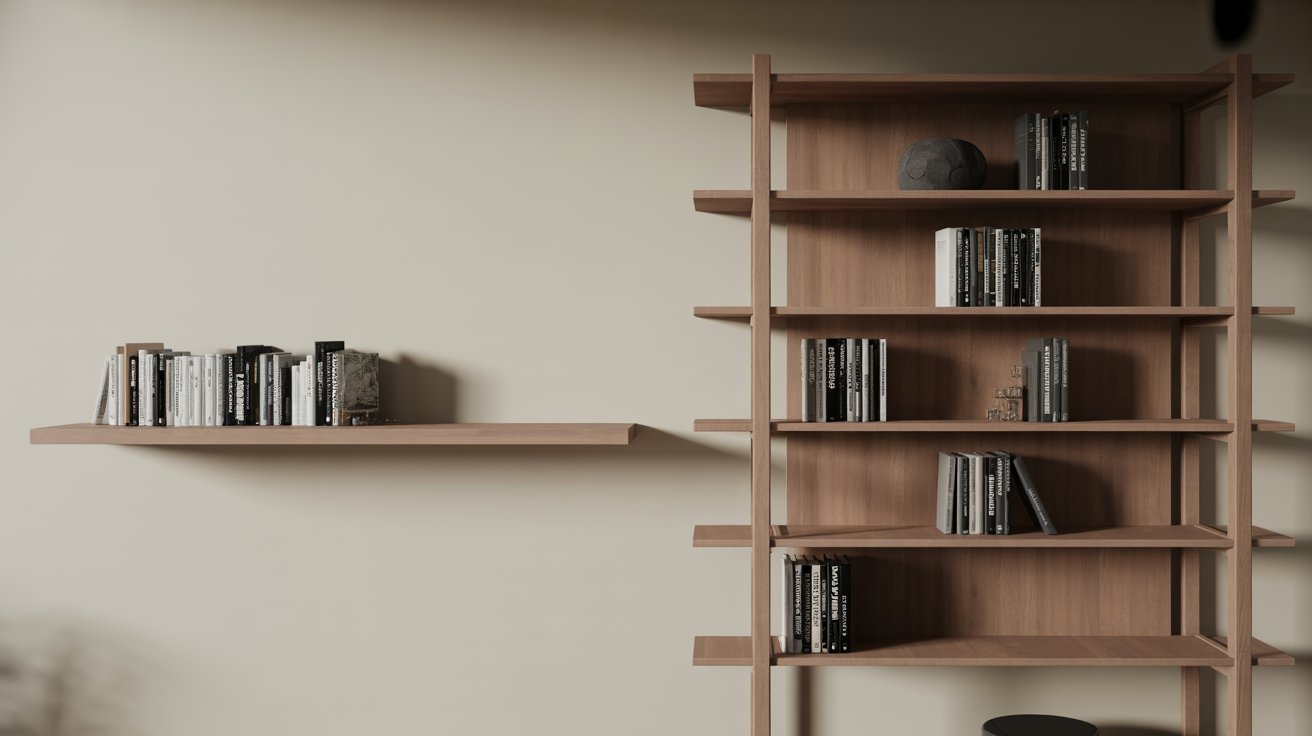
A bookshelf, at its simplest, is a single horizontal surface that holds books. It could be one shelf on a wall or one tier within a larger unit. The word describes a surface more than a full piece of furniture.
A bookcase, on the other hand, usually refers to a complete furniture unit. It has multiple shelves stacked within a frame. It stands on its own or fits against a wall as a whole piece.
The furniture industry tends to use "bookcase" for freestanding units and "bookshelf" for individual shelving components. But in everyday conversation, most people don't follow that distinction at all.
That's exactly where the confusion starts. Both words are used casually to mean the same thing, which makes it hard to know when the difference actually matters.
Are Bookcases and Bookshelves the Same?
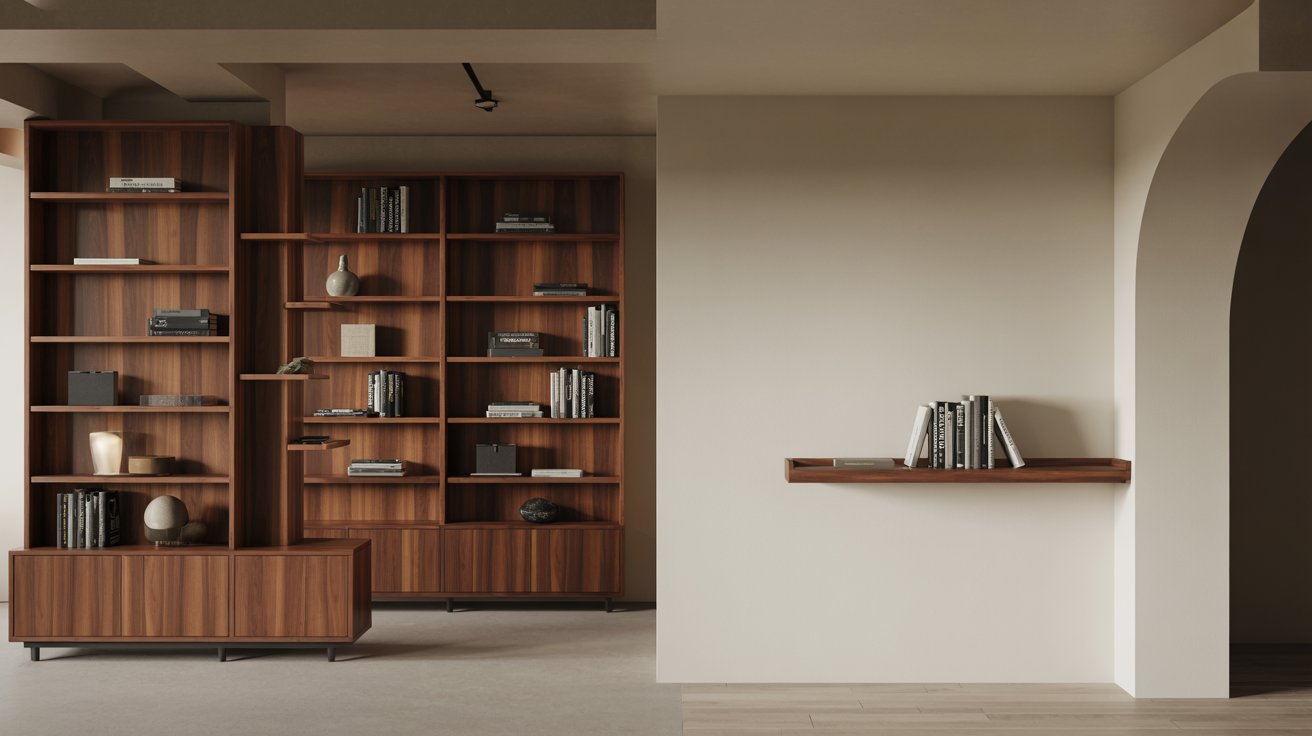
In most everyday situations, yes. People say both words to describe the same object without any real issue. The overlap is significant enough that most listeners won't notice or care which word you use.
But they're not completely identical in every context. The distinction becomes clearer when you're dealing with furniture retail, interior design, or architecture. In those spaces, terminology carries more weight.
A bookcase implies a full unit. A bookshelf implies a surface or component. That difference is small but real.
So are bookcases and bookshelves the same in casual conversation? Practically, yes. In professional or design contexts, not quite. Knowing both sides of that answer makes you more confident regardless of the setting.
Cultural and Regional Differences in Terminology
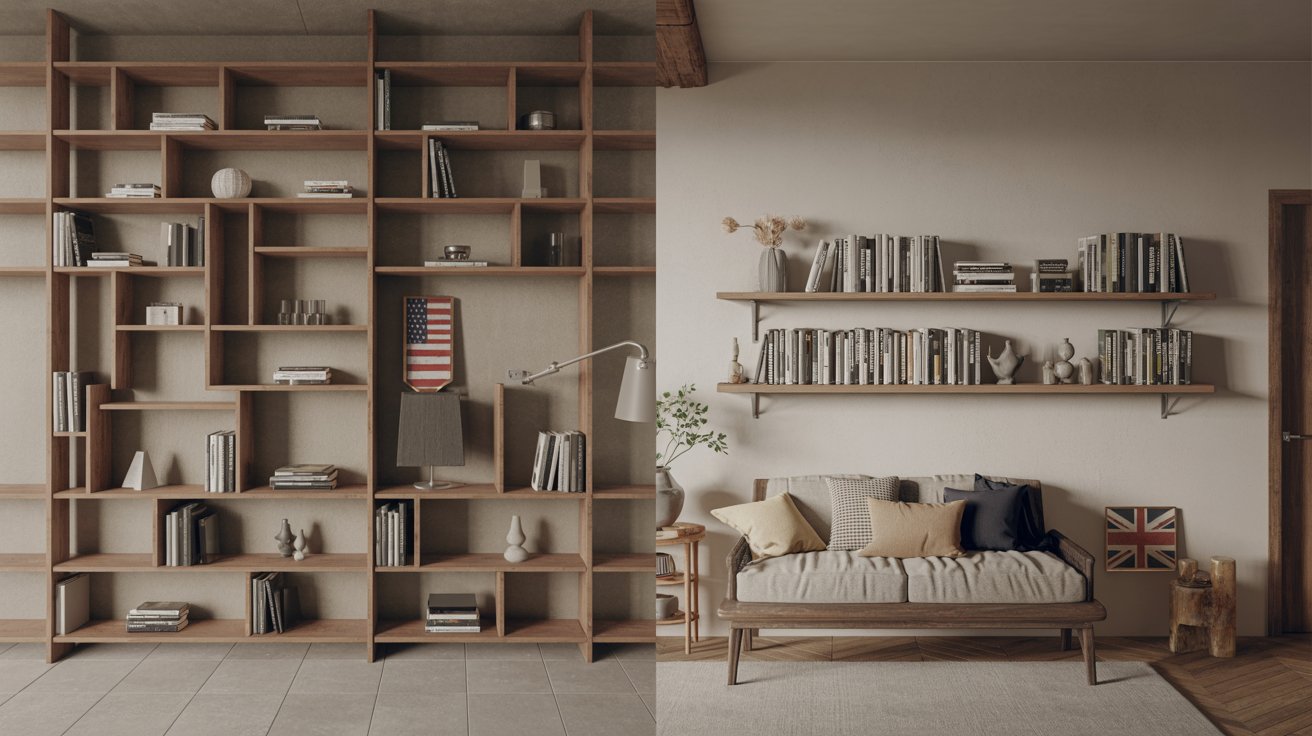
Language shapes how we see everyday objects, including furniture. The word someone reaches for first often depends more on where they grew up than what the object actually looks like. That's especially true with terms like bookcase and bookshelf.
American English vs British English Usage
The two terms don't carry exactly the same weight on either side of the Atlantic.
Here's how usage tends to differ:
| Feature | American English | British English |
| Preferred term | Bookcase | Bookshelf |
| Typical usage | Refers to full freestanding furniture unit | Used more casually for shelves or storage |
| Formality level | Slightly more formal in retail and design | More conversational and flexible |
| Design context | Common in furniture catalogs and stores | Common in everyday speech and home decor |
In the US, "bookcase" shows up more in product listings and furniture stores. In the UK, "bookshelf" feels more natural in casual conversation and general use.
Other Regional Interpretations
In Commonwealth countries like Australia, Canada, and New Zealand, usage tends to follow British patterns loosely. "Bookshelf" is more common in speech, while "bookcase" appears more in formal or retail settings.
In non-English speaking regions, the distinction gets blurrier. Translations often default to one word regardless of structure. A single translated term ends up covering both meanings.
Global furniture brands like IKEA tend to standardize their own terminology. Their product names don't always align with how local customers naturally speak. This adds another layer of inconsistency to an already flexible topic.
Structural and Design Differences in Real Usage
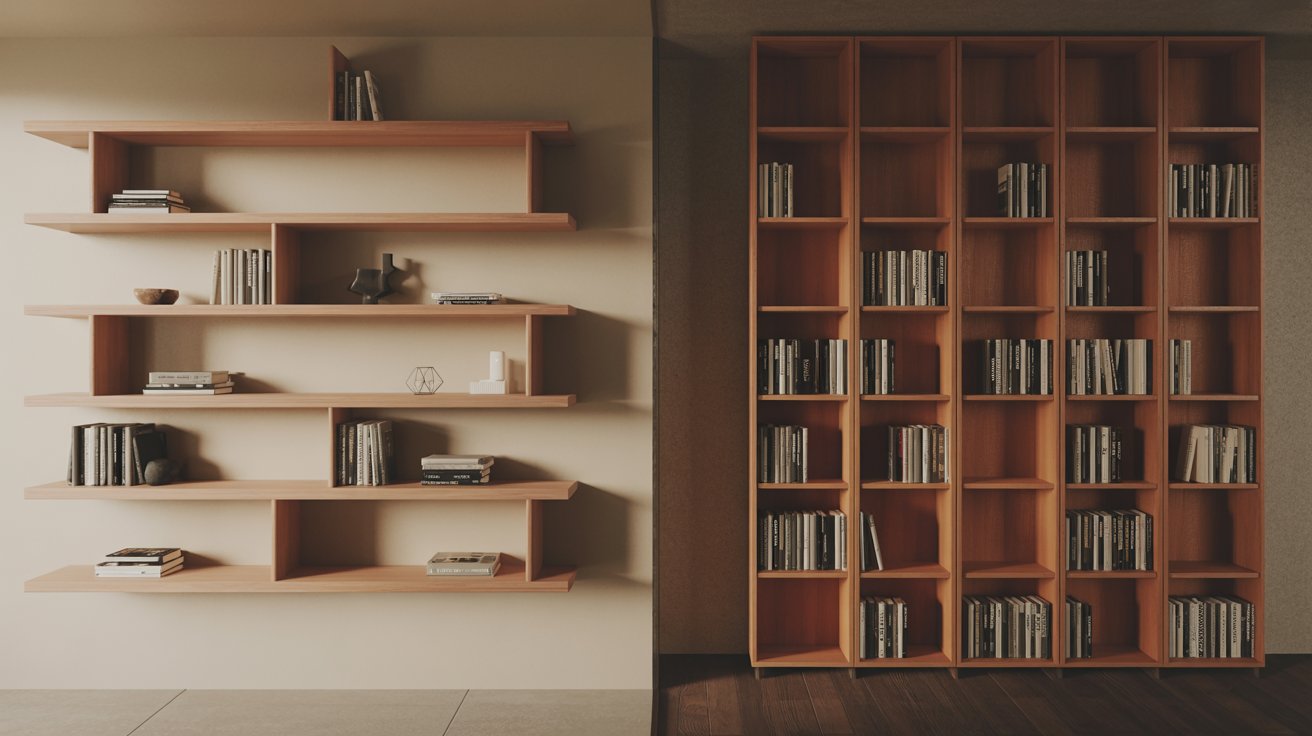
When you look at the physical objects, some real differences do exist. A bookcase is typically a self-contained unit. It has a back panel, a frame, and multiple shelves built into one structure. You can move it from room to room as a single piece.
A bookshelf, in design terms, often refers to a mounted or modular storage element. It might be a single shelf fixed to a wall or a series of open shelves without an enclosing frame.
Bookcases tend to feel more permanent and furniture-like. Bookshelves feel more flexible and architectural. That difference matters when you're planning a room or talking to a carpenter.
The key is context. The same object could reasonably be called either word depending on who's describing it and why.
Open Shelving vs Enclosed Bookcases
The structural difference becomes clearest when you compare open shelving to enclosed units side by side.
| Feature | Open Bookshelves | Enclosed Bookcases |
| Structure | No back panel or side frame | Full frame with back panel |
| Mounting | Often wall-mounted or floating | Usually freestanding |
| Flexibility | Easy to reconfigure or expand | Fixed as a complete unit |
| Visual style | Light, open, decorative | Solid, structured, traditional |
| Best use | Display and decor | Storage and organization |
Open shelving fits a modern, minimal look. Enclosed bookcases suit traditional or formal spaces. Both store books well. They just do it differently.
How Interior Design Industry Uses These Terms
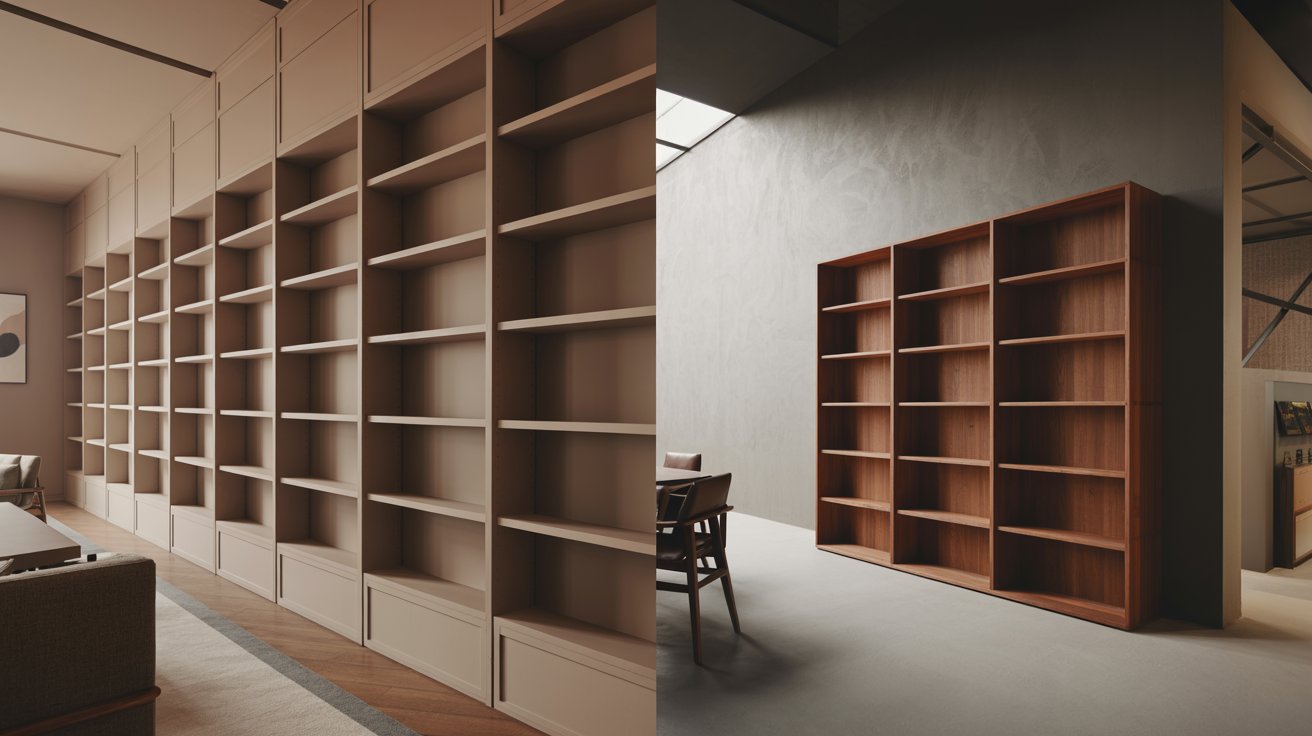
Interior designers and architects use these words with more precision than the average person does. For them, terminology affects planning, sourcing, and communication with clients and contractors.
A designer specifying "built-in bookshelves" is describing something architecturally integrated into a wall. A "freestanding bookcase" refers to furniture that can be moved and replaced. Those aren't interchangeable instructions on a design brief.
Furniture catalogs use both terms strategically to appeal to different search behaviors. A product might be listed as both a "bookcase" and a "bookshelf" to capture more buyers. It's a marketing decision as much as a design one.
Understanding how professionals use these terms helps when you're communicating about a project. Using the right word in the right room saves confusion and gets you closer to the result you actually want.
Evolution of Language in Modern Homes
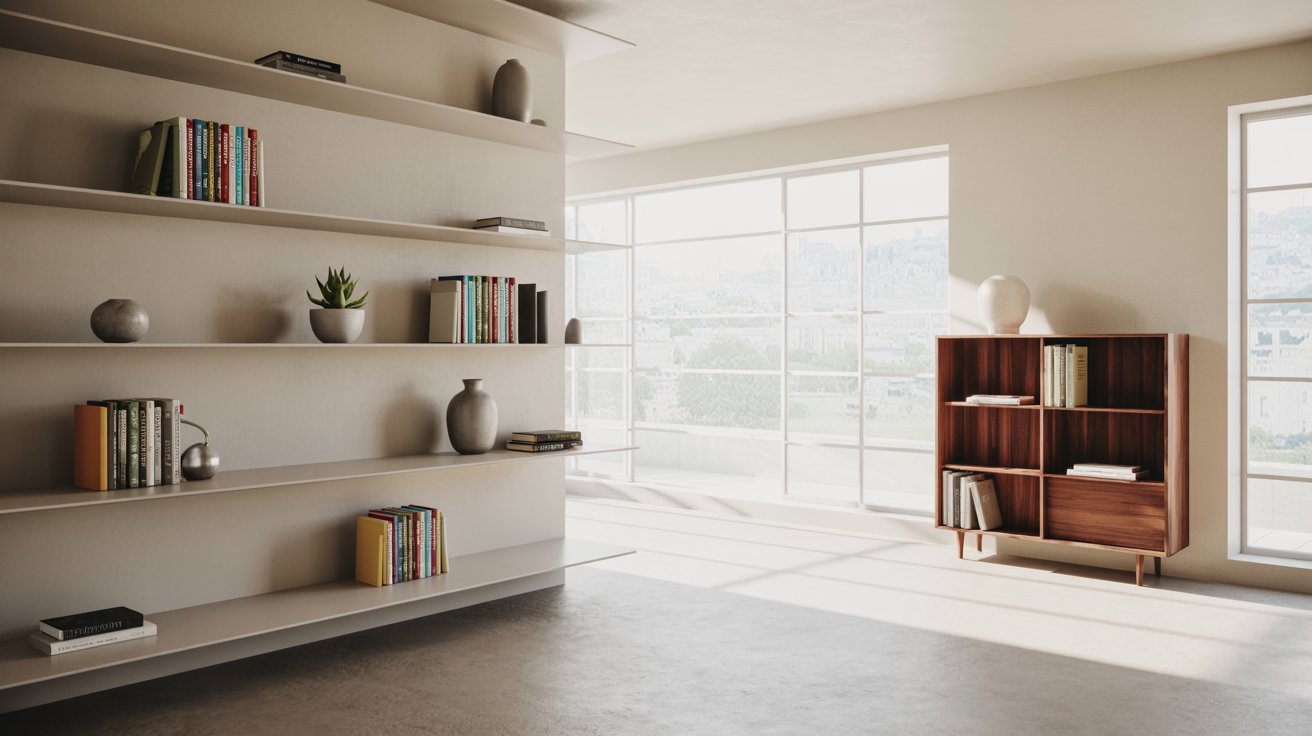
Interior design has shifted significantly toward open, minimal spaces over the past decade. That shift has changed how people talk about storage too. Heavy, enclosed bookcases feel less relevant to modern interiors. Open shelving feels more current.
As "bookshelf" started appearing more in modern design content, it picked up a fresher, more contemporary association. "Bookcase" started to feel slightly more traditional by comparison.
Social media has accelerated this shift. Home accounts on Instagram and Pinterest use "bookshelf" far more often than "bookcase." That repetition shapes how everyday people talk about furniture, whether they realize it or not.
The result is that traditional definitions are blurring in real time. Words evolve with the spaces they describe. That's not a problem. It's just how language works.
Common Misconceptions About Bookcases and Bookshelves
There's a fair amount of confusion around these two words, and some of it comes from myths that have been repeated often enough to sound true. Getting these straight makes it easier to shop, design, and communicate clearly.
Here are the most common misconceptions:
- They are completely different furniture types: In reality, the overlap is significant. Both store books and both appear in homes, offices, and libraries worldwide
- One is always built-in and the other is always movable: This isn't consistent. Both terms can describe built-in or freestanding furniture depending on context and region
- Terminology is universal: It isn't. The word someone uses first depends heavily on where they grew up and what language conventions they were raised with
- The difference always matters: In casual conversation, it rarely does. Most people won't correct you either way
- Furniture stores follow strict definitions: They don't. Many brands use both terms for the same product to reach more search queries
These misconceptions create more confusion than the actual words do. Once you understand that flexibility is built into both terms, the whole topic becomes a lot less complicated.
When Understanding the Difference Actually Matters
Most of the time, using either word is perfectly fine. But there are situations where knowing the distinction saves you time, money, or miscommunication.
When you're buying furniture online, search terms matter. Searching "bookcase" might return different products than searching "bookshelf" on the same website. Using both gives you a fuller picture of what's available.
If you're working with an interior designer or carpenter, being specific helps. Saying "freestanding bookcase" versus "wall-mounted bookshelves" tells them exactly what you want without back-and-forth.
When designing a home library or office, the structural difference affects your planning. A bookcase takes up floor space. Wall-mounted shelving uses vertical space without touching the floor. That distinction shapes the whole room layout.
For bloggers and product sellers, keyword strategy matters too. Knowing that are bookcases and bookshelves the same is a real search query means you can write content that actually answers what people are looking for.
Conclusion
Honestly, this question bothered me more than it should have. But now that I've looked at it from every angle, the answer feels simple.
Are bookcases and bookshelves the same? Close enough for most situations. Different enough to matter when it counts.
Stop overthinking the label. Start thinking about what works for your space and how you want to use it. That's the part that actually matters.
Now tell me, which word do you use at home? Drop it in the comments. And if this helped, share it with someone who's been confused about this too.
Frequently Asked Questions
Are Bookcases and Bookshelves the Same Thing?
They are used interchangeably in most everyday situations, but technically a bookcase refers to a full freestanding furniture unit while a bookshelf refers to a single shelf or open storage surface. The difference matters more in design and retail contexts than in casual conversation.
What Is the Main Difference Between a Bookcase and a Bookshelf?
A bookcase is typically an enclosed, self-contained furniture unit with multiple shelves and a back panel. A bookshelf usually refers to a single shelf surface or an open, wall-mounted storage system.
Why Do People Use the Terms Interchangeably?
Both words describe furniture used to store books, so the functional overlap makes swapping them feel natural. Regional language habits and casual everyday speech have further blurred any formal distinction between the two.
Is a Bookshelf Always Wall-Mounted?
No, the term bookshelf can apply to both wall-mounted shelves and individual tiers within a freestanding unit. The word describes the shelf surface itself rather than specifying how it is installed.
Which Term Is More Commonly Used in the US and UK?
In the US, "bookcase" tends to appear more often in furniture retail and formal contexts. In the UK, "bookshelf" is generally the more common term in everyday speech and casual home decor conversations.


