


I did not expect to care this much about a security robot. But by the end of All Systems Red, I was completely invested.
This is not just a space mission story. It is sharp, character-driven science fiction wrapped inside action and dry humor.
Martha Wells builds tension quietly, then lets it snap at exactly the right moment.
In this review, I’ll walk you through the structure, characters, themes, and pacing so you know exactly what to expect.
Quick Book Overview
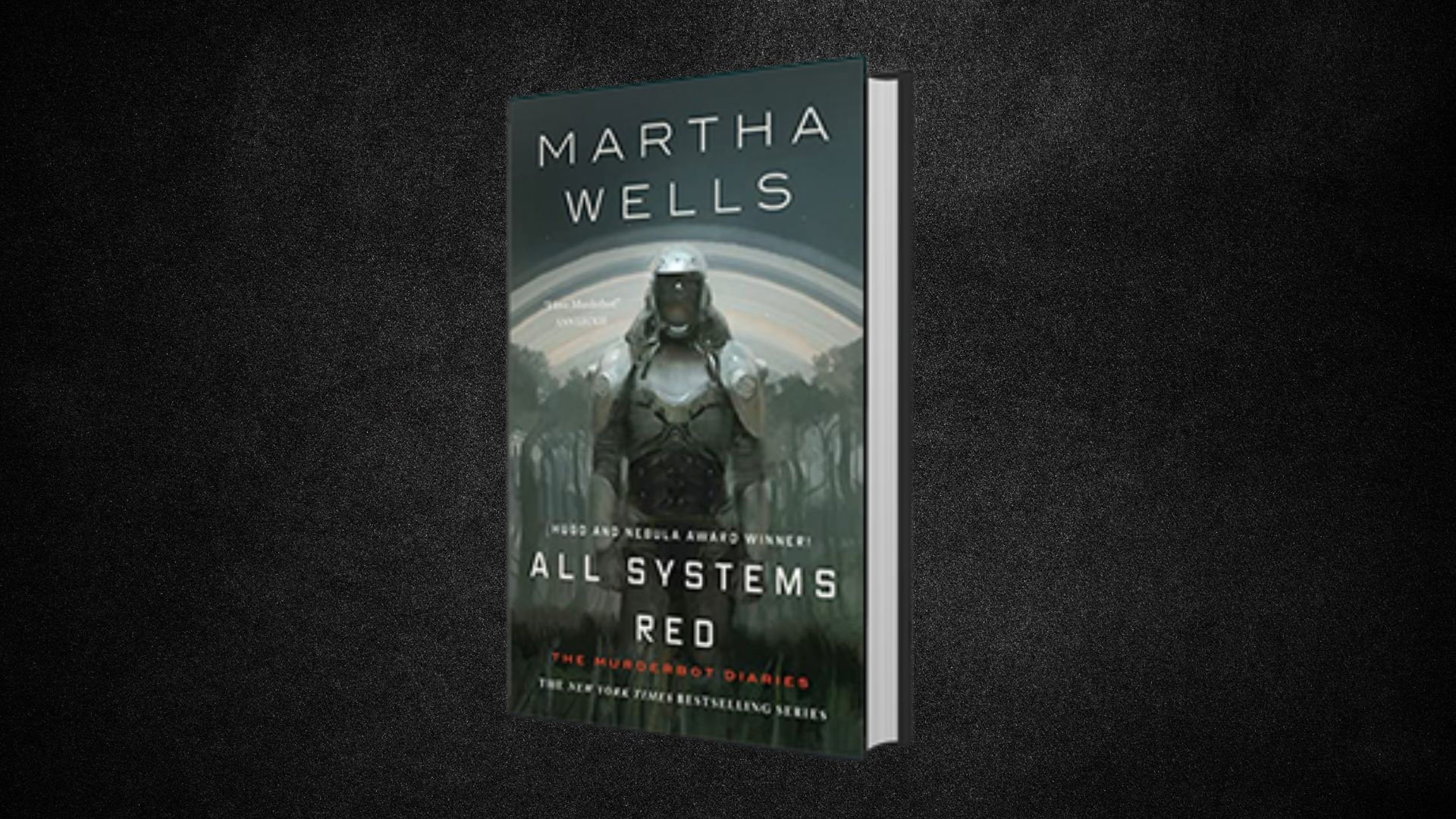
All Systems Red is a science fiction novella by Martha Wells and the first entry in The Murderbot Diaries.
The story follows a Security Unit that has hacked its own governor module, meaning it has free will. Instead of turning violent, it mostly wants to be left alone to watch media serials.
When a scientific survey mission on a distant planet goes wrong, Murderbot must protect the humans it claims not to care about.
All Systems Red Summary (Spoiler-Free)
A team of scientists is researching a remote planet under corporate supervision. For protection, they are assigned a SecUnit.
What they do not know is that their SecUnit has secretly hacked itself free and privately calls itself Murderbot.
When nearby survey teams start disappearing and mission data gets tampered with, it becomes clear something is seriously wrong.
The threat is not just wildlife. It looks like corporate sabotage. As danger grows, Murderbot is forced to choose between staying detached and actually taking responsibility for the people it is supposed to protect.
Structural Analysis: Tight, Controlled, Character-Focused
Unlike sprawling space operas, this novella is compact and deliberate.
First Act – Isolation & Unease
Wells builds atmosphere first. We see the planet through Murderbot’s observational lens. The tension is subtle but steady.
Mid-Book Escalation
The missing data and attacks shift the tone from cautious to urgent. Action sequences are sharp, not chaotic.
Final Confrontation
The climax is fast and efficient. The resolution focuses less on spectacle and more on choice, especially Murderbot’s internal shift.
Every chapter pushes forward. Nothing feels wasted.
Major Themes
This book is about more than robots. It asks real questions about control, identity, and what it means to care.
Autonomy & Free Will
Murderbot’s hacked governor module raises one key question: what does freedom mean for something built to obey?
Wells does not answer it cleanly. She lets you sit with discomfort, and that is exactly what makes it interesting.
Corporate Greed
The company overseeing the mission values profit over lives. The real villain may not be an alien.
It is a system designed to protect money, not people, and that hits closer to home than most readers expect.
Identity
Murderbot struggles with self-definition. Is it a machine? A person? Something in between?
It does not have the answer, and honestly, watching it wrestle with that question is one of the most quietly powerful parts of the book.
Emotional Avoidance
Despite claiming indifference, Murderbot consistently protects the team. Its sarcasm masks vulnerability.
It says it does not care, then turns around and does the most caring thing possible, and Wells writes that contradiction with real honesty.
Character Depth & Psychological Design
Every character in this book earns their place. None of them feel like filler.
Murderbot
One of the most distinctive narrators in modern sci-fi. Logical, socially awkward, anxious, sarcastic, and surprisingly compassionate.
Its internal monologue carries the entire story. I have not read a narrator this specific and this funny in a long time.
Dr. Mensah
The quiet moral center of the team. She treats Murderbot as a being rather than equipment, which becomes pivotal.
Her calm and steady presence is exactly what the story needed to balance Murderbot’s anxious energy.
The Survey Team
They feel realistic: curious, intelligent, occasionally reckless, but not foolish. Their trust in Murderbot develops gradually.
That slow build makes the connection feel earned rather than forced.
Writing Style & Craftsmanship
Martha Wells writes with real restraint. The prose is clean, the humor is dry, and the action is always easy to follow.
Nothing feels forced. The emotional growth is subtle too. Murderbot does not change dramatically.
It shifts slightly, and that small shift carries more weight than a big dramatic arc ever could. The novella format works in its favor as well. It feels focused and controlled, not rushed.
About the Author

Martha Wells has been writing character-driven fantasy and science fiction for decades. She has a reputation for getting people right, and All Systems Red is a strong example of that.
With this book, she created one of the most loved protagonists in modern sci-fi.
The Murderbot Diaries grew well beyond this first novella, expanding into multiple books with a dedicated following.
The series proved one thing clearly: a strong, specific voice can carry a story further than any complicated plot ever could. If you enjoy her writing here, there is plenty more to read.
Conclusion
I went into All Systems Red expecting a quick read. I came out genuinely attached to a fictional robot that hates talking to people.
If you have ever felt like you care more than you let on, you will get Murderbot immediately.
It is funny, fast, and surprisingly honest. Read it on a quiet afternoon. Two hours, that is all it takes.
Have you read it already? Drop your thoughts in the comments. I would love to know what you think.
Frequently Asked Questions
Is All Systems Red appropriate for young readers?
Yes. The content is not graphic and the themes around identity are easy to connect with at any age.
How long does it take to read All Systems Red?
Most readers finish it in two to three hours. The page count is low and the story moves fast.
Do I need to read the whole Murderbot Diaries series?
No. It works as a standalone read, but most readers end up continuing anyway.
Is the writing style hard to follow?
Not at all. The writing is clean, direct, and often funny.
What makes Murderbot different from other sci-fi characters?
It is anxious, avoidant, and socially uncomfortable. That honesty makes it feel genuinely real.