
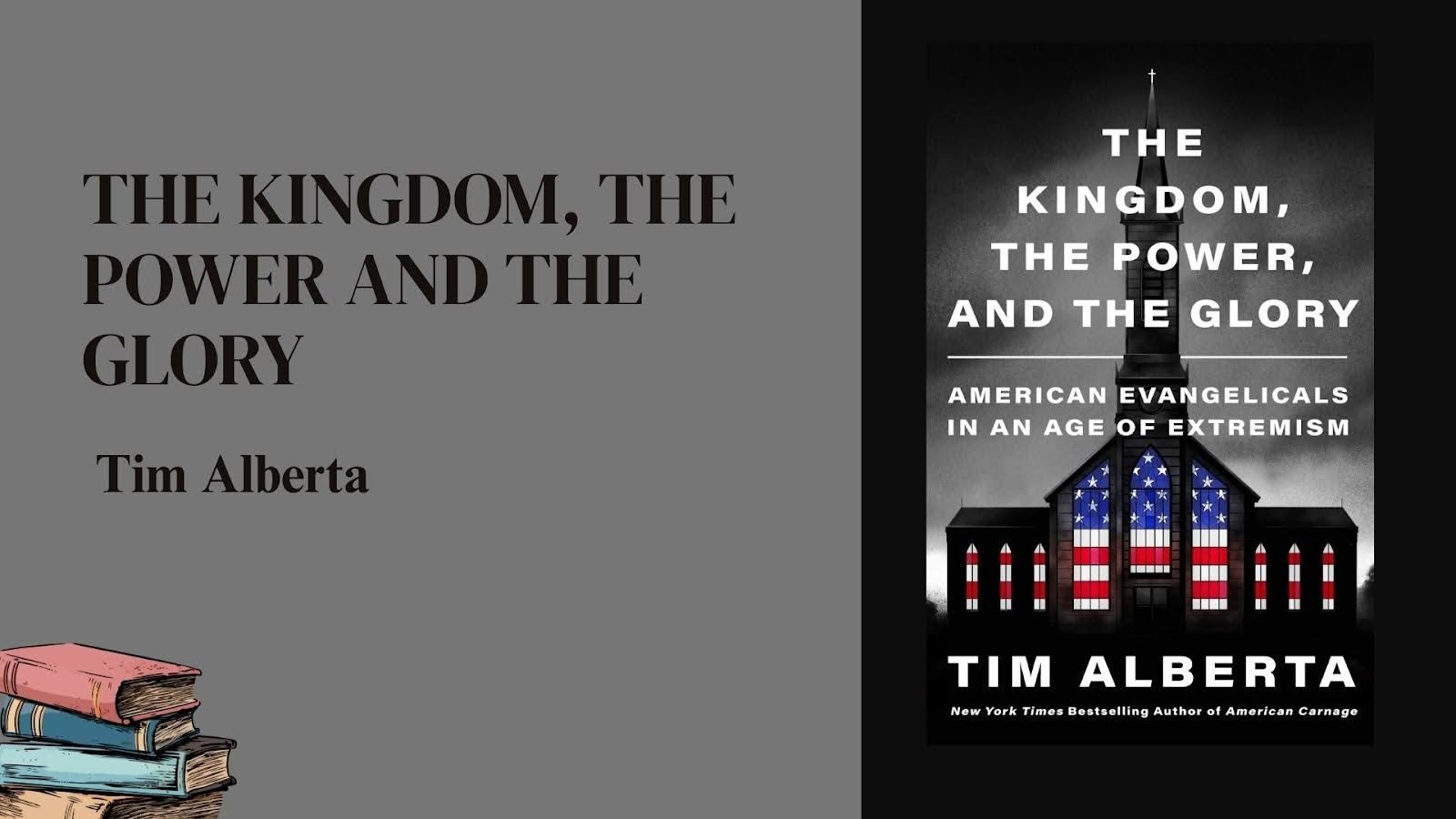
Looking for The kingdom, The power and the glory review? I’ve got you covered.
I read Tim Alberta’s book from cover to cover, and I’m here to give you the honest truth. No fluff. No hype. Just real insights you can trust.
This review will help you decide if this book deserves your time. I’ll explain who Tim Alberta is, what the book covers, why it matters right now, and whether you should read it. I’ll share the strengths, the weaknesses, and the key takeaways.
If you’re searching for clarity on faith and politics in America, you’re in the right spot. Let’s get started.
Overview of the Book

This book examines how politics changed American evangelical Christianity. The book tackles four main ideas.
First, the rise of Christian nationalism. Alberta shows how faith and patriotism got tangled together. Many Christians started seeing America as God’s chosen nation.
Second, political identity versus religious identity. Are evangelicals following Jesus or following a political party? Alberta found that many people couldn’t tell the difference anymore.
Third, internal fractures within American evangelicalism. The movement is breaking apart. Pastors are fighting with their congregations. Families are splitting over politics.
Fourth, effects of Trump-era politics and COVID-19 on the church. These two forces pushed evangelicals to choose sides. The church struggled to hold together.
Alberta uses reporting-based storytelling. He shows up with facts, interviews, and observations. The book mixes interviews with evangelical leaders, regular church members, and political figures. The tone is serious but not preachy. The pacing works well.
Key Insights from the Book
Alberta uncovers truths that many people don’t want to face.
How Politics Reshaped Evangelical Identity:
Politics became the main thing for many evangelicals. Alberta found churches where people cared more about election results than Sunday sermons. By 2020, many evangelical churches looked more like political rallies than worship services.
The Shift from Faith to Fear-Based Culture:
Fear replaced hope in many evangelical spaces. Alberta documents how church leaders used fear to control people. This fear-based approach filled pews but damaged the spiritual core of these communities.
Evangelical Leaders and Abuse of Power:
Alberta exposes how some church leaders abused their authority. They silenced critics. They covered up scandals. They chose power over truth. This abuse created deep wounds that still haven’t healed.
Decline of Public Trust in the Church:
The evangelical church lost credibility with outsiders. Young people walked away. Communities of color felt betrayed. The church’s political choices damaged its witness.
The Struggle Between Spiritual Mission and Political Agenda:
Many pastors felt trapped. If they stayed quiet on politics, some members got angry. If they spoke up, others left. This balancing act tore congregations apart.
Strengths of the Book
Several things make this book stand out from other critiques of evangelicalism.
Deep Investigative Reporting
Alberta did serious homework. He traveled across America. He attended church services. He verified facts. He interviewed dozens of pastors, church members, and evangelical leaders. He spent time in megachurches and small congregations.
He read internal church documents and emails. The reporting shows on every page. You can trust what he writes because he backs it up with evidence.
Balanced Yet Honest Critique
Alberta loves the church even as he criticizes it. He’s not an angry ex-evangelical throwing bombs. He’s a concerned member trying to help. He shows compassion for everyone involved. He understands why people made certain choices.
He explains the pressure pastors faced. This approach will reach readers who might dismiss a harsher critique. The book feels fair even when it hurts.
Emotional and Relatable Human Stories
The personal stories hit hard. Alberta introduces you to real people with real struggles. You meet pastors who lost their jobs. You hear from church members torn between faith and politics. You feel their pain when their church splits.
You understand their confusion when leaders fail them. These human moments make abstract issues concrete. The stories stay with you long after you finish reading.
Criticisms & Limitations
Alberta admits his evangelical background. Some readers will see this as bias. The book clearly leans toward a particular view of what evangelicalism should be. Conservative readers might feel unfairly represented.
The book spends a lot of time on extreme cases. Megachurch scandals. Radical pastors. Conspiracy theories. Most evangelical churches aren’t this dramatic. Many quietly do good work in their communities. Alberta acknowledges this but doesn’t spend much time on it.
If you attend a moderate evangelical church, you might not recognize the world Alberta describes. Many congregations handled politics better than the ones in this book. The book works better as a warning than as a complete summary.
Notable Reviews & Ratings
Goodreads: 4.40/5 Around 54% gave it 5 stars and 34% gave it 4 stars. The book has strong reader approval with most ratings in the top tier.
Amazon US: 4.8/5 Based on 843 reviews for the hardcover edition. This is an exceptionally high rating showing broad reader satisfaction.
Amazon India: 4.7/5 From 3,851 ratings. The international response remains consistently positive across different markets.
Kirkus Reviews: Positive Professional reviewers called it “well researched and comprehensive” despite being “sometimes overly personal.”
What Reviewers Are Saying
- Readers on Goodreads praised the book as “one of the most important books of the year.” One reviewer noted that “his love and genuine concern for the Church comes through” in every chapter. They appreciated how Alberta showed that “too many have exchanged a heavenly kingdom for a finite game of culture warring.”
- Kirkus Reviews highlighted Alberta’s approach as “an exploration of the changing face of American evangelicalism” done through interviews and a deeply personal lens. While they found some sections overly personal, they recognized the comprehensive research behind the work.
- The consistent ratings across platforms show that readers find value in Alberta’s honest examination of evangelical Christianity and politics.
Personal Thoughts
Alberta wants to save evangelicalism from itself. He believes the movement can recover. But first, it must face hard truths. The book succeeds in forcing that confrontation.
We need books like this right now. The 2024 election showed that these issues didn’t go away. Evangelicals remain politically powerful. Alberta’s timing is right. His message is urgent. This book captures a crucial moment in American religious history.
I give this book 4 out of 5 stars. It’s well-written, well-researched, and important. The focus on extremism keeps it from being a complete view. But the strengths outweigh the weaknesses. I recommend it to anyone who wants to understand American evangelicalism.
About the Author: Tim Alberta

Tim Alberta is a journalist and staff writer at The Atlantic. He grew up in an evangelical church where his father was a pastor. He knows the world he’s writing about from the inside. Alberta has spent years covering American politics and religion.
Alberta worked at Politico and National Review before joining The Atlantic. He covered Congress, presidential campaigns, and the conservative movement. His father’s death in 2019 happened right before Alberta started investigating these shifts.
Most people write about evangelicals from the outside. Alberta lived it. He sat in those church pews. This gives him credibility with evangelical readers. His journalism training keeps him honest. He asks hard questions and doesn’t look away from uncomfortable truths.
Conclusion
I finished The Kingdom, The Power and The Glory feeling both challenged and concerned. As someone who grew up in church, Alberta’s book hit close to home.
This review covered the main points, but the full book will impact you differently. I’ve seen some of these tensions in my own church community. It’s uncomfortable but necessary reading.
What’s your experience with faith and politics mixing? Have you seen these issues in your church?
Drop a comment below and let’s talk about it. If this helped you decide, share it with someone wrestling with these questions.
Frequently Asked Questions
What is The Kingdom The Power and The Glory about?
The book examines how American evangelicalism changed during the Trump era and COVID-19 pandemic. Alberta investigates Christian nationalism and political division in churches.
Is Tim Alberta still an evangelical Christian?
Yes, Alberta identifies as an evangelical despite his criticisms. He writes from a place of love and concern for the church.
Does the book criticize all evangelical churches?
No, Alberta focuses mainly on churches embracing political extremism. He acknowledges many evangelical churches maintained their spiritual focus.
Is this book only for Christians?
Not at all. Anyone interested in American politics, religion, or culture will find value here.
What makes this book different from other critiques?
Alberta writes as an insider with journalism credentials. This perspective gives the book credibility that outside critiques often lack.