
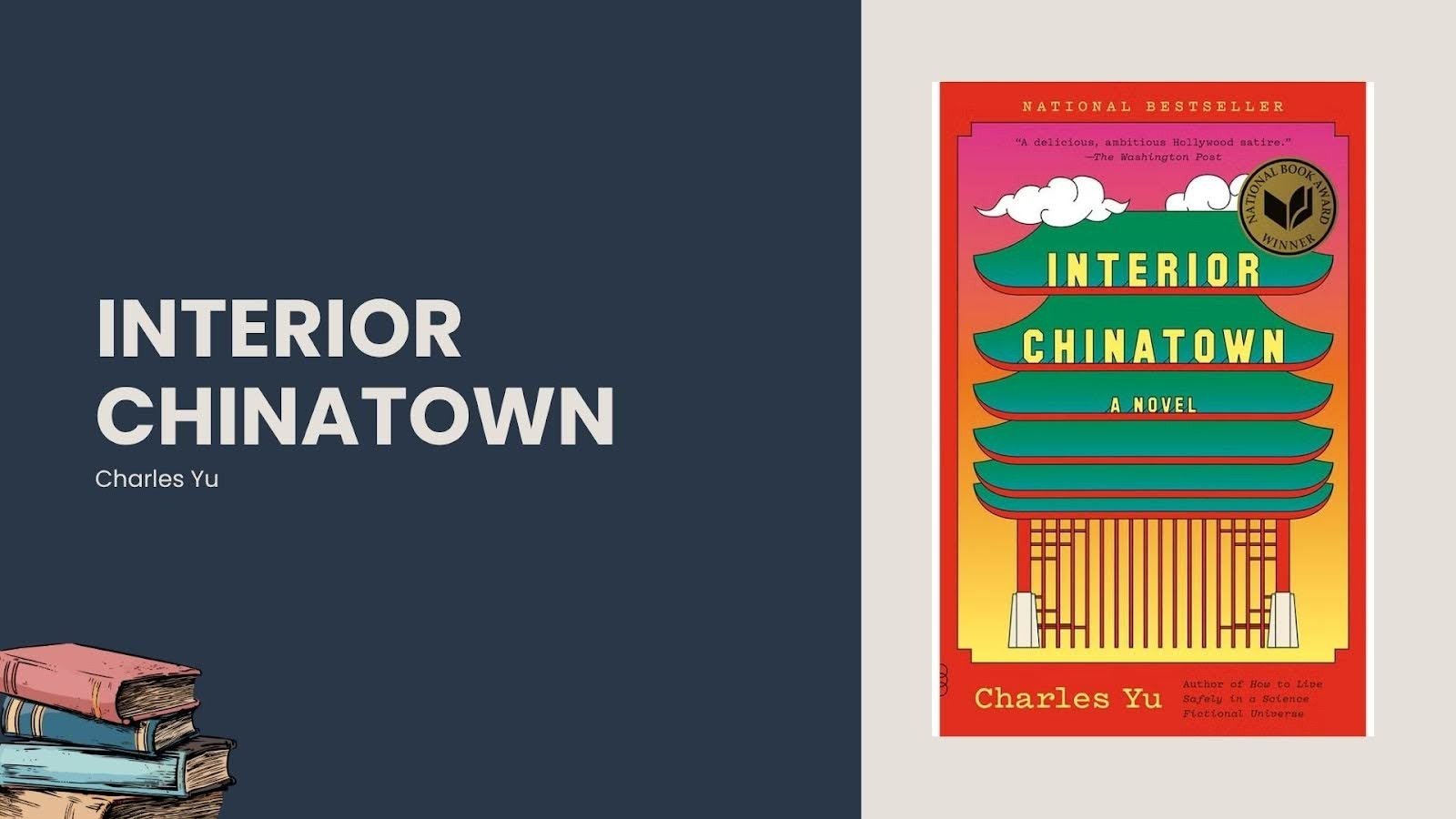
You’ve probably heard about Interior Chinatown by now. This book won the National Book Award for Fiction, and people can’t stop talking about it.
What makes it different? Charles Yu wrote it like a screenplay, which is pretty unusual for a novel.
Some readers love this format, while others find it takes getting used to. In this review, I’ll walk you through what the book is about, the themes it tackles, and who might enjoy reading it.
I’ll also share what worked for me and what didn’t. Let’s get into it.
Quick Summary of Interior Chinatown
Here’s what the book is about, how it’s written, and why the format matters to the story.
The Story in a Nutshell
Meet Willis Wu. He’s stuck playing “Generic Asian Man” in a police procedural show called Black & White. His big dream? To get promoted to “Kung Fu Guy,” a more prominent role.
Willis lives his entire life within this TV show, where he’s always in the background. He serves food, gets ignored, and watches the white main characters solve crimes.
The story follows Willis as he tries to break out of these limiting roles and become something more. It’s a clever setup that mirrors real life for many Asian Americans in Hollywood and beyond.
Narrative Style & Structure
Charles Yu tells this whole story in script format. You’ll see stage directions, character cues, and scene descriptions instead of traditional prose. It reads like you’re flipping through an actual TV screenplay.
The book also plays with reality in interesting ways. Some moments feel grounded and real, while others shift into something more abstract.
Yu uses this format to make pointed observations about race, representation, and identity. The meta style isn’t just for show. It actually reinforces the book’s message about how Asian Americans are often reduced to stereotypes.
Themes Explored in the Novel
This book tackles several heavy topics that many Asian Americans face daily. Here’s what Yu digs into.
Asian Stereotypes & Typecasting
The book confronts how Asian characters get pigeonholed in the media.
Willis can only play certain roles: the waiter, the kung fu master, the tech guy. He’s never the lead.
Yu shows how these limited options in Hollywood reflect real limitations in society. The script format makes this obvious. You see Willis literally listed as “Generic Asian Man.”
Identity, Invisibility & Belonging
Willis struggles with feeling invisible. People look past him. He exists in scenes but doesn’t matter to the main story. This captures what it feels like to be background noise in your own life.
The book asks tough questions. Who are you when society only sees a stereotype? Willis wants to belong somewhere, but he’s not sure where.
Family, Immigration & Generational Sacrifice
Yu weaves in Willis’s family history. His parents immigrated with hopes for a better life. They made huge sacrifices for Willis. But what did those sacrifices achieve?
The book shows tension between immigrant parents who worked to assimilate and their kids who still don’t feel fully accepted. There’s love here, but also unspoken disappointment.
Assimilation & Life in a Predominantly White Society
The entire novel is about trying to fit into a world that wasn’t built for you. Willis and his family have adapted and played their assigned roles.
But assimilation comes at a cost. You lose parts of yourself. Yu doesn’t offer easy answers. He simply shows what it looks like to live where whiteness is the default.
What Makes Interior Chinatown Stand Out
Several things set this book apart from typical literary fiction. Here’s why it caught attention.
Bold, Inventive Structure
The screenplay format is the first thing you’ll notice. Yu wrote the entire book as a TV script. This isn’t just a gimmick. The format serves the story’s message about performance and roles. Some readers love this experimental approach. Others find it distracting. But you can’t deny it’s memorable.
Humor Paired With Social Commentary
Yu manages to be funny while discussing serious topics. The book has witty moments that make you laugh. Then it hits you with something painful about racism or identity. This balance keeps the story from feeling preachy. The humor makes the message easier to digest. It’s satire that actually works.
Cultural Insight & Representation
This book offers something you don’t see often in mainstream fiction. Yu writes from lived experience as an Asian American. The details feel authentic. For Asian American readers, this representation matters. For everyone else, it’s a window into experiences they might not understand otherwise.
Critical Reception & My Personal Take
Let’s talk about how this book has been received and what I think about it.
What Critics Praise
Critics loved Interior Chinatown enough to give it a National Book Award. They praised Yu’s creative risk-taking and sharp social observation.
The format got attention for being both innovative and meaningful. Critics also appreciated the humor and emotional depth.
Potential Weak Points
The screenplay format doesn’t work for everyone. Some readers found it hard to connect emotionally with characters written as stage directions.
The pacing feels uneven at times. The meta elements are clever, but might feel forced if you’re not into experimental fiction. It’s also short, and some readers wanted more development.
Overall Impression
I found Interior Chinatown compelling but not perfect. The format is fresh and the social commentary hits hard. Yu nails the frustration of being typecast in life.
However, I struggled to feel deeply attached to Willis. The script format created distance. That said, this book does something important. It makes you see how limiting stereotypes are. Worth reading if you’re open to unconventional storytelling.
Who Should Read Interior Chinatown?
This book is perfect for readers who enjoy experimental fiction and social commentary. If you’re interested in Asian American experiences or how media shapes identity, you’ll find plenty to think about here.
Fans of books that break traditional formats will appreciate Yu’s screenplay approach. It’s also great for anyone who wants to understand typecasting and representation better. The book was also adapted into a Hulu series, bringing the story’s themes to a visual medium.
However, if you prefer traditional narratives with deep character development, this might not be for you. Readers who don’t enjoy meta-fiction or short, conceptual books may find it unsatisfying. The format requires some patience and willingness to try something different.
Rating: How Good Is the Interior Chinatown?
Here’s my honest rating based on writing quality, themes, readability, and how the book made me feel.
Overall Score
I’m giving Interior Chinatown a 4.5 out of 5. Yu created something original that tackles important issues with intelligence. It loses half a point because the format creates some emotional distance. But overall, this is a strong, memorable read.
Goodreads Rating: 4.04 / 5 Amazon Rating: 4.2 / 5 (based on ~5,995 ratings)
Breakdown
Writing style: 5/5. Yu’s prose is sharp and witty. The screenplay format is executed perfectly.
Themes & depth: 5/5. The book handles complex topics about race and identity with nuance.
Readability: 4/5. The script format makes it quick, but some sections need rereading.
Emotional impact: 4/5. Thought-provoking and occasionally moving, but the format keeps you at arm’s length.
About the Author: Who Is Charles Yu?

Here’s what you should know about the writer behind this award-winning book.
Charles Yu is a Taiwanese American author and screenwriter based in California. He studied law at Columbia University but turned to creative writing instead.
Yu has written several novels, with How to Live Safely in a Science Fictional Universe being his debut. Interior Chinatown won him the National Book Award for Fiction in 2020.
Beyond books, Yu works extensively in television. He’s written for shows like Westworld and Legion.
His background in both literature and TV writing clearly influenced Interior Chinatown’s unique screenplay format. Yu brings his dual expertise to create stories that blur the line between media.
Conclusion
Interior Chinatown matters because it shows what many people experience but rarely see in literature. Yu took a risk with the screenplay format, and it paid off.
This book makes you think about how we categorize people and limit their potential based on appearance. It’s especially relevant now as conversations about representation continue in media and society.
Yu contributed something valuable to contemporary fiction. He gave voice to feelings of invisibility and frustration that Asian Americans face.
This isn’t just a clever experiment. It’s a book with real heart and purpose. If you want something different that also makes you think, pick this one up.
Frequently Asked Questions
Is Interior Chinatown based on a true story?
No, it’s a work of fiction. However, Charles Yu drew from real experiences of Asian Americans in Hollywood and society. The stereotypes and typecasting Willis faces reflect actual industry practices.
Why is Interior Chinatown written like a screenplay?
The script format reinforces the book’s themes about performance and roles. Yu uses this structure to show how Willis lives his entire life as if he’s in a TV show, always playing assigned parts.
How long does it take to read Interior Chinatown?
Most readers finish it in 2-4 hours. The book is short, around 260 pages, and the screenplay format with lots of white space makes it a quick read.
Is Interior Chinatown appropriate for young readers?
Yes, it’s suitable for mature teens and up. The book contains some adult themes and language, but nothing overly graphic. It’s often taught in high school and college courses.
Do I need to know anything about TV shows to understand the book?
Not really. Familiarity with police procedurals helps you catch some references, but Yu explains enough that any reader can follow along. The story works on multiple levels.