
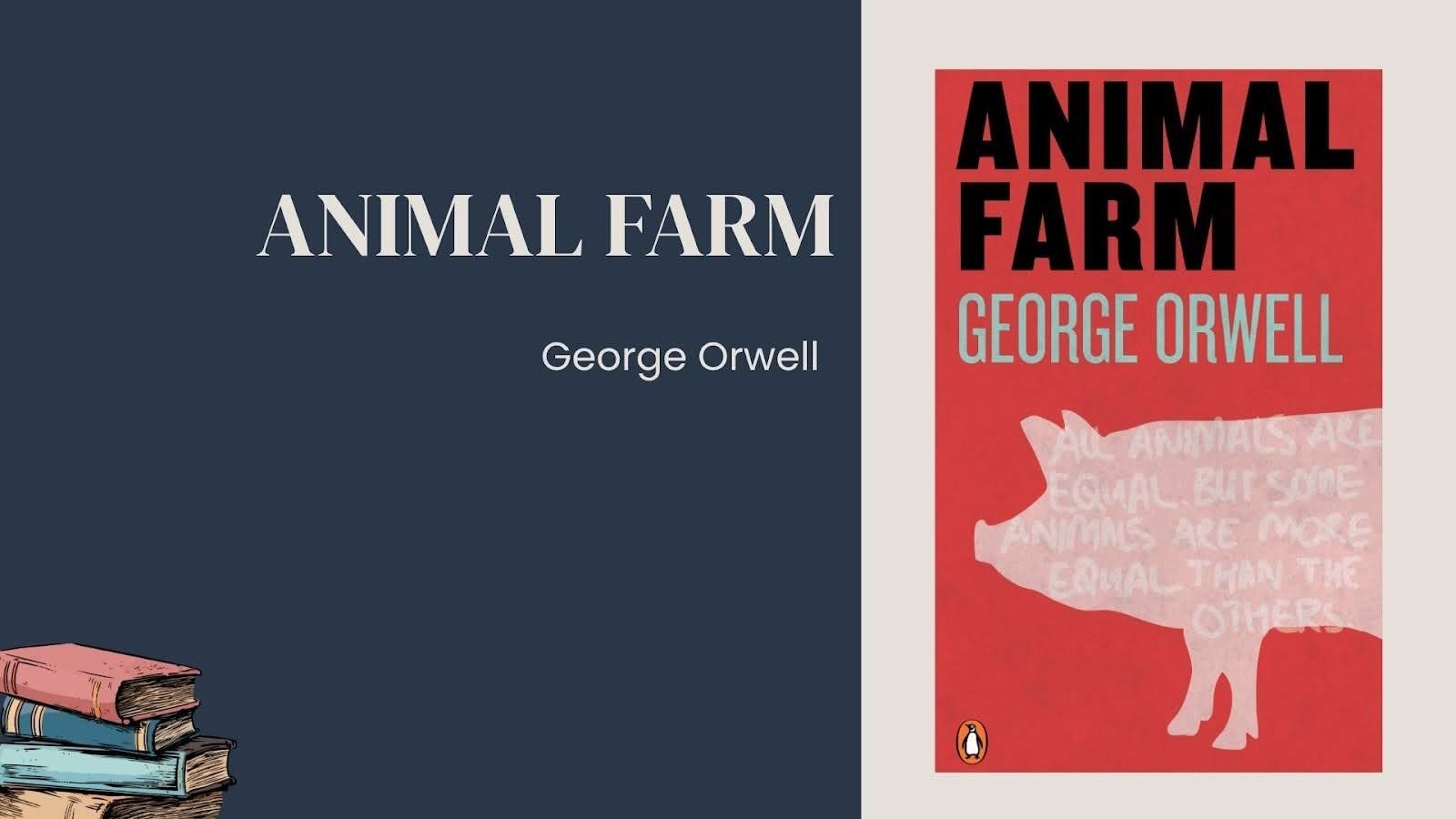
I just finished reading Animal Farm, and I need to talk about it. This book hit me harder than I expected.
In this review, I’ll walk you through why Orwell’s story about farm animals still matters today. You’ll learn about the plot, the hidden meanings, and why this short book packs such a powerful punch.
I’ll cover the characters, the themes, and help you decide if this classic is worth your time. I’m writing this because I want you to understand what makes this story so important.
Trust me when I say this isn’t just another school assignment book. It’s a warning that feels more real every year. Let’s get into it.
Book Overview

George Orwell wrote this masterpiece to show how power corrupts and revolutions fail ordinary people.
George Orwell lived from 1903 to 1950. He fought in the Spanish Civil War and watched communism turn ugly. This shaped his writing.
He believed in democratic socialism but hated totalitarianism. His books warned against fascism and Stalinism.
Animal Farm came out in 1945 after publishers initially rejected it. They feared offending Stalin. It became an instant success.
The book runs only 30,000 words. Every scene serves a purpose. The fable format makes complex ideas simple for all readers.
Plot Summary
Animals on a farm rebel against their human owner and try to create a fair society, but things go very wrong.
Mr. Jones owns Manor Farm and treats his animals badly. Old Major, a wise pig, shares a vision of freedom. He dies, but his ideas inspire rebellion.
The animals chase Jones off the property. The pigs take charge and create seven commandments. All animals are equal is the key rule.
Napoleon and Snowball become leaders but disagree constantly. Napoleon uses secret dogs to drive Snowball away and takes full control.
The pigs change the commandments and move into the farmhouse. Life gets harder for working animals, but the pigs always have explanations ready.
In-Depth Themes Analysis
Orwell uses talking animals to expose how leaders manipulate people and how good intentions turn into nightmares.
Napoleon becomes worse than Jones once he gets power. He uses violence and fear to control everyone.
Squealer twists words to make lies sound like truth. The pigs secretly change commandments to benefit themselves.
Boxer works harder than everyone else. The pigs work him until he collapses, then sell him to a glue factory.
All animals are equal but some animals are more equal than others. This exposes the lie.
Napoleon represents Stalin. The story mirrors the Russian Revolution. Leaders still promise equality while grabbing power today.
Character and Symbolism Breakdown
Each animal represents a different type of person or political force from revolutionary Russia and beyond.
Napoleon Dictatorship and Control
Napoleon is a large boar who barely speaks. He represents Stalin and uses fear and violence to rule. He raises puppies in secret and turns them into attack dogs.
By the end, he walks on two legs and wears clothes. He becomes indistinguishable from the humans they overthrew.
Snowball Idealism and Innovation
Snowball is energetic and full of ideas. He wants to build a windmill. He represents Trotsky and idealistic revolutionaries.
Napoleon drives him away with violence. Later, Snowball becomes a scapegoat for everything that goes wrong.
Boxer Loyalty, Hard Work, and Tragedy
Boxer is a massive carthorse. His mottos are “I will work harder” and “Napoleon is always right.” He represents loyal workers who trust their leaders blindly.
When Boxer collapses from overwork, Napoleon sells him to a glue factory. His story shows how loyalty can be weaponized.
Squealer Propaganda Mastery
Squealer talks incredibly fast and twists words. He represents media manipulation.
He changes commandments secretly and rewrites history.
Old Major Revolutionary Inspiration
Old Major inspires the whole rebellion. He represents Marx and Lenin combined.
He dies early, so he never sees his ideas corrupted.
Orwell’s Writing Style
Orwell writes with brutal clarity that makes complex politics feel simple and immediate.
Clarity, Simplicity, and Sharp Satire
Orwell uses plain language that anyone can understand. He avoids fancy vocabulary and complex sentences.
He shows rather than tells. You watch Napoleon become corrupt through his actions.The satirical tone stays consistent.
Absurd situations reveal serious truths. Simple words carry profound meaning.
Allegory and Fable-Like Structure
The story works as a children’s fable on the surface. Kids can read it as an adventure story. But every element points to real history. Manor Farm is in Russia. Jones is the Czar.
Students learn about Stalinism without dry history lessons. You care about Boxer as a character while understanding what he represents.
Memorable Quotes and Their Meaning
All animals are equal, but some animals are more equal than others.” This contradiction exposes how dictators twist language.
Four legs good, two legs bad” shows how complex ideas get reduced to slogans. Thinking stops when chanting starts.
I will work harder” captures Boxer’s tragedy. He never questions if working harder serves the right cause.
These quotes give you phrases to identify propaganda in real life.
Emotional and Intellectual Impact
This book makes you think hard while making you feel deep sadness and anger.
You root for the animals from the first page. When things go wrong, you feel personally betrayed.
Boxer’s fate hits especially hard. He gave everything and died for nothing.The pigs eventually walk upright and wear clothes.
They play cards with human farmers. The animals can’t tell pigs from people anymore.People with power will abuse it without strong checks.
Good intentions aren’t enough to prevent tyranny.Propaganda works because people believe comfortable lies. Apathy enables dictatorship. Revolution without safeguards just creates new oppression.
Strengths and Criticisms
The book excels at political satire but its allegorical nature creates some limitations.
The Power of Brevity
Animal Farm packs more punch in 100 pages than most books manage in 500. Every word earns its place.
The short length makes it accessible. Students actually read it. Adults can finish it in the evening.
Near-Perfect Allegory with Some Dark Simplifications
The allegory maps to Soviet history almost perfectly. Each character has a clear real-world counterpart.
However, the allegorical structure limits character development. Animals represent ideas more than individuals.
The ending offers no hope or solutions. Orwell shows what goes wrong but not what could go right.
How It Is Adopted As In Movie
George Orwell’s Animal Farm has been adapted twice. The 1954 animated film used hand-drawn animation, softened darker themes, and changed the ending to be more hopeful.
It was partly CIA-funded as Cold War propaganda.The 1999 TV movie used real animals with CGI and stayed closer to Orwell’s original dark tone and pessimistic ending.
Both adaptations faced challenges translating the political allegory visually while conveying complex ideas about power and corruption through animal characters.
Who Should Read Animal Farm
This book works for anyone interested in politics, history, or understanding how power corrupts.
High schools assign this book for good reason. It teaches literary analysis and critical thinking. The length makes it achievable for students.
If you follow current events, this book illuminates modern politics. You’ll recognize propaganda techniques in real-world rhetoric.
Anyone skeptical of authority needs this book. It shows how democracies can slide into authoritarianism through small steps.
Ratings
On Goodreads, “Animal Farm” has an average rating of 4.01 out of 5 stars based on over 4.4 million ratings.
A significant portion of the ratings are positive, with a large percentage of readers giving it 4 or 5 stars.
On Amazon, “Animal Farm” has an average rating of 4.6 out of 5 stars.
Personal Thoughts
Animal Farm earns its place among the most important books of the 20th century. I give it 5 out of 5 stars at only 100 pages, it will change how you see politics and power forever.
Orwell captured something timeless about human nature and the corrupting nature of power.
In our age of propaganda, this book trains you to think critically about what leaders tell you. Freedom requires vigilance, and Orwell gives us the tools to recognize when it’s threatened.
About The Author

George Orwell (1903-1950), born Eric Arthur Blair, was one of the 20th century’s most influential writers.
After serving in Burma’s Imperial Police and living in poverty, he fought in the Spanish Civil War, which shaped his fierce opposition to totalitarianism.
Best known for Animal Farm (1945) and Nineteen Eighty-Four (1949), Orwell championed clear prose and political truth-telling.
He died of tuberculosis at 46, but his legacy lives on through terms like “Orwellian” and “Big Brother,” with his warnings about authoritarianism remaining powerfully relevant today.
Conclusion
Orwell died in 1950, but his warning echoes louder each year. Every new authoritarian leader proves the book’s relevance.
Watch for leaders who change rules to benefit themselves. Question those who use complex language to confuse simple truths. Never trust anyone who claims they alone can fix everything.
I read Animal Farm in school and dismissed it as just an assignment. Rereading it as an adult hit differently. Now I see Napoleon everywhere I look. I hear Squealer in political speeches.
This book taught me to spot manipulation before it traps me. Read it, think about it, then share it with someone who needs this warning. Drop a comment below about which character resonates with you most.
Frequently Asked Questions
Is Animal Farm suitable for children?
Kids can read the surface story about talking animals. The deeper political themes will go over younger heads. Teenagers get the most out of it as they start understanding politics.
How long does it take to read Animal Farm?
Most people finish Animal Farm in 2-4 hours. It’s only about 100 pages with simple language. You can easily read it in one sitting.
Do I need to know Russian history to understand Animal Farm?
You don’t need historical knowledge to enjoy the story. However, knowing the Soviet parallels adds depth and makes it more powerful.
What’s the main message of Animal Farm?
Power corrupts those who hold it. Revolutions often replace one oppressive system with another. Ordinary people need to stay vigilant against manipulation.
Why did Orwell write Animal Farm?
Orwell witnessed how the Soviet Union betrayed socialist ideals under Stalin. The book warns against trusting leaders who promise equality while consolidating power.