

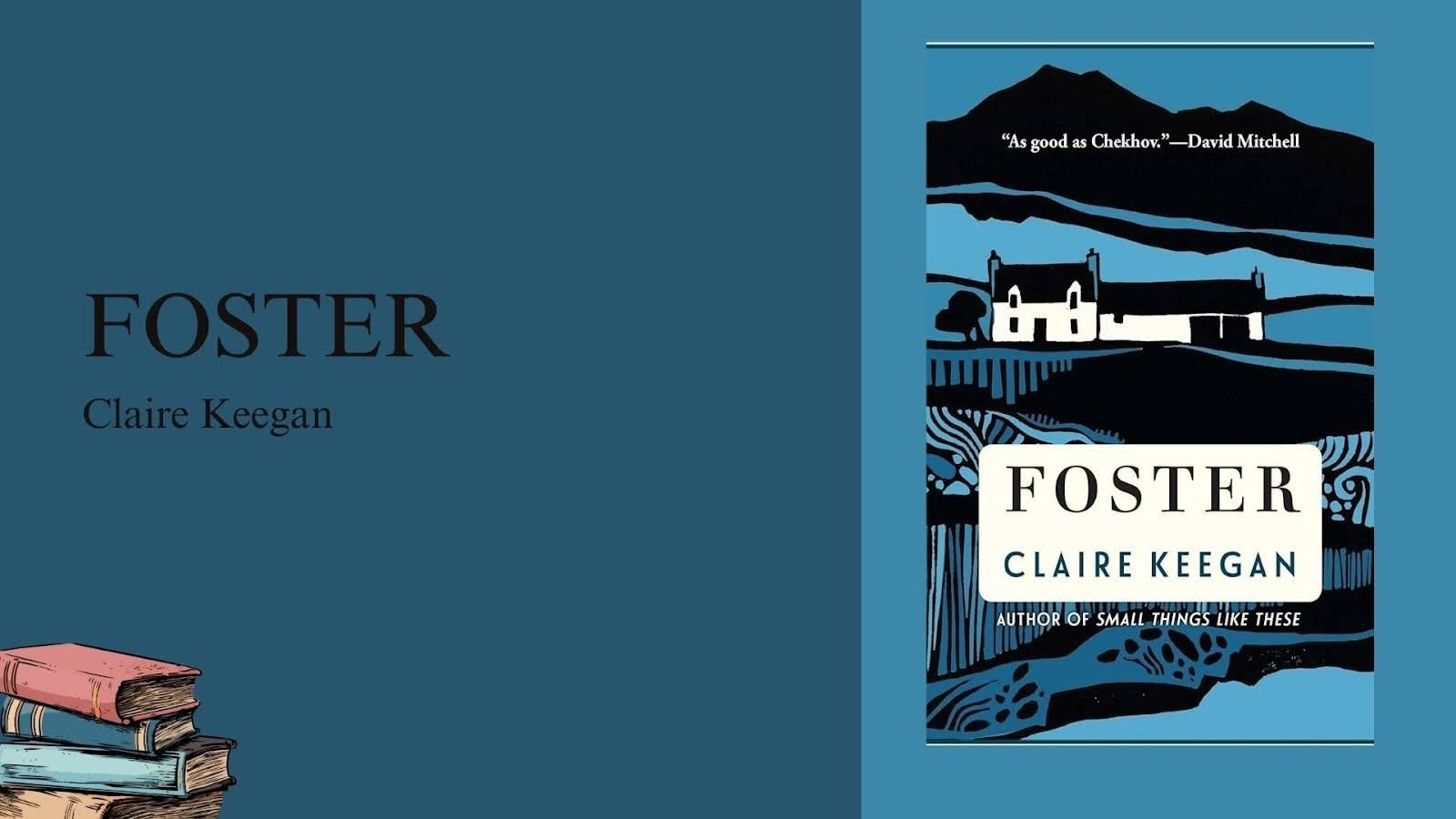
Looking for an honest foster book review? You’re in the right place. I’ll help you decide if Claire Keegan’s novella is worth your time. Trust me, I read it twice because it affected me that deeply. This short book packs serious emotional power.
In this review, I’ll cover the plot without spoilers, the main themes, character analysis, and my personal thoughts.
You’ll also find out what critics say and who should read this book. I’ll be straight with you about what works and what to expect.
Let’s get into it.
Synopsis of Foster
The story takes place in rural Ireland during the 1980s. We meet a young girl whose name we never learn. She is the narrator. Her family is struggling. There are too many children. Not enough money or attention to go around.
The girl’s father drives her to the Kinsella farm. She will spend the summer there. The Kinsellas are childless. Their home feels different immediately. It’s clean, warm, and peaceful. The contrast with her own crowded house is striking.
During her stay, the girl experiences real care. The Kinsellas give her attention and affection. She feels safe for the first time. Small moments matter here. A new dress. Proper meals. Being tucked into bed. These things change how she sees herself. The summer reshapes her quietly but deeply.
Themes Explored in Foster

Keegan examines profound themes through simple, everyday moments in this novella.
Silence and What Goes Unsaid
Keegan uses a minimalist narrative style. She doesn’t explain everything. Much of the story lives in what characters don’t say.
This creates powerful emotional moments. Readers feel the weight of unspoken things. The silence carries meaning.
Family, Care, and Emotional Nurturing
The book contrasts two types of families. The girl’s biological family struggles with neglect. The Kinsellas offer genuine warmth.
We see how care impacts a child. Attention matters. Kindness changes lives. The girl blossoms under the Kinsellas’ nurturing.
Loss, Grief, and Healing
The Kinsellas carry hidden grief. They lost a child years ago. This loss shapes their kindness toward the girl.
Shared vulnerability creates connection. The girl and the Kinsellas heal each other. Their bond grows from mutual need and understanding.
Character Analysis
Each character in Foster reveals themselves through small actions and quiet moments.
The Young Girl (Narrator)
We experience everything through her eyes. She is observant and sensitive. Her inner world is rich despite her young age.
The girl grows through stability and affection. She learns what it feels like to be seen. To matter to someone.
The Kinsellas
Mr. Kinsella shows quiet strength. He is gentle and patient. He teaches the girl small things about farm life. His kindness comes through actions, not words.
Mrs. Kinsella provides warmth and structure. She gives the girl new clothes and proper meals. Her grief over her lost son adds depth to her character. She needs this girl as much as the girl needs her.
The Girl’s Biological Parents
Keegan portrays them without judgment. They are overwhelmed by poverty. Too many children. Not enough resources.
They represent emotional absence rather than cruelty. This contrast intensifies the story’s emotional impact. It shows what the girl has been missing.
Writing Style and Narrative Voice
Keegan’s writing style makes Foster unforgettable and deeply moving for readers.
Keegan’s Minimalism:
Every word counts in this novella. Keegan chooses her language with precision. She trusts readers to understand what’s not said.
The emotional depth comes through subtlety. No dramatic scenes. No big speeches. Just quiet, careful observation.
Atmosphere and Imagery:
The rural Irish setting feels real. You can smell the hay. Feel the warmth of the kitchen. Hear the quiet of the countryside.
Certain scenes stay with you forever. The girl is getting her new dress. The moment she realizes she’s loved. These images linger long after reading.
Critical Reception
Foster has earned widespread praise from critics and readers around the world.
The novella won multiple awards. Critics admire Keegan’s narrative economy. She accomplishes so much in so few pages. Reviewers praise her emotional intelligence. Her ability to capture childhood perspective. The way she handles difficult subjects with grace.
Readers find deep emotional resonance in this story. Many say it made them cry. Others call it perfect. The story feels universal despite its specific Irish setting. Everyone understands what it means to need love. To find temporary belonging.
The Movie Adaptation

Foster was adapted into the Irish film “The Quiet Girl” (An Cailín Ciúin) in 2022.
Director Colm Bairead stayed faithful to the source material’s quiet tone. Shot entirely in Irish with subtitles, the film adds authenticity to the rural setting. Young actress Catherine Clinch gives a powerful performance as the unnamed girl. Carrie Crowley and Andrew Bennett bring warmth as the Kinsellas.
The film preserves the novella’s minimalist dialogue and emotional restraint. It became Ireland’s highest-grossing Irish-language film and received an Oscar nomination for Best International Feature.
Reading the book first offers deeper access to the girl’s inner world. But the film stands as excellent cinema through its visual storytelling. Both versions move audiences in different ways.
Notable Reviews and Ratings
Foster has received exceptional praise from readers and critics worldwide.
Goodreads: 4.32 out of 5 stars Based on over 146,000 ratings. The majority of readers gave it 5 stars. Many describe it as a perfect novella that stays with them long after reading.
Amazon: 4.5+ out of 5 stars Based on thousands of reviews across different editions. Readers consistently praise the emotional depth and beautiful prose. The hardcover edition features mostly 5-star reviews.
Awards and Recognition: Foster won the prestigious Davy Byrnes Award. The Times selected it as one of the Top 50 Novels Published in the 21st Century. The story was published in The New Yorker.
What Reviewers Are Saying:
- Readers on Goodreads call Foster a masterpiece. Many say they cried in the best way. The spare prose and what goes unsaid moved them deeply.
- Kirkus and Booklist both gave starred reviews. They praised the simple prose and emotional depth. David Mitchell compared Keegan to Chekhov. Maggie O’Farrell called her a devastatingly economic writer. Hilary Mantel praised her luminous effects with spare material.
My Personal Reading Experience
Reading Foster affected me deeply and changed how I think about family stories.
The emotional realism hit me hard. Nothing feels forced or manipulative. The tenderness of the Kinsellas felt genuine. I kept thinking about how small acts of kindness matter. How being seen changes everything. This book made me cry, but in a good way.
The quiet turning points got me. When Mrs. Kinsella buys the girl new underwear. When the girl realizes the Kinsellas lost a child. The bittersweet ending broke my heart. I won’t spoil it. But it’s perfect. It captures the complexity of love and loss.
About the Author: Claire Keegan

Claire Keegan is an Irish master of short fiction who writes stories that cut deep.
Claire Keegan was born in County Wicklow, Ireland. She studied literature and creative writing in the United States. Her work has won many awards.
Keegan writes with incredible precision. She uses few words but creates deep emotion. Her stories often focus on family dynamics and rural Irish life. Silence and what people don’t say matter in her work.
She has influenced modern short fiction significantly. Writers admire her minimalist approach. Readers love how much feeling she packs into short spaces.
Conclusion
I hope this Foster book review gave you what you needed. Honestly, this novella wrecked me in the best possible way. I couldn’t stop thinking about the girl and the Kinsellas for days.
Sometimes the shortest books leave the longest marks on your heart. If you’re looking for a story that feels real and hits deep, give Foster a try. You can finish it in an hour, but you’ll carry it forever.
Have you read it? Tell me in the comments which moment affected you most. I’d love to hear your take.
Frequently Asked Questions
Is Foster based on a true story?
No, Foster is fiction. Keegan drew from rural Irish life to create an authentic emotional story.
How long does it take to read Foster?
Foster is about 90 pages. Most readers finish it in one to two hours.
What age is appropriate for reading Foster?
Foster suits mature teens and adults. Readers aged 14 and up can handle its themes.
Did Foster win any literary awards?
Yes, Foster won the Davy Byrnes Award and appeared in The New Yorker.
Should I read Foster or watch the movie adaptation?
Read the book first. The 2022 film is great, but the prose is worth experiencing.