

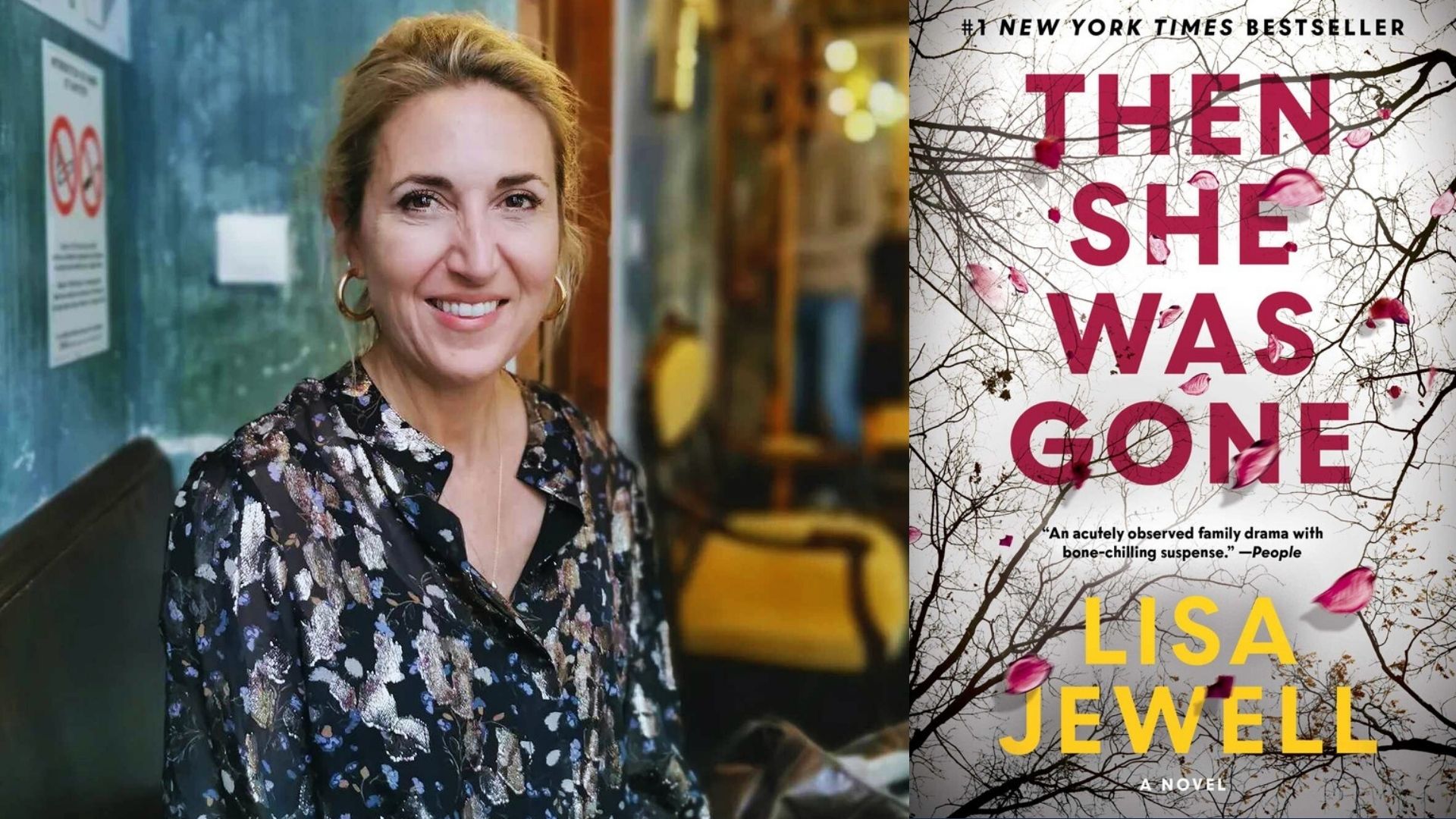
Looking for an honest Then She Was Gone book summary with spoilers? You are in the right place.
Lisa Jewell’s 2017 novel refuses to let its horror live at a comfortable distance. It places grief and obsession inside an ordinary suburban family, then slowly reveals that the worst thing imaginable has already happened, hiding in plain sight the entire time.
The questions it raised about loss, control, and what parents never truly know about their children stayed long after the final page.
I will walk you through the plot, themes, characters, and share my personal response. Full spoilers ahead.
Synopsis of Then She Was Gone
Ten years before the novel opens, fifteen-year-old Ellie Mack vanished without a trace from a London suburb.
Her mother, Laurel, has spent a decade suspended in grief, her marriage dissolved, her life hollowed out by a disappearance never explained.
Then Laurel meets Floyd, a warm man whose young daughter Poppy looks startlingly like Ellie at that age, shares her mannerisms, and reads the same books.
Through chapters following the now-dead Ellie, readers learn she was lured into dependency on Noelle Donnelly, a former tutor who held her captive, forced her into pregnancy, and let her die during childbirth. Poppy is Ellie’s daughter. Floyd never knew.
Laurel eventually confronts Noelle directly and learns everything. Noelle dies. Poppy remains, a living connection to Ellie that brings neither closure nor comfort. Only facts, and the weight of them.
Major Themes in Then She Was Gone
A searching examination of grief, obsession, the stories parents tell themselves, and the violence that ordinary-seeming people are capable of hiding.
Grief
Laurel’s decade of suspended mourning is the emotional core of everything. Jewell does not treat grief as a phase with clean stages.
It rewires a person entirely, making ordinary experience feel fraudulent and connection feel impossible.
Laurel’s gradual return to the world through Floyd is written with genuine tenderness, which makes the subsequent revelation all the more devastating.
Obsession
Noelle’s fixation on Ellie grows from recognisable sources: loneliness, resentment, a distorted sense of entitlement to love.
Jewell traces the psychology carefully, making it comprehensible without ever softening it. Noelle believed she was owed something, and she took it.
The horror lies in how clearly that logic is shown to operate.
Parental Blindness
Running under every chapter is the quiet suggestion that parents do not truly know their children.
Ellie’s private life, her academic anxieties, her relationship with Noelle, was largely invisible to Laurel.
The novel treats this not as failure but as an uncomfortable feature of how families function.
Violence Behind Closed Doors
Jewell’s specific skill is making the suburban familiar feel wrong. The streets, schools, and kitchens in this novel are entirely recognisable, and that recognisability is precisely what makes the events inside them so disturbing.
The violence does not arrive from an alien elsewhere. It arrives from next door.
Character Analysis
Through interlocking timelines and unreliable silences, the novel examines what remains of a family when its defining wound finally gets a name.
Laurel Mack
Laurel is the most fully realised character in the book. She is self-absorbed in her grief, sometimes blind to her living children’s needs, and prone to magical thinking about Ellie’s fate.
What makes her compelling is that this self-absorption is entirely legible. Her determination to find the truth, even when each new piece is worse than the last, is not heroic. It is compulsive and human.
Ellie Mack
Ellie exists only in retrospective chapters, but Jewell makes her vivid and specific. She is fifteen in the way actual fifteen-year-olds are confident on the surface, privately terrified of failing, susceptible to adult attention that looks like recognition.
Her relationship with Noelle begins as tutoring and slides into something far darker with a gradual plausibility that is genuinely difficult to read.
Noelle Donnelly
Noelle is the novel’s most challenging creation because Jewell refuses to make her a straightforward monster. Her motivations are coherent and her psychology is traceable.
She wanted to be loved and chose the most destructive possible way of securing it. Her chapters are the most uncomfortable in the book, not because she is alien but because she is not.
Floyd
Floyd is both a romantic possibility and an unwitting participant in the tragedy. His genuine ignorance of Poppy’s origins matters Jewell is not writing a story where every adult is complicit.
Some people are simply standing in the wrong place. Floyd is one of them.
Writing Style and Narrative Voice
Built across alternating timelines and perspectives, the novel is constructed with the confidence of a writer who knows exactly where each reveal needs to land.
Jewell’s Structural Choices
The decision to show Ellie’s fate from the beginning, giving readers knowledge that Laurel does not have, creates a sustained dramatic irony that powers the entire second half.
It also means the novel is not really a whodunit. The question is not who did it. The question is how long it will take for the people who loved Ellie to find out what readers already know.
Tone and Register
Jewell writes domestic life with precision and warmth, and that warmth makes the horror register harder. The novel does not announce its darkness.
It lets it settle into rooms that feel completely ordinary. The prose is clean and unfussy, which suits the subject: there is nothing decorative about this story, and the writing knows it.
Critical Reception
Then She Was Gone was published in March 2017 to strong critical attention, with reviewers praising its emotional weight and refusal to play its darkness for easy thrills.
It became a Sunday Times bestseller in the United Kingdom and reached the New York Times bestseller list in the United States.
Critics highlighted Jewell’s ability to locate extreme darkness inside recognisable domestic settings.
Reader response was largely enthusiastic, though some found the Noelle storyline more disturbing than anticipated. Many described the final chapters as genuinely hard to process.
Notable Ratings
Goodreads: 4.04 out of 5 stars based on over 400,000 ratings
Amazon: 4.2 out of 5 stars across tens of thousands of reviews
Awards: Shortlisted for the British Book Awards Crime and Thriller Book of the Year, 2018
My Personal Reading Experience
Then She Was Gone was not the book I expected, and I mean that as a full compliment. The domestic setup reads initially like a quiet character study.
By the midpoint, it had become something else entirely, and the final third was genuinely difficult to sit with.
What stayed with me most was Jewell’s portrait of a mother who could not grieve properly because the absence of facts meant the absence of an ending.
When the ending finally arrives, it is not a relief. It is just a different kind of unbearable. That is honest writing, and it is rarer than it should be.
About the Author Lisa Jewell

Lisa Jewell is a British author born in London in 1968. She began her career with the romantic comedy Ralph’s Party in 1999, which became a bestseller.
Over two decades her novels gradually moved toward darker psychological territory. Then She Was Gone marked a decisive shift in tone, introducing her work to a significantly wider international audience.
Her subsequent novels, including The Family Upstairs and Invisible Girl, continue exploring domestic darkness with accessible prose and unsettling subject matter.
She lives in North London and has spoken about how parenting shaped her approach to writing about missing children.
Conclusion
I hope this Then She Was Gone summary gave you what you were looking for. This novel earns its darkness by grounding it in recognisable emotional life.
Not comfortable, and never meant to be. But it is honest in ways less serious thrillers avoid, and that honesty makes it linger.
The grief is real, the horror is real, the ending refuses to pretend otherwise.
Crystal City Entertainment and Moonshot Films felt the same, with a film now in development. This one will stay with you before the screen version arrives.
Frequently Asked Questions
Is Then She Was Gone a standalone novel?
Yes. It is a completely self-contained story with no sequel and no required prior reading.
How long does it take to read Then She Was Gone?
The novel runs to approximately 370 pages. Most readers complete it across five to eight hours, often in concentrated sittings because the pacing makes it difficult to stop at chapter breaks.
What age is appropriate for Then She Was Gone?
The novel suits readers aged 16 and up. It contains themes of abduction, captivity, pregnancy, and death handled with seriousness but without gratuitous detail.
Does Then She Was Gone have a happy ending?
Not in any traditional sense. The ending provides answers, which Laurel has spent ten years without, but those answers do not repair what was lost. It is a realistic ending rather than a reassuring one.
Is there a television or film adaptation of Then She Was Gone?
As of early 2026, no confirmed adaptation has been released, though Lisa Jewell’s other work, particularly The Family Upstairs, has attracted screen interest, and Then She Was Gone remains among the most frequently discussed of her novels in adaptation conversations.